



Shipping Container Rust and Coastal Corrosion in NZ


Shipping containers are built from weathering steel, usually sold under the name Corten, and finished with a marine paint system. Many buyers assume the Corten protects itself. Near the New Zealand coast it does not. This guide explains how containers rust, how the BRANZ exposure zones apply to your site, why Rotorua and other geothermal areas are a special case, and how to inspect, treat and paint a container so it lasts.
Where containers rust first
Rust starts where the paint is broken or where water sits. On a container that usually means:
- Roof panels with dents that hold rainwater.
- Scratches from twistlocks, forklifts and crane chains.
- The lower door frame and the steel behind worn door gaskets.
- Corner castings and corner posts, where paint chips during handling.
- The bottom side rails, where dirt, leaves and moisture collect.
- Cut edges around doors, windows or vents added later.
What Corten can and cannot do
Weathering steel forms a dense rust layer, called a patina, that slows further corrosion. BlueScope’s technical bulletin on REDCOR weathering steel explains that the patina only forms with bold exposure, regular wetting and drying, and limited contact with airborne chloride. It states plainly that “there is no advantage to using weathering steels (compared to plain carbon structural steels) for marine applications”. It also notes that painted weathering steel can give better paint life.
For a container near the sea, the paint system is what protects the steel. Keeping that paint intact is the whole job.
| Zone | Description | What it means for a container |
|---|---|---|
| B (low) | Inland areas with little risk from wind-blown sea-spray salt | Standard care: touch up damage and check the roof once a year |
| C (medium) | Inland coastal areas with medium risk | Wash sheltered areas and check the paint every 6 to 12 months |
| D (high) | All areas within 500 m of the coast including harbours, 100 m from tidal estuaries and sheltered inlets, and all offshore islands | Faster paint breakdown at scratches, dents, seals and castings; wash every 3 months, use stainless fixings |
| E (severe marine) | Breaking-surf beachfronts (E2/AS1 only) | Plan regular recoating and frequent washing |
Find your exposure zone
BRANZ Maps shows the indicative exposure zone, wind zone and earthquake zone for any NZ address. Much of the Auckland isthmus and Dunedin sits inside the 500 m zone D band, as do Mount Maunganui, Pāpāmoa and the harbour edges in Tauranga. BRANZ also records wind-carried salt more than 20 km inland, so a site outside zone D is not free of salt.
The NZ Metal Roof and Wall Cladding Code of Practice treats the south coast of the North Island as a particularly harsh marine environment because of strong onshore winds and salt-laden air. If you are placing a container in Wellington, especially on the south coast, plan for coastal maintenance from the first year. Local notes for Auckland cover the harbour suburbs.
Geothermal corrosion in Rotorua
Geothermal air is harder on steel than sea air. BRANZ field trials in Rotorua, published as study report SR393, measured first-year corrosion of mild steel at about 3,302 g/m² per year near Sulphur Bay. That is around five times the 650 g/m² recorded at a severe marine test site at Oteranga Bay. Zinc, the coating on galvanised steel, also corroded faster than at the marine site. The early corrosion products did not protect the metal, and attack accelerated sharply once hydrogen sulphide rose above about 1 part per billion. Levels of 31 to 41 ppb were measured.
The Code of Practice treats buildings within 50 m of a fumarole, and much of Rotorua generally, as a geothermal microclimate, and BRANZ has proposed moving parts of the Bay of Plenty geothermal area from zone B to zone C. In Rotorua or on other geothermal ground, inspect the paint more often than you would on the coast and repair damage quickly. Our Rotorua page covers local supply and delivery.
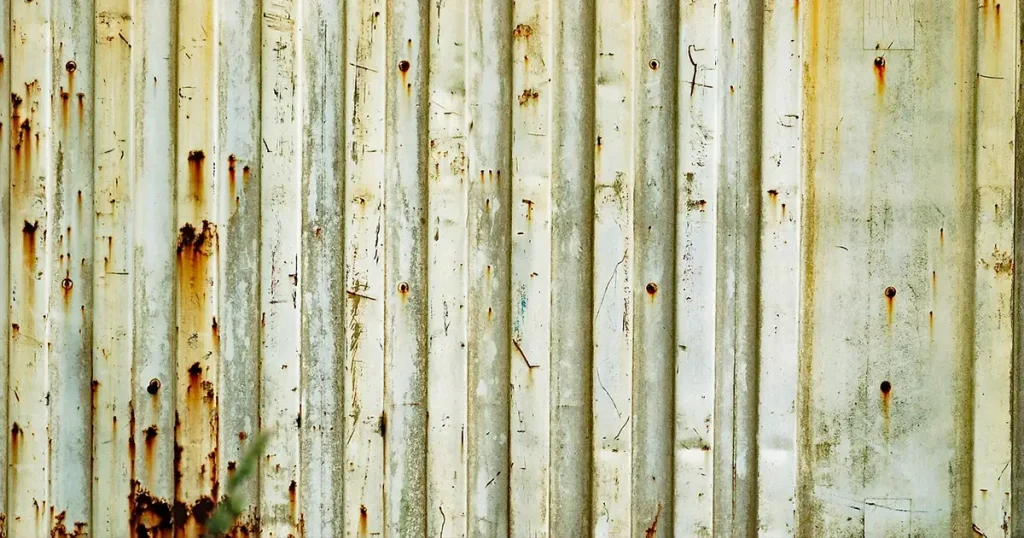
Surface rust, scale and holes
- Surface rust: orange staining or light bloom at scratches and on the paint film. Cosmetic if treated early.
- Scale: flaking layers that lift when scraped. The steel underneath is losing thickness.
- Perforation: holes, or steel that a screwdriver pushes through. That section needs cutting out and new steel welded in.
Check the roof, the top and bottom side rails, the lower door frame and the corner castings first. Push a screwdriver into suspect spots on the base rails and cross members. When you buy used, read the grade description carefully; our guide to container grades explains what rust each grade usually allows, and the buying checklist covers the rest of an inspection.
Treating rust and repainting a container
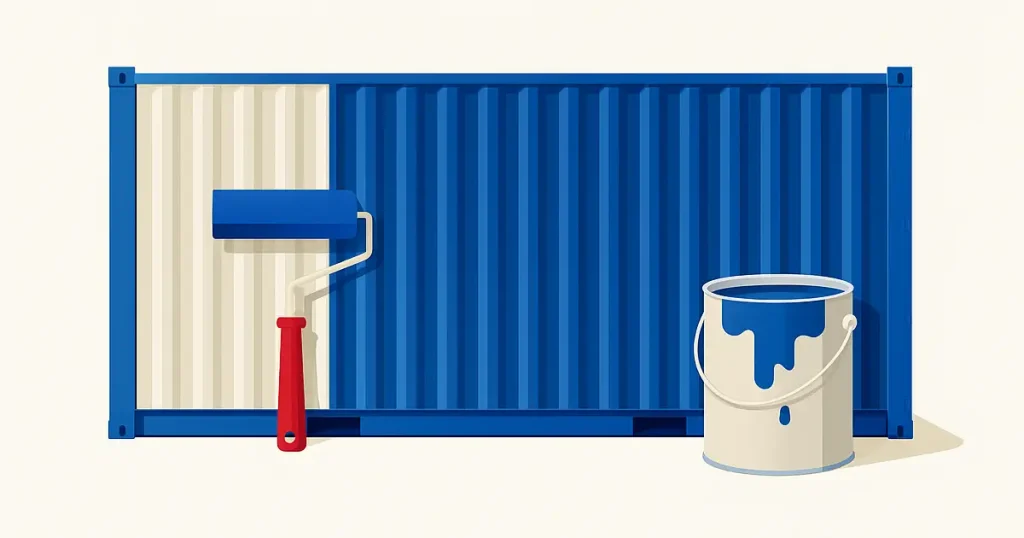
- Wash the container with fresh water to remove salt and dirt. Salt left under new paint makes it fail early.
- Remove loose rust and flaking paint back to firm material with a wire brush, grinder or abrasive blasting.
- Prime bare and rusted steel with a primer suited to the surface, such as a zinc-rich or surface-tolerant primer, following the manufacturer’s instructions.
- Apply a topcoat system rated for your exposure, ideally a marine or industrial grade product, at the film thickness the manufacturer specifies.
- Seal cut edges and new penetrations, and replace damaged door gaskets.
Paint life depends heavily on exposure. BRANZ notes that coatings rated for 10 to 15 years in medium environments may last only 2 to 5 years in very high industrial or marine conditions. Ask the paint supplier for a specification matched to your BRANZ zone, and choose a lighter colour if heat inside the container matters to you.
Placement and maintenance that slow corrosion
- Set the container on sleepers, concrete pads or piers under the corner castings so air moves under the base and the bottom rails can dry. Our guide to container foundations compares the options.
- Give it a very slight fall along its length so the roof drains rather than ponding.
- Wash sheltered surfaces. BRANZ reports that sheltered, unwashed surfaces collect about 3 to 8 times more salt. One cladding manufacturer recommends washing every 3 months in the most severe environments, and 6-monthly or yearly elsewhere.
- Use stainless steel fixings for anything you attach. In zone D, NZS 3604 requires structural fixings (other than nails and screws) to be at least grade 304 stainless; grade 316 is the better choice right on the coast.
- Control condensation inside with vents and moisture absorbers, as rust also starts on the underside of the roof. See our condensation guide.
- Touch up scratches as soon as they appear.
A well maintained container on a coastal section can still give many years of service. Our guide on how long shipping containers last sets out a full maintenance schedule. If you are buying for a site within 500 m of the sea, a container with sound paint is worth the extra cost; ask suppliers about paint condition in your quote request.
Buying for a coastal or geothermal site
Tell us the delivery address and how close it is to the sea or geothermal ground. Suppliers who service your area can quote a container with paint suited to the site.
Get a free quoteFAQ
Container rust: common questions
Yes. Containers are made from weathering steel with a paint system on top, and rust starts wherever that paint is broken or water sits, such as roof dents, scratches, door frames and corner castings. Weathering steel does not protect itself in marine air, so near the coast the paint does the work and needs regular care.
No. Corten forms a protective patina only under bold exposure, regular wetting and drying and limited airborne salt. BlueScope’s technical guidance states there is no advantage to weathering steel over plain structural steel for marine applications. On a container, the factory paint system is the main protection, so keep it intact.
Zone D is the high exposure zone used in NZS 3604. BRANZ describes it as all areas within 500 m of the coast including harbours, 100 m from tidal estuaries and sheltered inlets, and all offshore islands. In zone D, structural fixings other than nails and screws must be at least grade 304 stainless steel. You can check your address on BRANZ Maps.
Set it on sleepers or pads so the base stays dry, keep the roof free of standing water, wash off salt regularly, and touch up scratches as soon as they appear. When rust does start, take it back to firm steel, prime it and apply a topcoat rated for your exposure zone. Control condensation inside with vents and absorbers.
Often, yes. BRANZ trials in Rotorua measured first-year corrosion of mild steel near Sulphur Bay at about five times the rate at a severe marine test site, driven by hydrogen sulphide in geothermal air. Zinc coatings also corroded faster. In geothermal areas, inspect and repair the paint more often than you would on the coast.
Yes, with the right preparation. Wash off salt, remove loose rust and flaking paint, prime bare steel and apply a topcoat system suited to metal and your exposure zone, at the thickness the manufacturer specifies. Painting over loose rust or salt fails quickly. On coastal sites, ask the paint supplier for a marine or industrial grade specification.
Andreas Atrott | Shipping container specialist and founder
Andy has worked with shipping containers since 2013. He runs shipping-containers.com.au from Brisbane and Shipping-Containers.co.nz for New Zealand buyers, and spends much of his time inspecting containers, checking grades and sorting out deliveries. His YouTube channel Andy Knows Containers covers buying, inspecting, delivering and converting containers.
Blog
More container guides

Do You Need Consent for a Shipping Container in NZ?
New vs Used Shipping Containers: NZ Buying Guide
HIAB vs Swinglift: Container Delivery Options in NZ
Need a container for your project?
Tell us the size, condition and delivery address. Your request goes to suppliers who service your area.
Get a free quote