



Shipping Container Grades in NZ: A, B, C and One-Trip

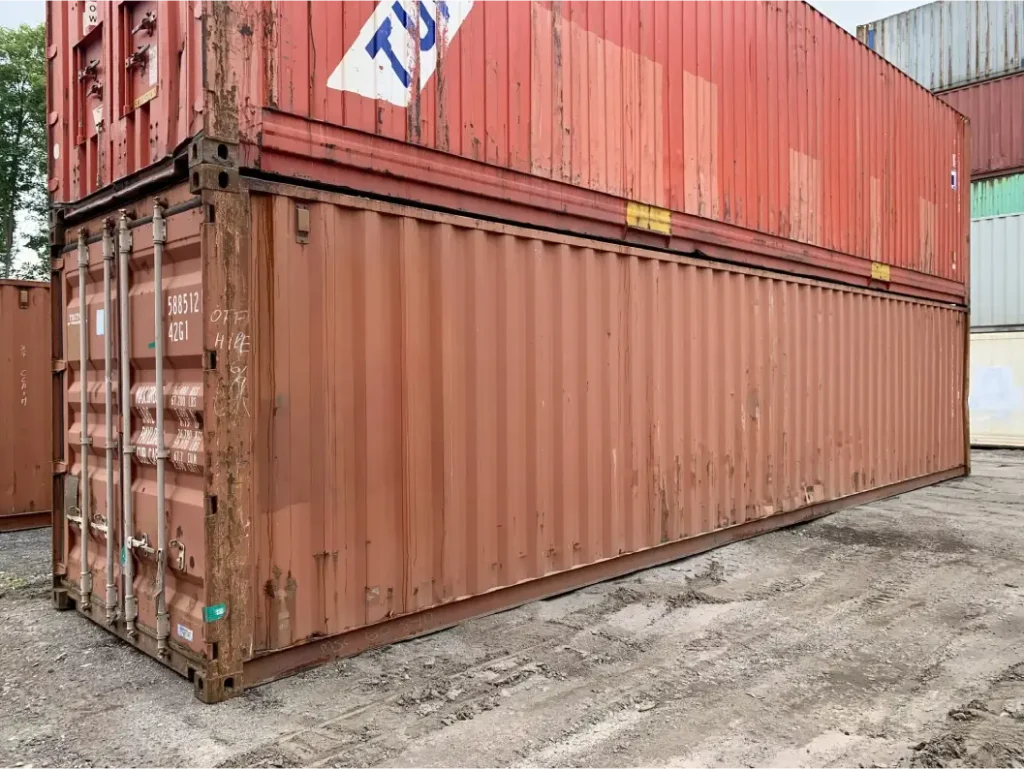
Shipping container grades describe the condition of a container, but no single grading standard applies to containers sold in New Zealand. Each supplier uses its own scale. In our October 2026 price research, NZ sellers described standard containers with more than a dozen labels, from A grade and near new to weatherproof, tidy, ex-lease and as-is.
This guide explains what each grade usually means, which terms come from the shipping industry and which are seller shorthand, and how to check that a container matches its grade before you pay.
Industry terms and seller labels
A few terms have a defined meaning in shipping. Cargo-worthy and IICL relate to whether a container is fit for sea freight or for return to a leasing company. Wind and watertight is a plain description of a box that keeps the weather out. Letter grades such as A, B and C are not defined anywhere. They are a supplier’s way of sorting used stock, and one yard’s B grade can be another yard’s C grade.
The grade is part of the description you are buying against. Under the Fair Trading Act a trader must not mislead you about the quality of goods, and the Consumer Guarantees Act requires goods sold to consumers to match their description. Ask every seller to explain their grade in writing.
A grade does not mean the same thing at every yard
NZ sellers use letter grades in different ways. At some yards A grade means a repainted used container around 10 to 12 years old. Other suppliers use A grade for new-build or one-trip containers. Two A grade containers can therefore differ by years of service and hundreds of dollars. Before you compare prices, ask each seller what their grade means, how old the unit is, whether it has been repaired or repainted, and for current photos of that unit. Our buying checklist lists what to look at.
| Grade or label | What it usually means | Good for | Check before buying |
|---|---|---|---|
| New, one-trip, single trip, new-build | Built recently, one sea voyage with cargo, then sold | Homes, sleepouts, offices, visible and coastal sites | Build date on the CSC plate, handling marks |
| Near new, ex-lease new-build | Young container that has spent time in a hire fleet | Storage where appearance still matters | Build date, dents, floor wear |
| IICL | Meets the repair criteria used when containers go back to leasing companies | Buyers who want a recent, well kept used box | Inspection report |
| Cargo-worthy (CW) | Structurally fit to carry cargo by sea, with a valid CSC plate | Exporting your own goods | CSC plate, current examination, survey |
| A grade (used) | Seller’s best used grade: few dents, little rust, sound floor | Long-term storage, light conversions | What the seller’s A grade excludes |
| B grade, wind and watertight (WWT), weatherproof | Sound structure, doors seal, no holes; dents, surface rust and old markings | Farm, site and household storage | Roof dents, door gaskets, light test |
| C grade, D grade, as-is | No watertight promise; may have holes, heavy rust or floor damage | Materials that tolerate damp, project bases, parts | Inspect in person |
New and one-trip containers
New containers sold in New Zealand are almost always one-trip units, built overseas and shipped here once with cargo. They are the top of every seller’s scale. Expect handling marks but no repairs. Some yards also sell ex-lease new-builds, which are young but have been in a hire fleet, so check the build date. Our page on new and one-trip containers covers prices and what is included.
IICL and cargo-worthy
IICL refers to the Institute of International Container Lessors, whose inspection criteria set the condition a leased container must meet when it goes back to the leasing company. A container described as IICL is usually recent and well kept. The term appears less often on NZ listings than in larger markets.
Cargo-worthy means a container has been surveyed as structurally fit to carry cargo by sea: sound frame, corner castings, floor and doors, plus a valid CSC safety approval plate. You only need cargo-worthy if the container will travel by sea again. For a box that will sit on a farm or a section, it adds cost without adding anything you will use.
Wind and watertight, B grade and weatherproof
Most used containers bought in New Zealand fall here. The box keeps wind and rain out, the doors close and seal, and there are no holes. Expect dents, surface rust, patched panels and old shipping line logos. In October 2026 the median asking price for a 20ft in this grade was $3,680 incl. GST, against $4,830 incl. GST for a new 20ft.
C grade, D grade and as-is
As-is means the seller makes no promise about watertightness. These containers may have rust holes, damaged floors or doors that do not seal. They still have uses: a base for a project where panels will be cut out, storage for materials that tolerate damp, or parts. Price them as damaged goods and inspect them in person.
For what a valid CSC plate involves and when you need one, see our guide to container certification in NZ.
How to check a container matches its grade
- Ask for the container number and build date. The number has four letters ending in U, six digits and a check digit. It lets you match the box on site to the box on the invoice.
- Photograph the CSC plate, usually fixed to the left-hand cargo door. It shows the manufacture date and maximum gross weight and underpins any cargo-worthy claim.
- Ask for photos of the actual unit, including the roof, floor, door gaskets and corner posts.
- Do a light test. Close yourself inside on a bright day and look for pinpoints of light in the roof and walls.
- Get the grade and any known defects written on the quote or invoice.
Our used container buying checklist expands each step, and our Australian site shows how container grades are defined in a market that uses many of the same labels.
Which grade do you need
- Household, farm or site storage: wind and watertight or B grade is usually enough.
- Coastal sites, or goods that must stay dry: a better B grade or A grade with sound paint. See coastal corrosion.
- Homes, sleepouts, offices and shops: one-trip, so the shell starts clean and straight.
- Export freight: cargo-worthy with survey documents.
- Budget project base or parts: as-is, inspected in person.
Grade also affects how long a container will last on your site, which our guide on container lifespan covers. Current prices by grade, from the Shipping-Containers.co.nz NZ price index, October 2026:
| 20ft grade | n | Price incl. GST | Excl. GST equivalent |
|---|---|---|---|
| New or one-trip | 51 | median $4,830; middle half $4,590 to $5,290 | median $4,200 |
| Used, wind and watertight or B grade | 15 | median $3,680; typical $2,990 to $4,000 | median $3,200 |
| Used, as-is (C or D grade) | 3 | $1,495 to $3,220 | $1,300 to $2,800 |
If you are still weighing condition against price, our new vs used comparison covers paint life and resale, and the used containers page lists 40ft price ranges. When you know the grade you want, put it in your quote request so suppliers price like for like.
Compare quotes for the grade you need
Tell us the size, the grade and what the container is for. Suppliers who service your area quote directly, and you can compare offers on the same basis.
Get a free quoteFAQ
Container grades: common questions
A new or one-trip container is the best condition you can buy in New Zealand. Among used units, IICL and a seller’s A grade are the top of the scale. Best for your purpose may be different: for farm or site storage, a wind and watertight B grade does the same job for less money.
B grade is a seller’s label, not a formal standard. Most NZ suppliers use it for a used container that is wind and watertight, with a sound structure and doors that seal, but with dents, surface rust and old markings. Ask the seller to confirm in writing that their B grade means wind and watertight, and get photos of the actual unit.
No. Wind and watertight means the container keeps weather out. Cargo-worthy means it has been surveyed as structurally fit to carry cargo by sea and has a valid CSC plate. A cargo-worthy container is normally also wind and watertight, but many wind and watertight containers would not pass a cargo-worthy survey. For storage on land, wind and watertight is enough.
The CSC safety approval plate is required for containers used in international transport under the Convention for Safe Containers. It is usually fixed to the left-hand cargo door and shows the manufacture date, identification number, maximum gross weight and allowable stacking load. For storage it is a useful record of age. For sea freight it must be valid and current.
No. There is no national grading standard in New Zealand, and each supplier sets its own scale. One yard’s B grade may match another yard’s A or C grade. Compare containers by their description, build date, photos and a written list of defects, not by the letter alone.
Use a new or one-trip container. A habitable conversion needs straight walls for lining, a sound floor, a known cargo history and a shell that will meet Building Code durability requirements once consented. The shell is a small part of the total cost, so saving on the grade rarely pays off for a home, office or sleepout.
Andreas Atrott | Shipping container specialist and founder
Andy has worked with shipping containers since 2013. He runs shipping-containers.com.au from Brisbane and Shipping-Containers.co.nz for New Zealand buyers, and spends much of his time inspecting containers, checking grades and sorting out deliveries. His YouTube channel Andy Knows Containers covers buying, inspecting, delivering and converting containers.
Blog
More container guides

Do You Need Consent for a Shipping Container in NZ?
New vs Used Shipping Containers: NZ Buying Guide
HIAB vs Swinglift: Container Delivery Options in NZ
Need a container for your project?
Tell us the size, condition and delivery address. Your request goes to suppliers who service your area.
Get a free quote