



8ft Shipping Containers for Sale in NZ
An 8ft container gives you about 5 m² of lockable, weatherproof storage on a footprint smaller than a car park. It suits small sections, townhouses, school grounds and club sheds. Compare the two common builds, current NZ prices and what delivery needs before you request quotes.
Backed by the team behind Shipping-Containers.com.au


Two kinds of 8ft container
There is no ISO standard 8ft shipping container, so the units sold in New Zealand come from two sources. The difference matters for the door size, the internal height and how the box will last.
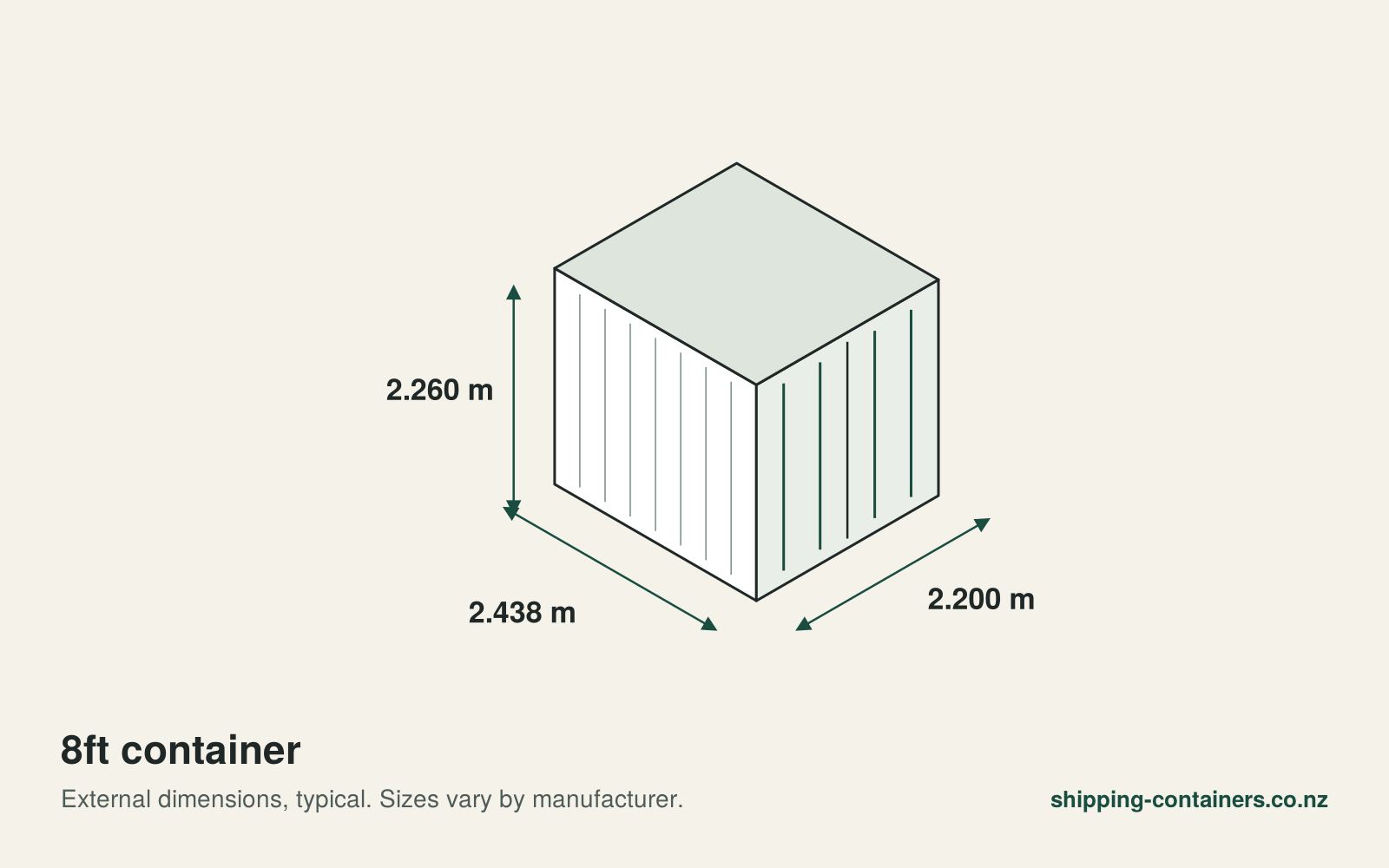
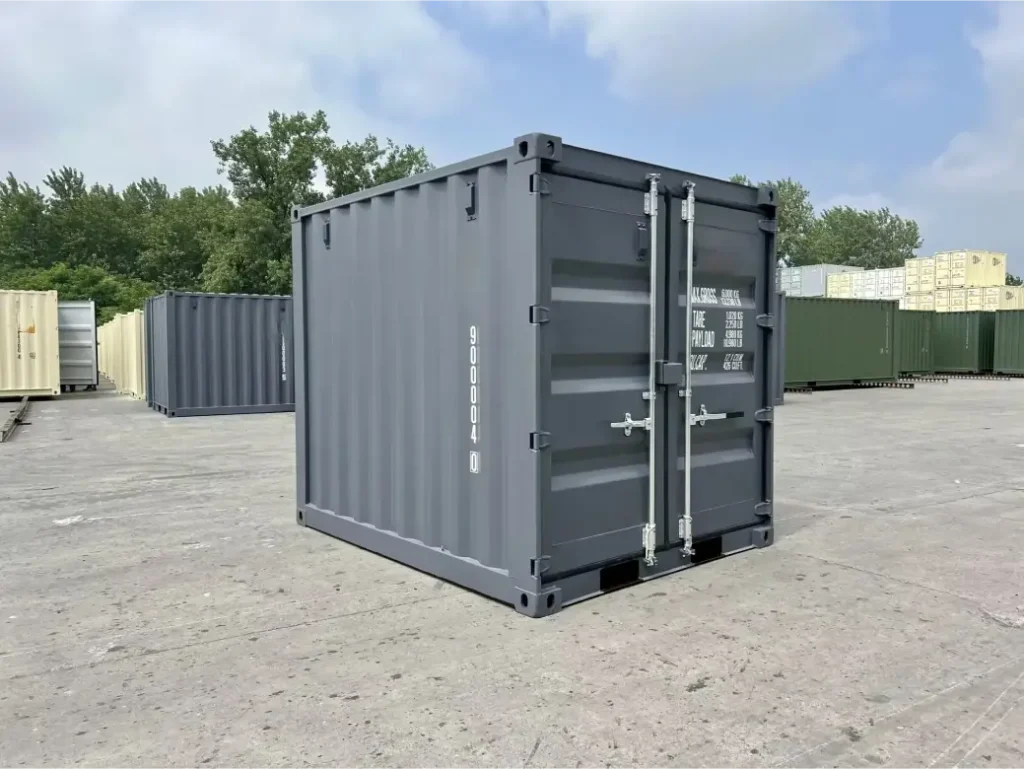
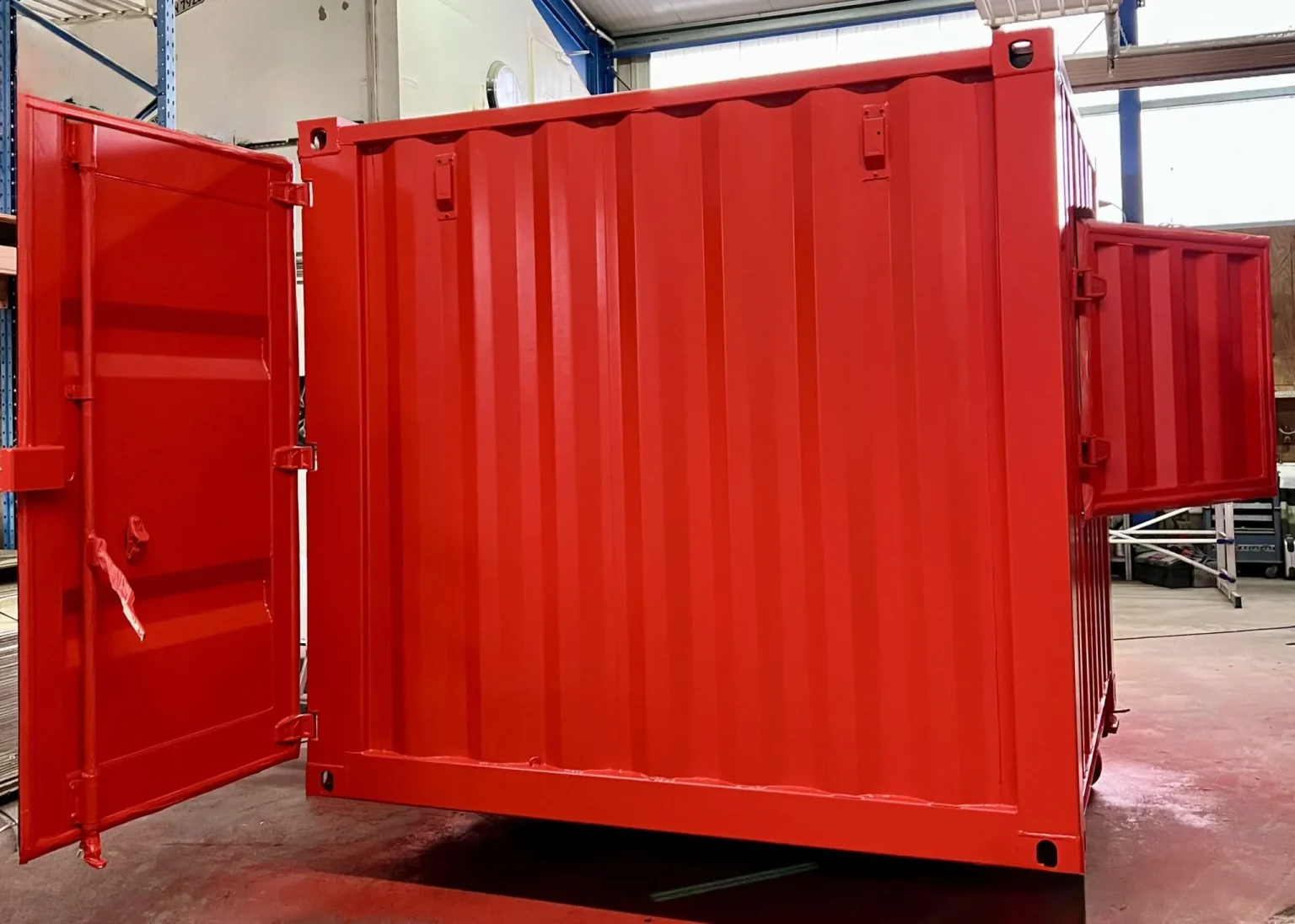
- New-build mini containers are made in a factory as small storage units. They are usually narrower and lower than a standard container, at about 2.2 metres wide and 2.26 metres high outside, with a smaller set of cargo doors.
- Cut-down containers start as a 20ft. The supplier cuts off the door end at about 2.4 metres and welds in a new end wall. You keep the full 2.44 metre width, the 2.59 metre height and the original full-size doors.
Both are sold as new or one-trip in New Zealand. Ask the supplier which build you are being quoted, because a photo of the doors alone does not always show it. If you need a bigger door or more floor, compare 10ft shipping containers, which cost about the same.
| Specification | New-build 8ft mini | 8ft cut-down from a 20ft |
|---|---|---|
| External length x width x height | 2.44 x 2.20 x 2.26 | 2.44 x 2.44 x 2.59 |
| Internal length x width x height | about 2.28 x 2.11 x 2.06 | about 2.28 x 2.35 x 2.39 |
| Door opening, width x height | about 1.95 x 2.00 (varies) | about 2.34 x 2.28 |
| Internal floor area | about 4.8 m² | about 5.4 m² |
| Internal volume | about 9.9 m³ | about 12.8 m³ |
| Empty (tare) weight | about 0.9 to 1.1 tonnes | about 1 to 1.3 tonnes |
| External footprint | about 5.4 m² | about 5.9 m² |
Typical uses
Where an 8ft container earns its place
Garden, tool and bike storage on small sections
On a townhouse or infill section, an 8ft container replaces a garden shed with something a burglar cannot cut through with a craft knife. It holds a lawnmower, bikes, garden tools, camping gear and a few storage boxes. Fit a lockbox over the padlock and add shelving on one wall. For a whole household during a renovation you will need a 20ft; see our home storage guide.
Schools, sports clubs and community groups
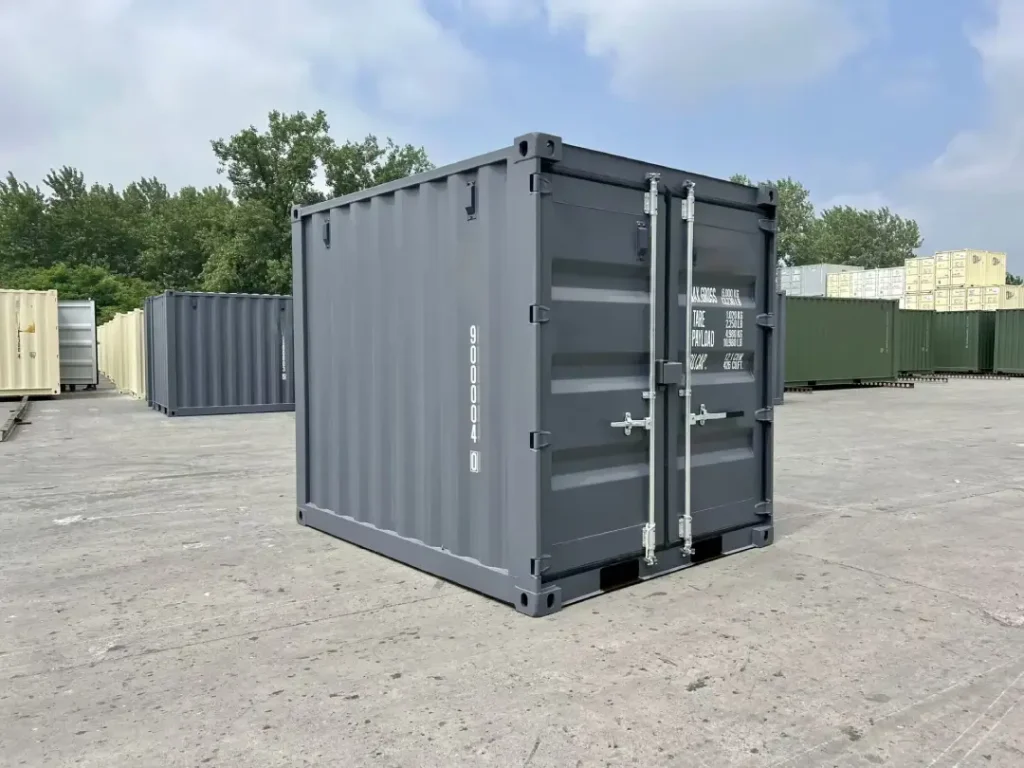
Clubs use 8ft units beside fields and courts for balls, nets, line markers and barbecue gear, where a larger truck cannot get in and a building consent for a shed would take months. A painted unit with a sign blends in better than a stack of cages. Our page on containers for schools and clubs covers fundraising, colour choice and approvals.
Trade and site lockups
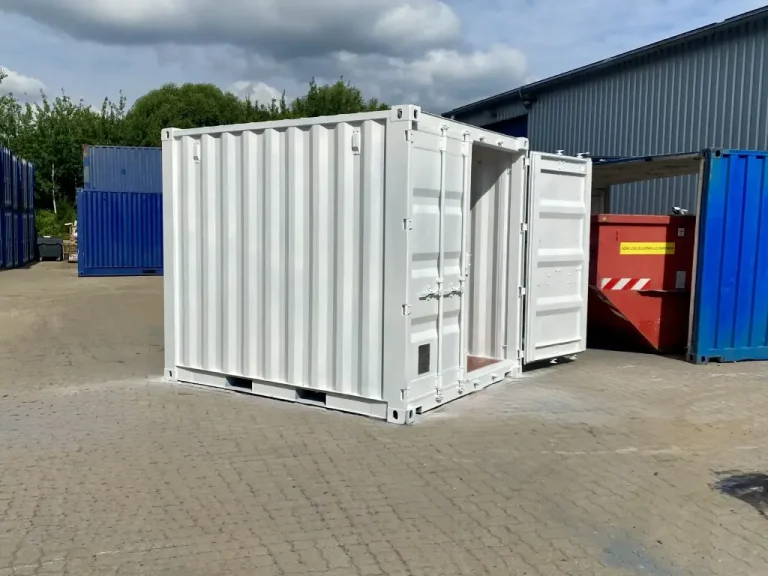
On small renovation jobs and in workshop yards, an 8ft holds power tools, compressors and fixings overnight. Because it is light, a HIAB truck can move it from job to job quickly. If you need it for months rather than years, hire may cost less than buying, so ask suppliers for both prices in the same quote request.
8ft container prices in NZ
Only a few 8ft units carry published prices in New Zealand. The Shipping-Containers.co.nz NZ price index for October 2026 recorded three new or one-trip 8ft units at $4,250 to $4,700 incl. GST, which is $3,696 to $4,087 excl. GST. Delivery was not included in any of them. That puts an 8ft at about the same price as a new 20ft, whose median was $4,830 incl. GST. Cutting down a 20ft and welding in a new end wall takes labour, and new-build minis are made in small runs, so the small size does not bring a small price.
Trade Me also carried a few 6ft and 7ft mini containers at $2,000 to $3,350 (condition not stated, so they are not part of the index). Hire is available from some suppliers: one national hire company published $2.45 a day excl. GST for an 8ft with a 12-month minimum, about $74 a month. Full ranges for every size are on the NZ shipping container price index.
Buying checklist
What to check on an 8ft before you pay
Weld quality on the new end
On a cut-down, look at the welded seam where the new end wall meets the roof, floor and sides. It should be continuous, ground smooth and painted over. A gappy or unpainted weld is where rust and leaks start, especially within 500 metres of the coast.
Door seals and handles
Close the doors from the inside in daylight and look for light around the rubber seals. The locking bars should turn without a hammer. On new-build minis the doors are smaller and lighter, so check the hinges are welded rather than bolted on.
Floor and roof
Most containers have marine plywood floors on steel cross members. Check the floor is flat and dry and that the roof has no dents that hold water. Water that ponds on a roof eats through the paint, and condensation under a cold roof drips onto whatever you store.
Ventilation
A small box with no vents sweats in a damp New Zealand winter. Ask whether the unit has factory vents, and consider adding one or two more plus a moisture absorber. Our guide to container condensation explains why steel containers get wet inside.
Delivery and placement
Getting an 8ft onto your section
Delivery is usually by HIAB
At around one tonne empty, an 8ft is light enough for a small HIAB crane truck to lift over a fence, past a hedge or onto a raised pad. The truck still needs a firm place to park with its outriggers out, roughly 3.5 to 4 metres of access width and no overhead power lines above the lift. Tell suppliers about slopes, soft lawns and the distance from the kerb to the spot. Our HIAB vs swinglift guide explains the options.
Placement and consent
Set the container level on four pads or sleepers under the corners, with a slight fall towards the doors so rain runs off. Council guidance from Invercargill City Council treats placing a container for storage as not building work. An 8ft is also well under the 10 m² limit for exempt small detached buildings, which since 23 October 2025 has no boundary setback condition according to building.govt.nz. District plan rules on yards and screening still apply, so read our container consent guide.
Ask for 8ft quotes for your address
Tell us whether you prefer a new-build mini or a cut-down, the colour if it matters, and how the truck gets to the spot. Suppliers who service your area quote you directly.
Get a free quoteFAQ
8ft containers: common questions
A new-build 8ft mini is typically 2.44 metres long, 2.20 metres wide and 2.26 metres high outside, with about 4.8 m² of floor inside. An 8ft cut down from a 20ft is 2.44 by 2.44 by 2.59 metres outside and keeps the standard 2.34 by 2.28 metre door opening. See our dimensions page for every size side by side.
In October 2026 the three new or one-trip 8ft units in our price index were listed at $4,250 to $4,700 incl. GST, without delivery. That is close to the price of a new 20ft. Smaller 6ft and 7ft minis appeared on Trade Me from about $2,000 to $3,350, with condition not stated. Delivery is quoted separately and depends on distance and access.
Roughly one tonne empty. A new-build mini is usually about 0.9 to 1.1 tonnes, and a cut-down from a 20ft a little more because it keeps the heavier original doors and frame. Ask the supplier for the tare weight of the actual unit if you plan to lift it with your own equipment or place it on a deck or retaining wall.
The container itself needs about 2.5 by 2.5 metres plus room to open the doors. The harder part is the truck. A HIAB needs to park close enough to reach the spot, with its stabiliser legs out on firm ground and clear air above the lift. Measure your driveway width, check for overhead lines and send photos with your quote request.
A 10ft gives about 25% to 40% more floor space than an 8ft, depending on the build, plus a full-size door, and new 10ft units had a median of $4,995 incl. GST in October 2026, compared with $4,250 to $4,700 for an 8ft. If the space on your section allows a 10ft, it usually gives more storage per dollar. Choose an 8ft when the footprint or access genuinely rules out anything larger.