



Shipping Container Modifications in NZ
Many containers get at least one change before they go to work: a roller door, a window, extra vents, insulation, power or shelving. This page explains each modification, when it brings in building consent and how to request modification quotes you can compare line by line.
Backed by the team behind Shipping-Containers.com.au



Doors and openings
Doors, windows and openings
Access
Roller doors
A roller door in the side or end wall turns a container into a garage, workshop or store that opens with one hand. On a 20ft container it often goes in the side, giving wide access without the swing space the cargo doors need. The opening is cut, then framed with steel so the wall keeps its strength, and the door is fitted with weather seals and a lock.
Same-seller listings in October 2026 show the effect on price: one Auckland seller listed a one-trip 20ft at $4,490 incl. GST and a one-trip 20ft with a roller door at $7,800 incl. GST.
Everyday entry
Personnel doors
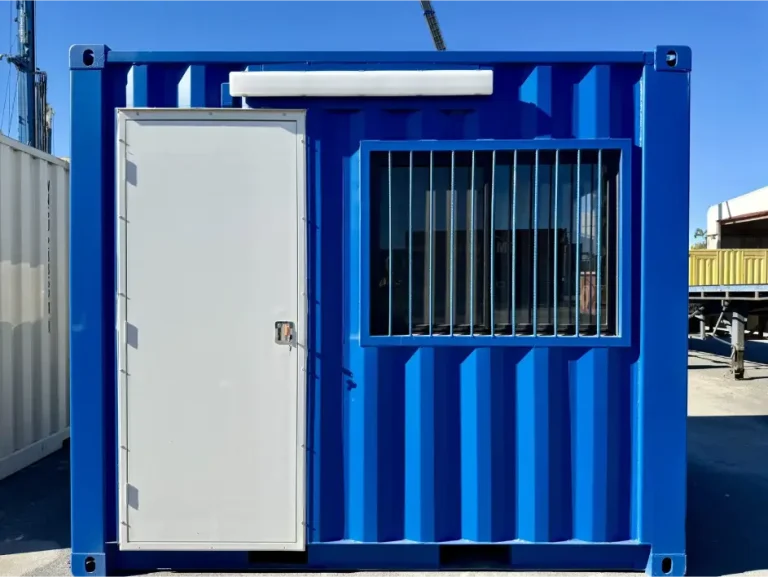
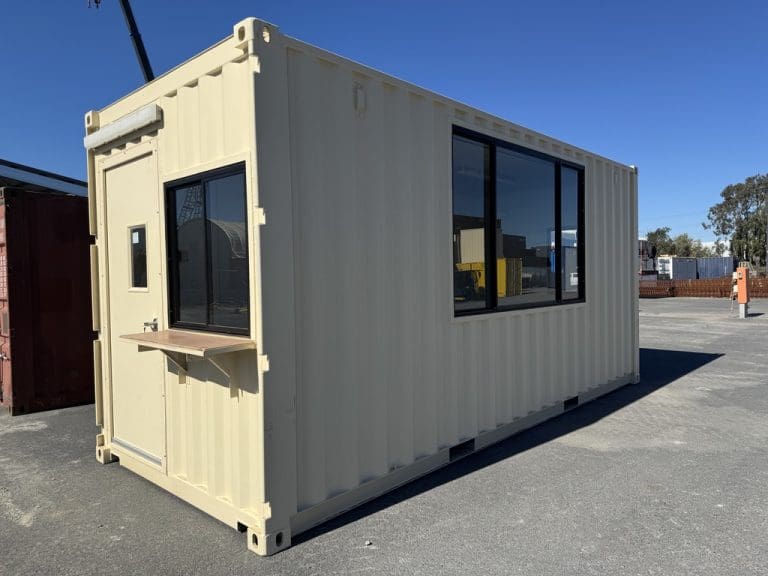
A personnel door is a standard hinged steel door with a lockset, cut into a side or end wall, so you no longer open the heavy cargo doors for everyday access. Site offices, lunch rooms and workshops almost always have one. Choose an outward-opening door with a proper frame and a drip flashing over the top, and fit a door stay or closer if the container sits in a windy spot.
Light
Windows and ranch sliders
Windows bring light and air to offices, sleepouts and studios. Aluminium joinery is fitted into a steel frame welded into the opening, with flashings to keep water out. Ranch sliders give a glazed doorway for a home office or cabin, and steel shutters can be added where security matters. On one Auckland seller’s listings, a new 20ft with a side door and window cost $3,800 more than the plain unit, and one with a window and ranch slider $6,900 more, both incl. GST.
When modifications need building consent
Placing an unmodified container on the ground for storage is generally not building work, so it needs no building consent. That changes as you modify it. Council guidance in several districts treats these as triggers for building consent, unless an exemption applies:
- fixing the container to a formed foundation or slab with hold-down fixings
- adding a roof or other structure to it
- connecting services such as power, water or drainage
- internal fit-out for people to use
- using it as anything other than storage, such as a sleepout, office, workshop or home
Whangārei District Council’s guidance, for example, says consent is needed for using containers as anything other than storage and treats foundation work as building work. Cutting openings matters too: each door or window removes part of a corrugated wall that carries load. For habitable conversions, Ruapehu District Council’s guide to converting a container into habitable space requires openings to be designed by a structural engineer or registered architect. In MBIE determination 2023/005, a container with its floor removed, walls cut and a green roof added was found to be a building, and the question became whether an exemption applied.
Some small buildings are exempt under Schedule 1 of the Building Act. Since the 2025 exemption order took effect on 23 October 2025, buildings up to 10 m² have no boundary setback condition and buildings of 10 to 30 m² need a 1 m setback, with limits on sanitary facilities and sleeping. A 10ft container sits under 10 m², while 20ft and 40ft containers fall in the 10 to 30 m² band, where the exemption routes need a licensed building practitioner or an engineer-reviewed design. MBIE’s summary of the changes and our building consent guide cover the details.
Fit-out
Vents, insulation, power and finishes
Air flow
Vents, whirlybirds and extractor fans
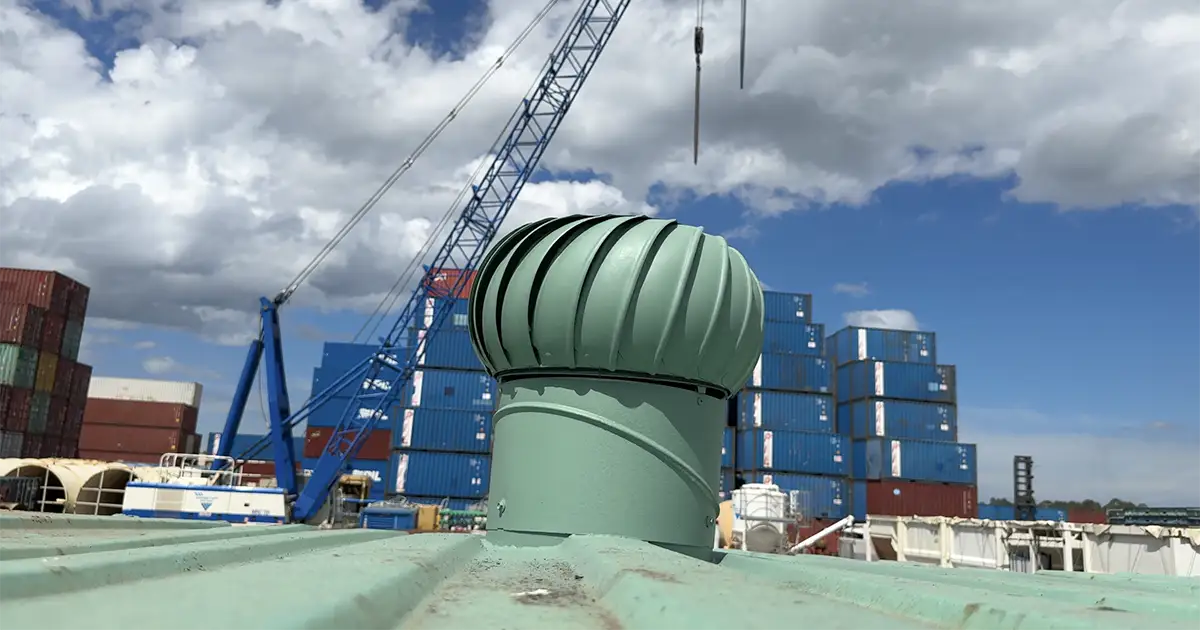
The small factory vents on a standard container do little in a humid climate. Extra louvred vents, a whirlybird on the roof or an extractor fan move moist air out and reduce condensation, which matters most in Northland, Auckland and the Bay of Plenty. Each one is cut through the wall or roof and sealed against rain. A heavy-duty steel vent listed on Trade Me at $390 incl. GST in October 2026. Our condensation guide covers ventilation and other fixes.
Comfort
Insulation and lining
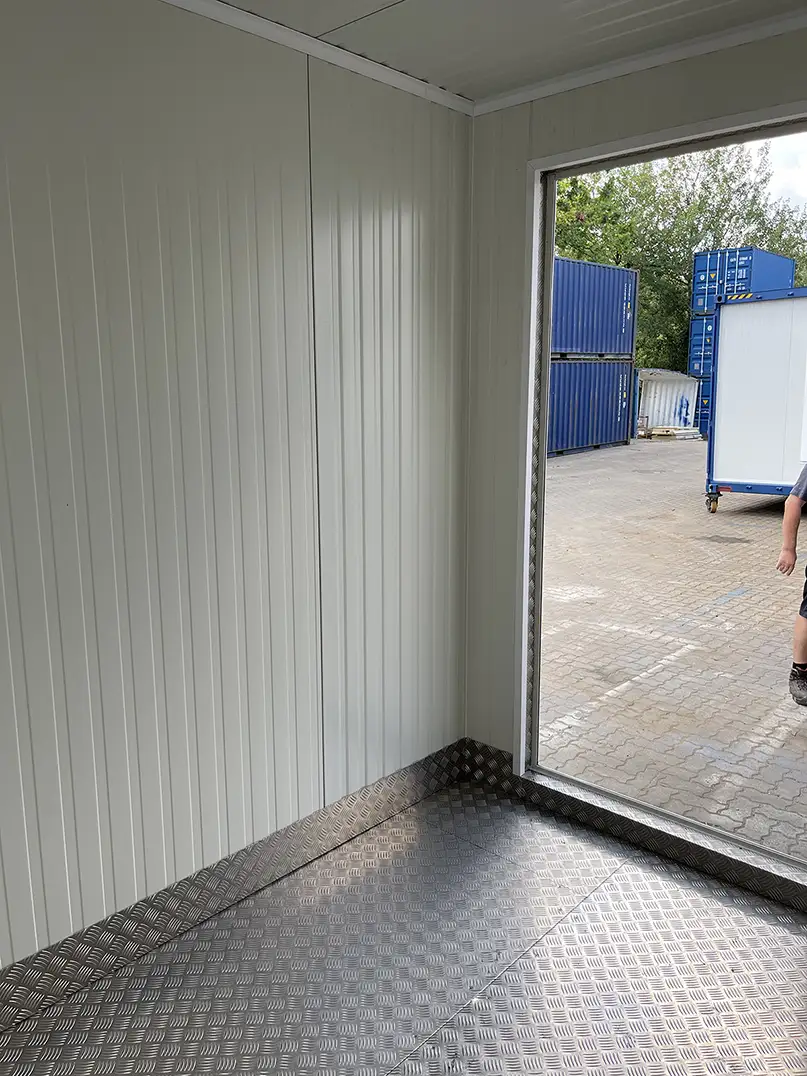
Insulation does more than anything else for comfort in offices, studios and sleepouts, and it reduces condensation. Common methods are closed-cell spray foam, rigid panels and batts behind a timber or steel frame, finished with plywood or prelined panels. Every method uses internal width and height, which is one reason high cube containers are popular for fit-outs. One NZ conversion guide puts insulation at $2,000 to $5,000, GST basis not stated. Compare methods in our container insulation guide.
Services
Power and lighting
A typical fit-out includes a weatherproof power inlet or a hard-wired supply, a small distribution board, LED lighting and several socket outlets. Fixed wiring and the connection to supply should be done by a licensed electrician, who issues an Electrical Safety Certificate when the work is finished. On off-grid sites a solar kit with a battery can run lighting and small tools. The same conversion guide quotes $3,000 to $6,000 for electrical work, GST basis not stated.

Finishes
Shelving, painting and coastal protection
Steel shelving and workbenches made for container walls fix to the floor or wall structure. In October 2026 a single-sided shelving kit for a 20ft container listed at $939.95 incl. GST and a 20ft workbench at $749.95 incl. GST. A repaint in a lighter colour keeps the box cooler and can help on sites with visual rules. Near the coast, ask for a marine-grade paint system and read our coastal corrosion guide.
Common builds
Typical modification packages
Site office
A personnel door, one or two windows with security screens, insulation and lining, LED lighting, power outlets and a heater or heat pump. Usually built on a 20ft container so it can move between jobs on a standard truck. See site office containers for layouts and hire options.
Workshop or garage
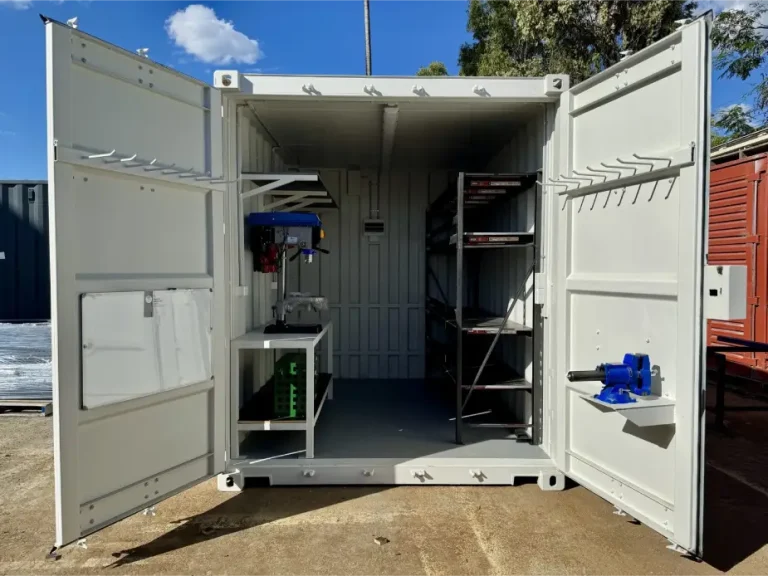
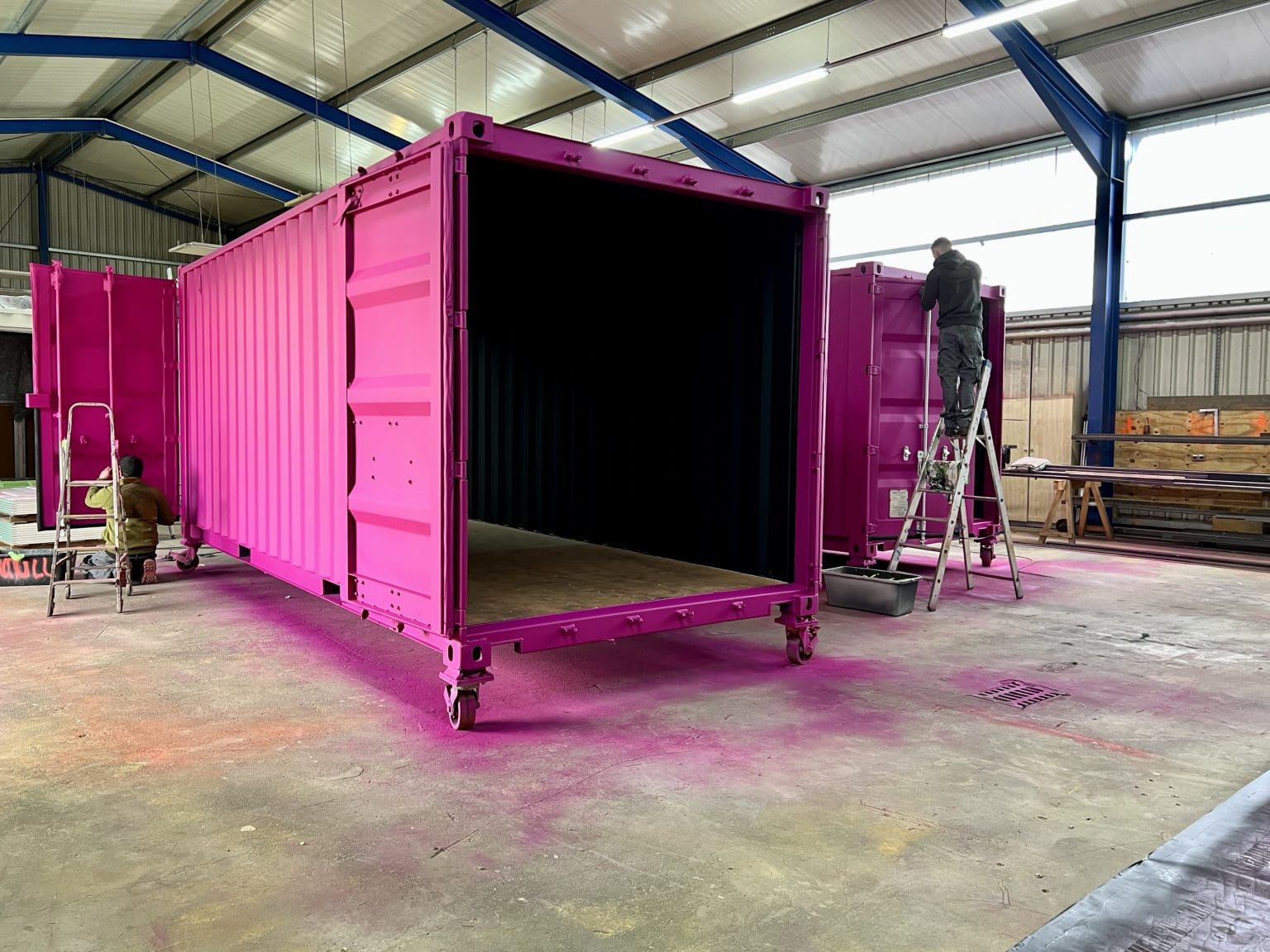
A roller door in the side, extra vents, lighting, power outlets, a workbench and wall shelving. A 40ft high cube leaves room for a vehicle and a bench along one wall. For a wider space, two containers can be joined; see our guide to joining two containers without welding.
Storage upgrade
A lockbox, extra vents, shelving and moisture absorbers for household, farm or business storage. Most of these are bolt-on items or small cuts rather than structural changes, so they rarely affect consent. Our container accessories page compares the options and published prices.
Container pool
The most demanding conversion: reinforced walls where the water pushes outwards, a waterproof liner, plumbing, filtration and pool fencing. Expect engineering design and building consent, and plan the site and foundations first. Our container pool page explains what is involved before you buy a container for the job.
Request modification quotes
Send the container size, the changes you want and where each goes, plus the delivery address. Suppliers who service your area quote you directly, so you can compare their prices line by line.
Get a free quote| Modification | Published price | GST basis | Source |
|---|---|---|---|
| Roller door on a one-trip 20ft (difference between same-seller listings) | +$3,310 | Incl. GST | Trade Me listings, Auckland |
| Side door and window on a new 20ft | +$3,800 | Incl. GST | Trade Me listings, Auckland |
| Window and ranch slider on a new 20ft | +$6,900 | Incl. GST | Trade Me listings, Auckland |
| Replacement container door set (pair) | $559 | Excl. GST | Supplier clearance list, August 2026 |
| Heavy-duty steel vent | $390 | Incl. GST | Trade Me listing |
| 20ft shelving, single or double-sided | $939.95 to $1,879.90 | Incl. GST | Trade Me listings |
| Insulation | $2,000 to $5,000 | Not stated | NZ retailer conversion guide, January 2026 |
| Electrical work | $3,000 to $6,000 | Not stated | NZ retailer conversion guide, January 2026 |
| Ready-made 20ft office or lunch room | $5,500 to $7,000 | Excl. GST | Supplier clearance list, August 2026 |
How modification quotes work
A modification quote has three parts: the base container, the modifications and the delivery. Suppliers price each part differently, so a clear request gets you quotes you can compare. Through our quote form your request goes to suppliers who service your area, and they quote you directly.
- Choose the base container: size, standard or high cube, new or used. High cube gives about 30 cm more height, which helps once you insulate and line.
- List each modification with its position. A simple sketch showing which wall, the distance from the corner and the size of each door or window saves a round of questions.
- Specify finishes: insulation type, lining, number of outlets and lights, paint colour.
- Say what the container will be used for. A store, a site office and a sleepout have different requirements, and the supplier needs to know if you will apply for building consent.
- Give the delivery address and access details, including slope, soft ground, overhead lines and narrow gates.
When quotes arrive, check that each one states the container grade, what every modification includes, the fabrication lead time, whether delivery is included and whether prices are incl. or excl. GST. Ask which documents you will receive, such as the Electrical Safety Certificate and any engineering drawings for consent. For a finished home build, our container homes guide covers the full process.
FAQ
Modification questions
Council guidance generally links consent to how a container is used, fixed and serviced rather than to a single opening. A window in a storage container on the ground may not trigger consent by itself, but the opening still needs a steel frame and flashings. Once the container becomes an office, sleepout or workshop, sits on foundations or is connected to services, consent is generally needed unless an exemption applies. Ask your council before the work starts.
One Auckland seller’s October 2026 listings put a one-trip 20ft with a roller door $3,310 above the same plain container, both incl. GST. A NZ retailer’s guide quotes $2,000 to $6,000 for professional roller door installation and DIY door kits from $600, GST basis not stated. The door size, side or end placement and whether framing is included all change the price.
Bolt-on items such as shelving, ramps and moisture absorbers are easy DIY jobs. Cutting openings is harder: the cut weakens the wall, so it needs a welded steel frame and proper flashings to stay strong and dry. Fixed wiring and connection to supply should be done by a licensed electrician. If the container will be used by people, check consent before you start cutting.
For anything people will work or sleep in, usually yes. A high cube is about 30 cm taller, so it keeps more headroom after insulation, lining and a floor overlay. For simple storage upgrades such as vents, shelving or a roller door, a standard height container works fine and costs less. Compare current prices for both in the NZ price index.
It depends on the supplier’s workload, the number of changes and whether parts such as windows or roller doors must be ordered in. Simple changes on a container already in the yard can be quick, while a full office fit-out takes longer. Ask each supplier for the fabrication lead time in writing, and allow extra time if you need building consent first.