



20ft High Cube Containers for Sale in NZ
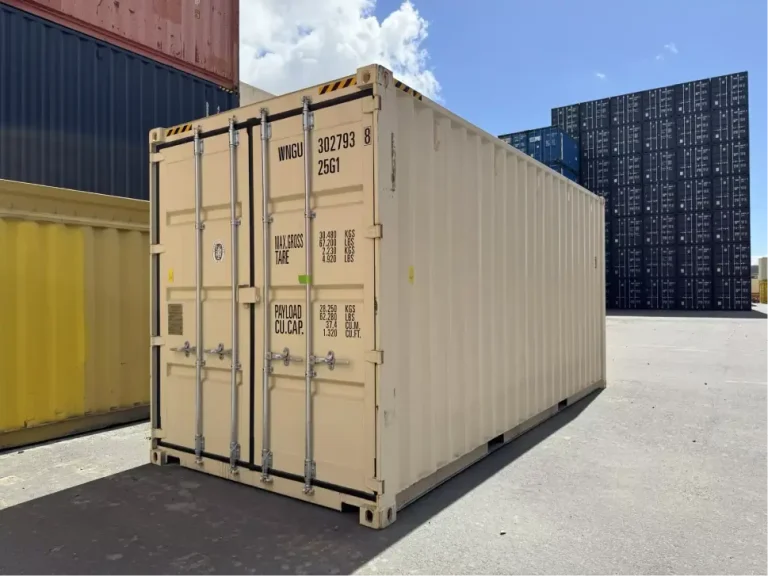
A 20ft high cube has the same 6 metre footprint as a standard 20ft but 2.70 metres of internal height and a taller door. It is the usual starting point for sleepouts, home offices, studios and workshops on residential sections. Compare specifications, NZ prices and what a fit-out involves.
Backed by the team behind Shipping-Containers.com.au



| Specification | Value |
|---|---|
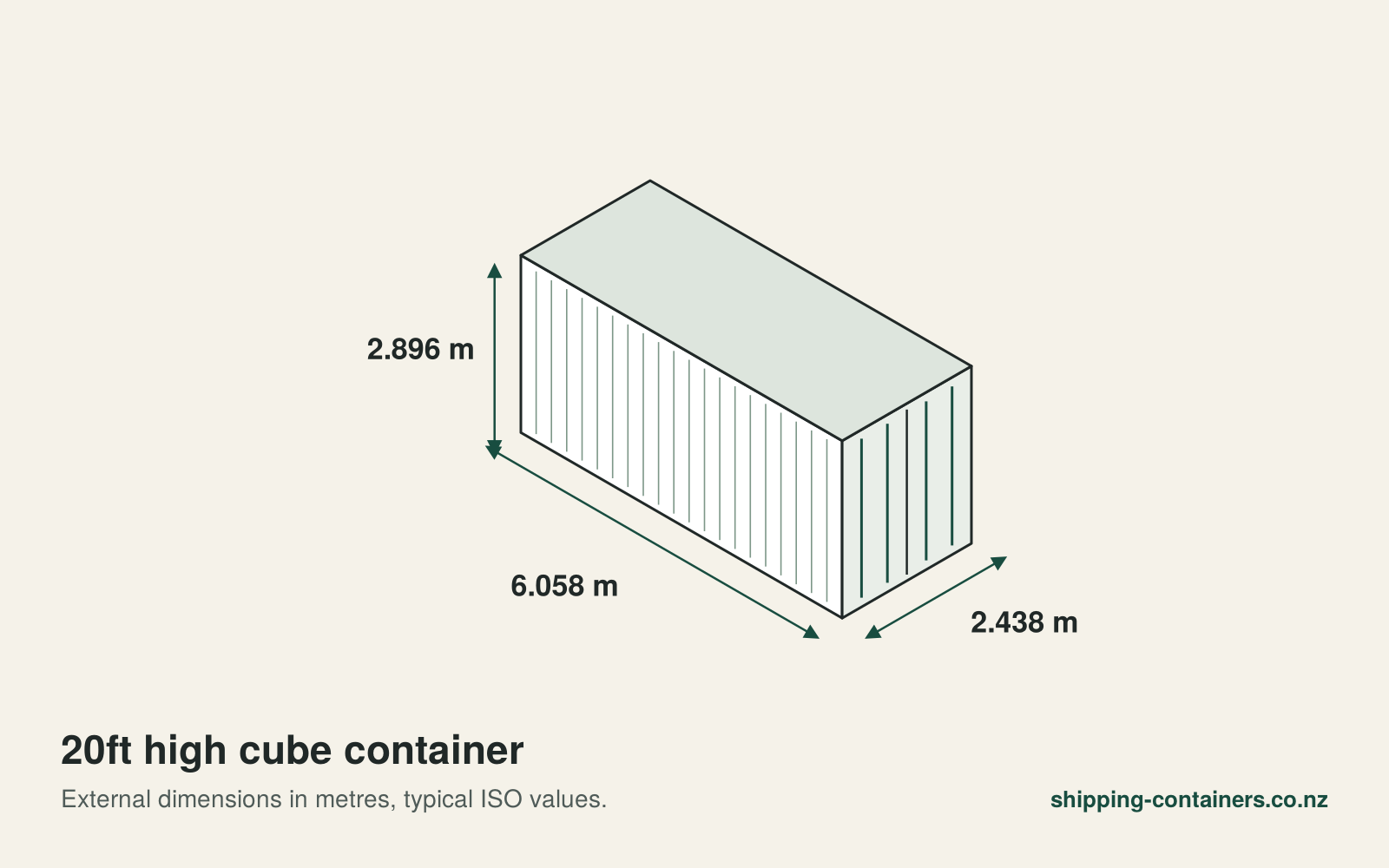
| External length x width x height | 6.058 x 2.438 x 2.896 m |
| Internal length x width x height | 5.898 x 2.352 x 2.698 m |
| Door opening, width x height | 2.340 x 2.585 m |
| Internal floor area | 13.9 m² |
| Internal volume | 37.4 m³ |
| Empty (tare) weight | about 2,350 to 2,500 kg |
| Maximum gross weight | usually 30,480 kg |
| ISO size and type code | 25G1 |
What the extra height gives you
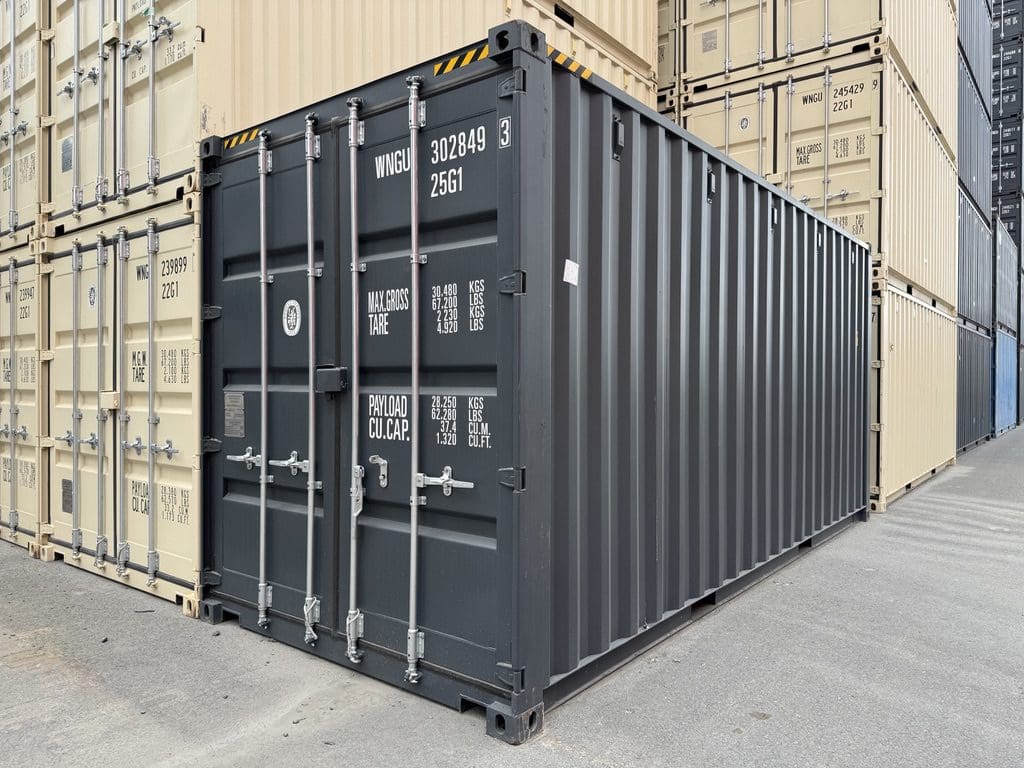
Compared with a standard 20ft container, the high cube adds 305 mm to the outside height, the inside height and the door opening. Volume rises from 33.2 to about 37.4 m³, roughly 13% more, while the floor stays at 13.9 m². The extra steel adds only about 150 to 200 kg of weight, so the same trucks can deliver it.
For storage of boxes and furniture, that extra height rarely changes much. It matters once you line the walls, insulate the ceiling or fit racking. After 100 mm of ceiling insulation and a new floor, a standard 20ft leaves roughly 2.2 metres of headroom and a high cube about 2.5 metres. That difference decides whether a sleepout or office feels like a room or a box. Our standard vs high cube guide covers the trade-off in detail, and the high cube overview compares the 20ft and 40ft versions.
Typical uses
What a 20ft high cube is used for in NZ
Sleepouts and studios
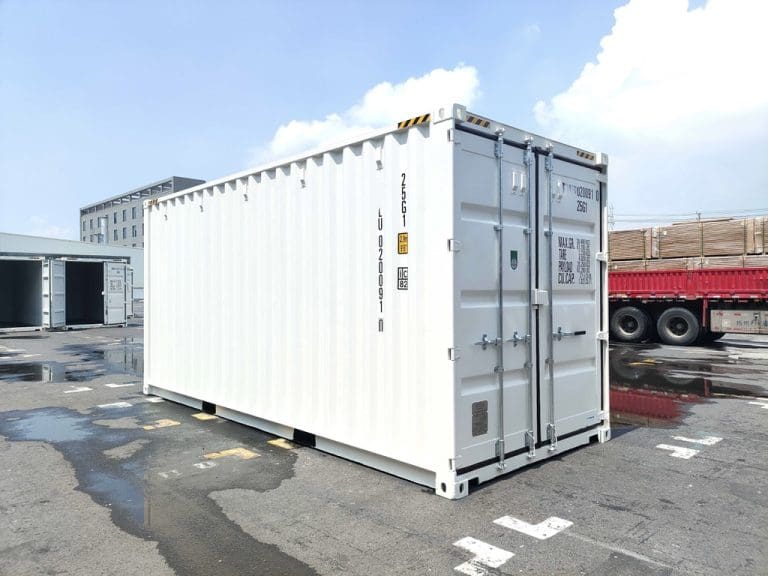
A 20ft high cube gives about 13.9 m² inside, enough for a bed, a desk and storage. A sleepout used in connection with a house can fall under Schedule 1 building consent exemptions for buildings of 10 to 30 m² if it has no cooking or sanitary facilities, sits at least 1 metre from boundaries and meets the other conditions listed by building.govt.nz. Whether a converted steel container qualifies under the lightweight building route is doubtful, so most owners use the licensed building practitioner or engineered design routes, or apply for consent. Read our container sleepout guide first.
Home offices and small business space
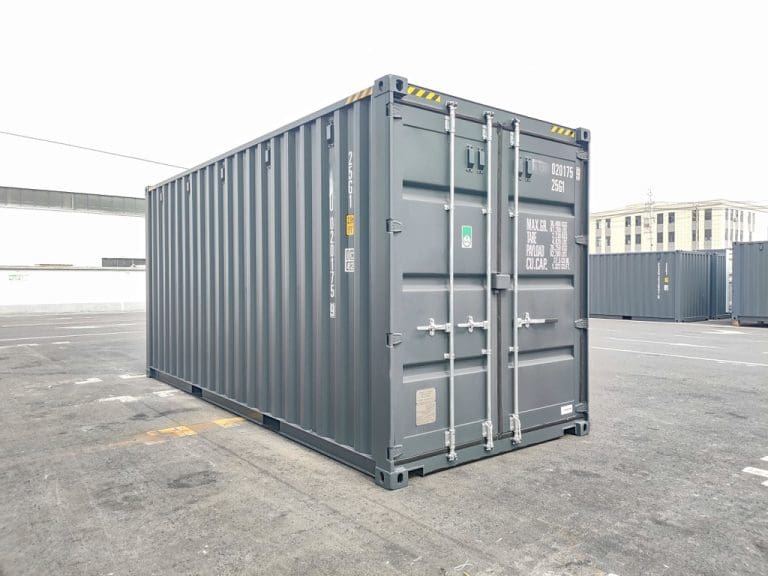
Lined, insulated and wired, a 20ft high cube makes a quiet office, consulting room or studio at the bottom of the section. The 2.585 metre door opening can be replaced with glazed doors, and a side window and a personnel door turn it into a usable workspace. Electrical work must be done by a licensed electrician, and any opening cut in the walls needs proper framing.
Workshops, home gyms and racked storage
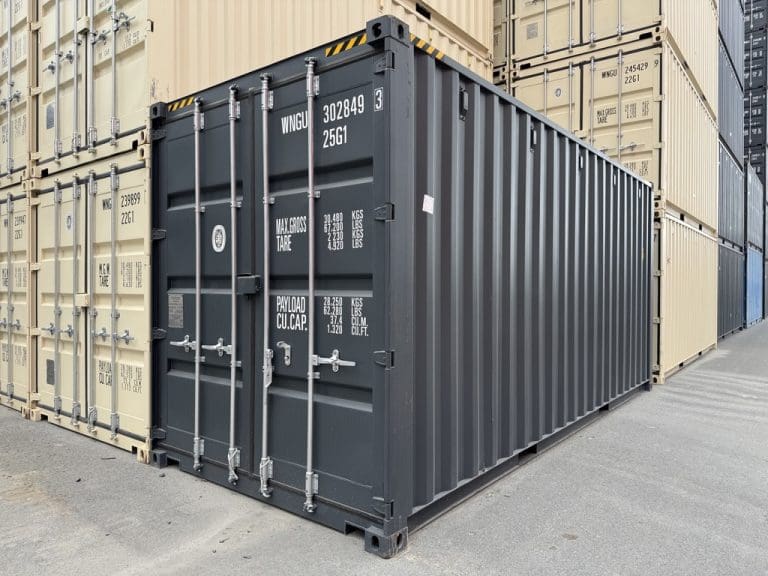
With 2.70 metres inside, you can fit a three-level shelving unit with room above, hang lights, swing a barbell or stand timber on end. A roller door in the side gives easy access without opening the cargo doors. For tool storage on building sites, see our page on site storage and workshop containers.
20ft high cube prices in NZ
The Shipping-Containers.co.nz NZ price index for October 2026 recorded 13 new or one-trip 20ft high cube listings with a median asking price of $5,395 incl. GST ($4,691 excl. GST). The middle half sat between $4,999 and $5,848 incl. GST, and the full range ran from $4,850 to $7,800 incl. GST. The lowest prices were in Auckland, Christchurch and Timaru, at about $4,850 to $4,999 incl. GST, and the highest in Northland and Cromwell. That puts a new 20ft high cube about $550 to $600 above a new standard 20ft. Used 20ft high cubes are uncommon: the only one in the index was a C grade unit at $3,278 incl. GST.
Modified 20ft high cubes cost considerably more. Open-side 20ft high cubes, with doors along the full length, were listed at $10,000 to $13,795 incl. GST. A NZ supplier’s June 2017 guide listed a new 20ft high cube at $4,100 to $4,300 excl. GST, so today’s median of $4,691 excl. GST is about 9 to 14% higher. None of these prices includes delivery. The method and data are on the NZ price index.
Planning a fit-out
What to plan before you convert a 20ft high cube
Insulation and energy rules
A habitable building must meet clause H1 of the Building Code. In a container that means insulating the walls, roof and floor while keeping as much width and height as possible. Our guide to container insulation in NZ compares panels, spray foam and batts.
Condensation control
Steel cools quickly at night, and moisture condenses on the inside of the roof. In a lived-in container that leads to mould. Continuous insulation with a vapour control layer, extract fans and heating are the usual answer. See our guide to container condensation.
Openings need design
Cutting a window or door into the corrugated wall removes part of the structure. Ruapehu District Council guidance on converting containers to habitable space says openings need to be designed by a structural engineer or registered architect, with steel framing around them.
The original floor
Container floors are usually marine plywood treated against insects for international shipping. For a sleepout or office, ask the supplier about the floor treatment, and plan to seal it or lay a new floor over it as your designer or engineer advises. A one-trip unit gives a cleaner starting point.
Delivery and placement
Getting a 20ft high cube onto your site
Delivery
A HIAB, swinglift or tilt tray can all deliver a 20ft high cube. On a truck deck it sits about 30 cm higher than a standard container, so check trees, carports, eaves and power lines along the route and over the placement spot. Allow at least 3.5 to 4 metres of access width and firm ground. Our delivery guide has a full checklist.
Foundations for storage and for living
For storage, four level pads or sleepers under the corner castings are enough. A container people live in is different: Ruapehu District Council requires permanent, earthquake-resistant foundations, typically six to eight piles in 900 mm deep concrete-filled holes with the container fastened down. Check the requirements for your consent with your council before you order.
Compare 20ft high cube quotes
Tell us whether you want a plain unit or one with doors and windows already fitted, the colour, and how a truck reaches your section. Suppliers who service your area reply directly.
Get a free quoteFAQ
20ft high cube containers: common questions
20HC means a 20ft high cube, also written 20ft highcube. It has the same 6.058 metre length as a standard 20ft but is 2.896 metres high outside. A 20hc container for sale is less common than a 40ft high cube in NZ, so allow more time for supply.
About 2.70 metres (2,698 mm) from floor to ceiling, against about 2.39 metres in a standard 20ft. The door opening is about 2.585 metres high and 2.34 metres wide. External height is 2.896 metres. Manufacturers vary by a few millimetres, so check the supplier’s specification if you are fitting something that only just clears.
In October 2026, new and one-trip 20ft high cubes had a median asking price of $5,395 incl. GST, with most between $4,999 and $5,848 incl. GST. Prices ran from $4,850 in Christchurch to $7,800 in Northland. Delivery is extra. Open-side 20ft high cubes cost $10,000 to $13,795 incl. GST.
About 2,350 to 2,500 kg empty, roughly 150 to 200 kg more than a standard 20ft. The exact tare weight is on the CSC plate and printed on the doors. A fitted-out sleepout weighs considerably more once lining, insulation, windows and furniture are added, which matters for the foundation design and for any future move.
Only with the right approvals. A container used as a dwelling needs building consent, design and building work by licensed building practitioners, engineered foundations and compliance with the Building Code, including insulation and ventilation. The granny flat exemption is written around light timber and steel framing, so do not assume a container qualifies. See our tiny home and sleepout planning page.
New 20ft high cubes are listed regularly in Auckland, Waikato, Bay of Plenty, Christchurch, Timaru, Dunedin and Central Otago. Used ones are scarce because most high cubes in shipping fleets are 40ft. If you need one with a particular colour or factory-fitted doors and windows, ask for quotes early and mention your timing.