



Do You Need Consent for a Shipping Container in NZ?

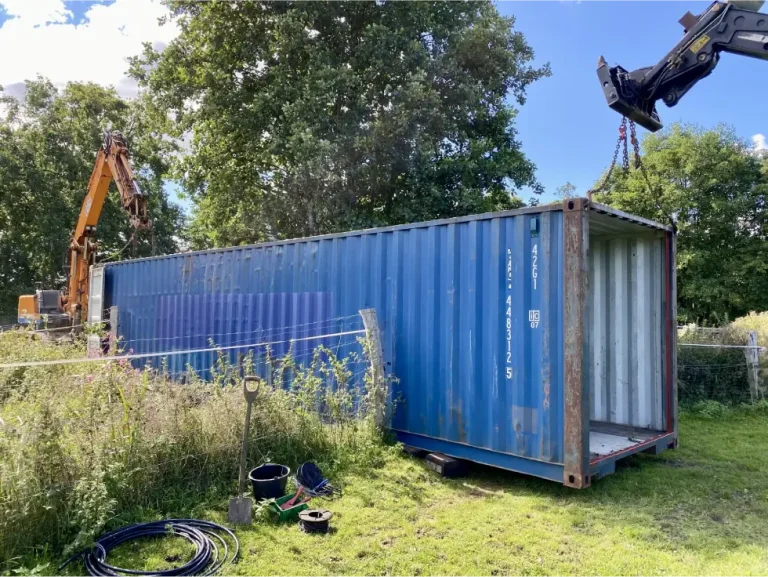
An unmodified shipping container placed on your section or farm for storage does not usually need a building consent. That changes once it sits on formed foundations, is cut and modified, is connected to services or is used by people. District plan rules apply separately, so a container can need no building consent and still breach a setback or a heritage rule. This guide reflects the rules as at October 2026, including the Schedule 1 changes of 23 October 2025. Confirm your site and plans with your council before you buy or modify anything.
Is a shipping container a building?
In law, usually yes. Section 8(1)(a) of the Building Act 2004 defines a building as “a temporary or permanent movable or immovable structure”. In Determination 2014/030 (two 20ft containers on sleepers, Grey District) MBIE said: “It is my view that a container can fit into this definition and so can be a building.”
A consent is needed for building work, not for a building as such. In the same case MBIE found that simply placing the containers was not building work: “I do not consider that foundations are required for a shipping container simply placed.” It noted that “shipping containers are inherently stable even when empty” and reversed the council’s notice to fix.
Placing a container for storage
Invercargill City Council and Grey District Council both state that placing or moving a container on a premises is not building work, and that storage use with no formed foundation or slab needs no building consent. Whangārei District Council requires consent for “using shipping containers as anything other than storage” and treats concrete, piles and footings as building work. For storage, set the container level on sleepers, pads under the corner castings or compacted gravel; see our guide to container foundations. Hazardous substances such as fuel and agrichemicals bring their own storage duties; a dangerous goods container is built for that.
What turns a container into building work
- A formed foundation or slab with hold-down fixings.
- Cutting openings or joining containers. In Determination 2017/067 three joined containers in Whangārei formed a shed that needed consent.
- A roof between or over containers. In Determination 2019/057 (Hurunui) the roof needed consent although placing the containers did not. See container shelters.
- Insulation, linings, plumbing, drainage and gas.
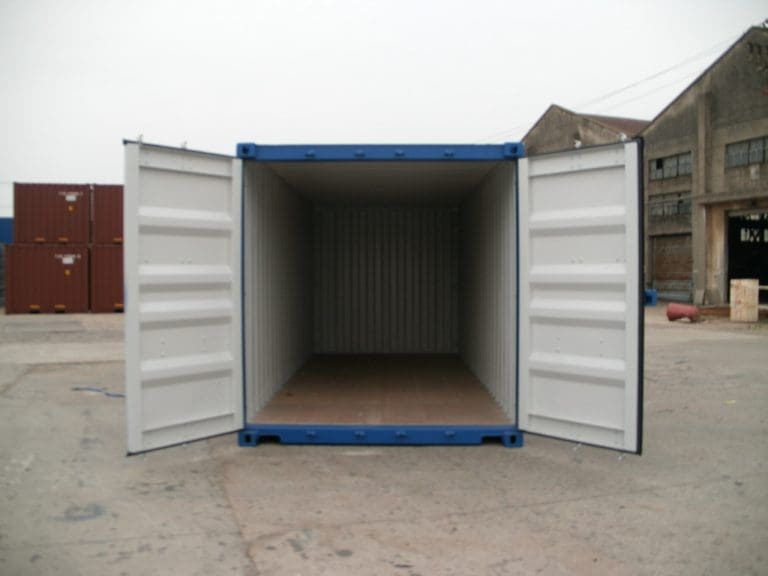
- Occupied use such as a sleepout, office, workshop or shop.
- A dwelling, which is restricted building work for licensed building practitioners (LBPs).
Schedule 1 exemptions after 23 October 2025
Schedule 1 of the Building Act lists work that needs no building consent. The Building (Exempt Roof-mounted Solar Panel Arrays and Building Work) Order 2025 took effect on 23 October 2025. As MBIE explains, it removed the setback for detached buildings under 10 m² and set a 1 metre minimum for 10 to 30 m². Exempt work must still meet the Building Code (section 42A).
| Clause | Floor area | Main conditions | Boundary | Container fit |
|---|---|---|---|---|
| 3 | Up to 10 m² | Single storey, up to 3.5 m high. No sanitary facilities or potable water storage. Sleeping only if used with a dwelling and no cooking. | No condition | A 10ft (about 7.3 m²) or 8ft fits. A 20ft (about 14.8 m²) does not. |
| 3A | Over 10 to 30 m² | Same use limits. Lightweight building products for walls and roof, built to B1/AS1. | 1 m | Questionable for a heavy steel shell. |
| 3B | Over 10 to 30 m² | Same use limits. Designed or built by or under an LBP. | 1 m | More defensible for a modified 20ft or 40ft. |
| 43 | Over 10 to 30 m² | Kitset or prefabricated, design done or reviewed by a chartered professional engineer. | 1 m | Suits engineered supplier designs. |
| 18 | Carport up to 20 m² | Ground level. Used in Determination 2023/005. | District plan | Open structures only. |
A 40ft container is about 29.7 m², just under the limit. The clause 3A point is our reading, not an MBIE ruling, so treat 3B or 43 as the safer route for a modified 20ft container and ask the council early. Clause 4 (buildings people do not normally enter) failed in Determination 2025/018. Councils can also grant a discretionary exemption under clause 2, usually for a fee.
What the determinations add
- 2023/005 (Ōpōtiki): a 20ft container on its side, floor removed, walls cut, green roof, on six concrete-set posts (19.2 m²) was “a permanent immovable structure”. It passed as an exempt carport. Clause 3A failed on the boundary distance then in force (2.8 m), which is now 1 m.
- 2025/018 (Hamilton): five container, frame and tarpaulin canopy structures used by a business needed building consent, and the work contravened section 40. The notice to fix was reversed on technical grounds.
- 2023/025 (Palmerston North): two containers with an arched roof formed one building over 3.5 m high and 30 m², closer to the boundary than its height, so consent was needed.
Resource consent and district plan rules
The district plan applies whether or not a building consent is needed. Rules that often catch containers:
- yards, setbacks and height in relation to boundary
- building coverage and relocatable building rules
- screening or visibility from the road
- heritage, special character, coastal and natural hazard overlays
- limits on numbers and stacking
In 2023 Hamilton City Council found a container dressed as a tiny home on Natural Open Space land was a “relocatable building” needing resource consent, and issued an abatement notice. In Woolston, Christchurch, container storage is permitted in the Industrial General Zone subject to rules on height, setbacks, noise and earthworks (CCC Newsline). Timaru’s draft RELO-R2 rule allows containers outside industrial and port zones as a controlled activity only if more than 20 m from the road or not visible, no more than two per site under 10 ha, and not stacked. Crux reported a $12,000 fine in the Queenstown Lakes district for containers placed without resource consent and converted for visitor accommodation. Rural zones have their own setbacks; see farm storage containers.
| What you plan | Building consent | District plan |
|---|---|---|
| Unmodified container on sleepers, pads or gravel for storage | Not needed | Check setbacks, coverage, overlays |
| Container on a slab or piers with hold-downs | Needed unless exempt | Check |
| 8ft or 10ft garden shed, no services | Clause 3 can apply | Check |
| 20ft or 40ft with cut openings, no services or sleeping | Needed, or clause 3B or 43 at 1 m from boundaries | Check |
| Sleepout, office, workshop or shop | Councils treat occupied use as needing consent | Check, including the activity |
| Container home or granny flat | Needed (restricted building work) | Zone rules or NES-DMRU |
| Roof or canopy over containers | Likely needed | Check |
| Container on a road or footpath | Not a building matter | Road permit |
Temporary placement on a road or footpath
A container on legal road needs a permit from the council or, in Auckland, a Corridor Access Request to Auckland Transport (see our Auckland container rules). Fees are as published by each council at October 2026.
| Council | Apply ahead | Maximum | Published fee | Key conditions |
|---|---|---|---|---|
| Wellington | 2 working days | 14 days | Free outside restricted parking | Wholly on the road, 4 m clear lane, 1 m from hydrants and driveways |
| Porirua | 5 working days | 14 days | $60 plus parking charges | Over 20ft needs a traffic management plan and a CAR |
| Lower Hutt | 2 working days | Not stated | Parking bay hood $10 a day | Footpath clear, 15 m from corners |
| Christchurch | Not stated | By permit | $53 per m² a month, minimum $210 | Traffic management plan, $500,000 public liability, 30 m from corners |
| Invercargill | 5 days | By permit | Not published | Traffic management plan via MyWorksites, neighbour consent |
Before you buy
- Check your zone and overlays on the council’s district plan maps. Older guides differ: Invercargill (2017) asks for the container’s own height from the boundary, Grey District 1 m.
- Fix the use now. For habitable plans read our guides to container sleepouts, the granny flat exemption and container homes.
- Ask for a project information memorandum before any building work.
- Request container and delivery prices through our free quote form, stating the planned use.
Know what you need?
Tell us the size, condition and delivery address. We pass your request to suppliers who service your area and they quote you directly.
Get a free quoteFAQ
Container consent questions
Usually, yes. Placing an unmodified container on your section for storage is not building work, so no building consent is needed. The district plan still applies, so check setbacks, coverage, road visibility and any heritage, character or coastal overlays. Some plans limit the number of containers or ban stacking outside industrial zones. Your council’s planning team can confirm the rules for your address.
Under Schedule 1, an exempt building up to 10 m² has no boundary condition since 23 October 2025, and exempt buildings of 10 to 30 m² must be at least 1 m from boundaries and residential buildings. The district plan sets its own yards, which are often larger on rural land and road frontages. A container simply placed for storage involves no building work, so the plan’s yards are what count.
Yes, if it is consented as a dwelling. That means a building consent for restricted building work, design and construction by licensed building practitioners, and a code compliance certificate. The container must meet the Building Code for structure, moisture, insulation, ventilation, light and fire safety, and the district plan must allow a dwelling there. Living in an unconsented container risks a notice to fix or abatement action.
The same rules apply to hire and purchase. A hired container set on level ground for storage is not building work, and suppliers expect it to stay unfixed so it can be collected. On a road or footpath you need a council or Auckland Transport permit. Long-term placement must still meet district plan rules such as setbacks and visibility from the road.
Andreas Atrott | Shipping container specialist and founder
Andy has worked with shipping containers since 2013. He runs shipping-containers.com.au from Brisbane and Shipping-Containers.co.nz for New Zealand buyers, and spends much of his time inspecting containers, checking grades and sorting out deliveries. His YouTube channel Andy Knows Containers covers buying, inspecting, delivering and converting containers.
Blog
More container guides

Do You Need Consent for a Shipping Container in NZ?
New vs Used Shipping Containers: NZ Buying Guide
HIAB vs Swinglift: Container Delivery Options in NZ
Need a container for your project?
Tell us the size, condition and delivery address. Your request goes to suppliers who service your area.
Get a free quote