



How to Buy a Shipping Container Safely in NZ: Checklist

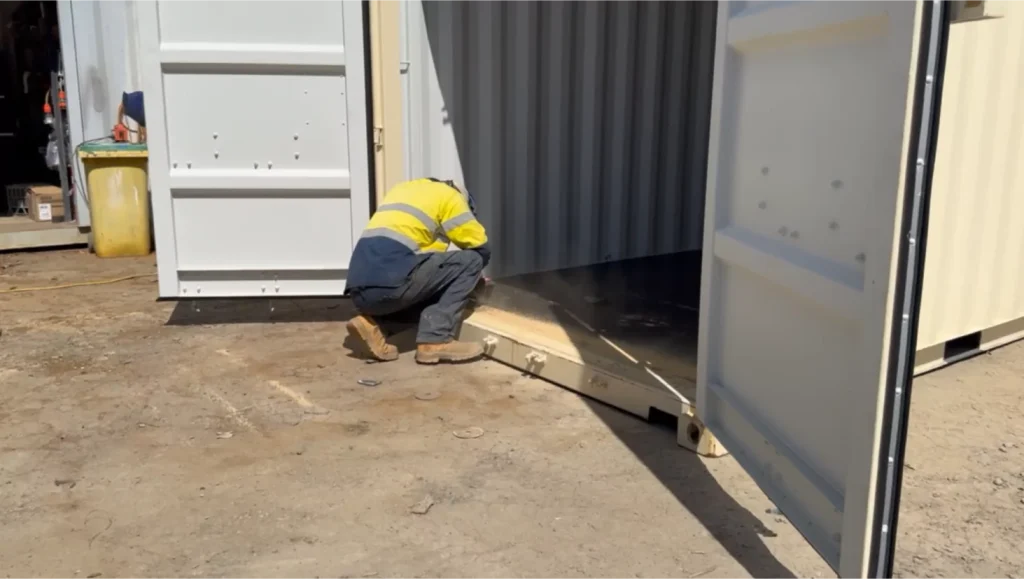
A used container is a simple product, but a poor one is expensive to fix and hard to resell. This checklist covers the decisions to make before you look, what to inspect on the container, how to buy on Trade Me, the warning signs of a container scam and the paperwork to hold when you pay. Keep it on your phone when you visit a yard or review photos from a seller.
Before you look: four decisions
- Size. Measure what you will store and the space on site. Our guide to choosing a container size helps.
- Grade. Storage needs wind and watertight. A home or office needs one-trip. Exporting goods needs cargo-worthy. See container grades explained.
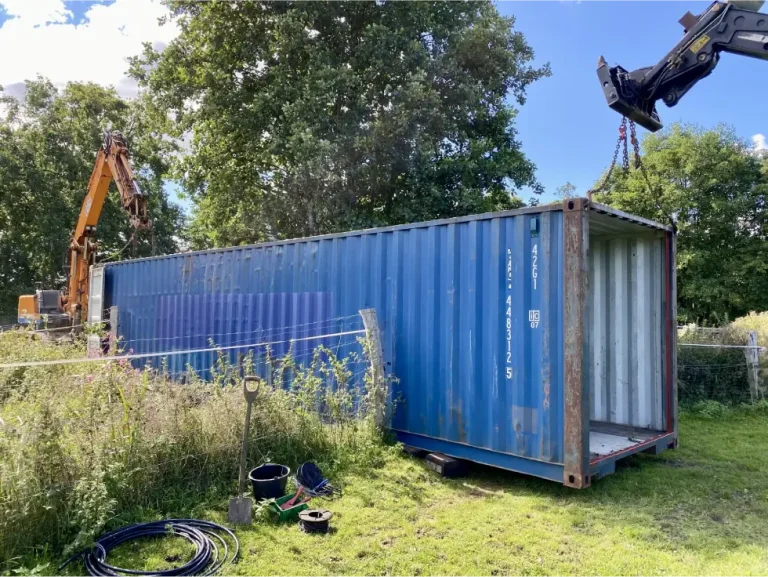
- Delivery. Work out whether a HIAB or a swinglift can reach the spot, and who arranges it. Trade Me sellers often leave transport to the buyer. Read HIAB vs swinglift before you commit.
- Budget. Price the container delivered, with GST shown. In October 2026 a used wind and watertight 20ft had a median asking price of $3,680 incl. GST and a new one-trip 20ft $4,830 incl. GST, before delivery.
The inspection checklist
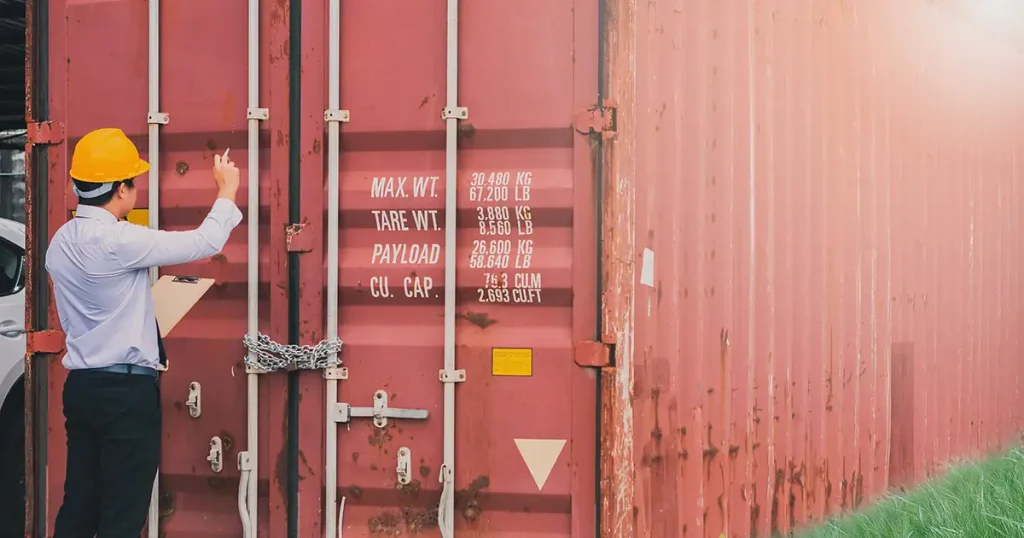
Work from the top down and from the outside in. Bring a torch, a screwdriver and a phone camera, and if you can, inspect on a dry, bright day.
| Area | What to check | Walk away if |
|---|---|---|
| Roof | Dents, standing water, rust patches; look from a ladder or ask for a roof photo | Rust holes or deep dents that pond water |
| Side and end walls | Dents, patched panels, weld repairs, bulges | Holes, or fresh paint hiding patches you cannot inspect |
| Doors | Both open fully, locking bars turn and seat in their keepers, hinges move freely | Doors that need a bar to shift, missing locking gear |
| Door gaskets | Rubber seals soft and continuous around both doors | Split, flattened or missing seals (unless priced in) |
| Floor | Firm underfoot, no soft spots, no strong smell | Rotten sections, chemical or fuel smells, oil soaking |
| Underside | Cross members and forklift pockets straight; rust only on the surface | Cross members rusted through or bent |
| Corner posts and castings | Square and straight, no cracks, no heavy flaking rust | Cracked castings, posts bent out of line |
| Light test | Close yourself inside on a bright day and look for light | Any light through the roof or walls |
| Plates and numbers | CSC plate present; container number matches the listing and invoice | Number missing, ground off or not matching |
The CSC plate and container number
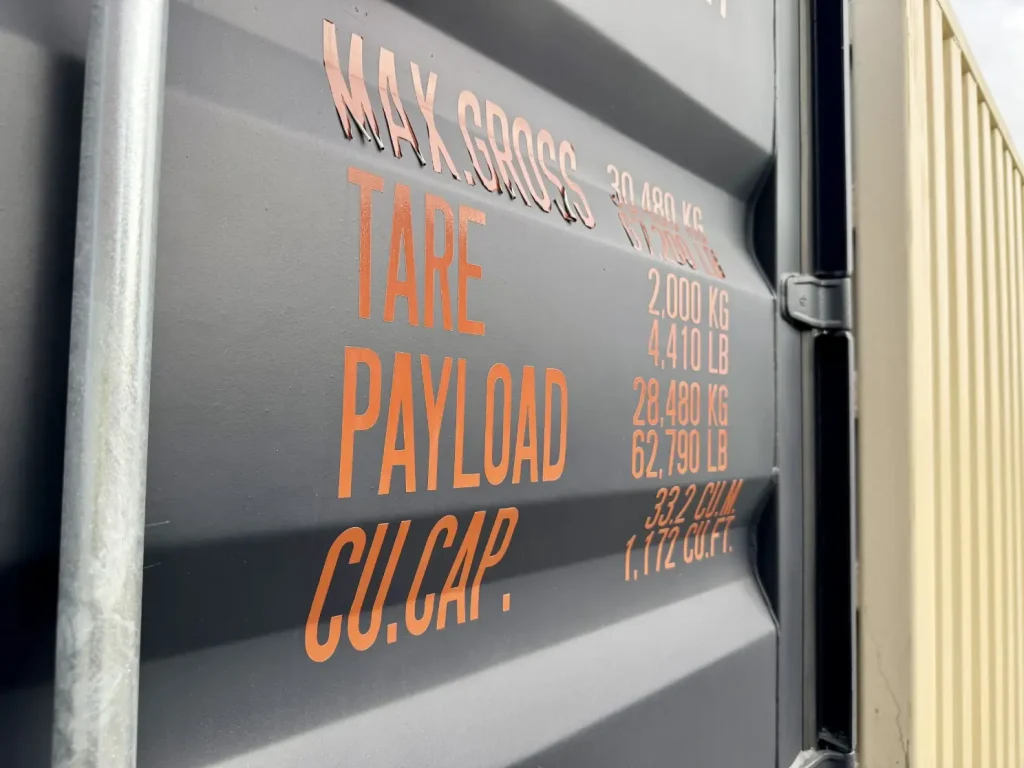
Every container built for sea freight carries a CSC safety approval plate under the International Convention for Safe Containers. It is usually fixed to the left-hand cargo door. The plate shows the manufacture date, identification number, maximum gross weight and allowable stacking and racking loads. If a seller describes a container as cargo-worthy, the plate must also show a current examination date or approved continuous examination programme (ACEP) reference.
The container number on the doors and sides follows ISO 6346: a four-letter owner code ending in U, six digits and a final check digit. It should match the CSC plate, the listing and your invoice. A seller who will not give you the number before you pay is a warning sign. For storage on land a CSC plate is not a legal requirement, but it is the most reliable record of the container’s age.
If you need the container to carry cargo by sea again, our guide to container certification and CSC plates explains examination dates and recertification.
Buying a container on Trade Me
Trade Me is New Zealand’s main marketplace for containers, with trade sellers and private sellers listed side by side. A trade seller is covered by the Fair Trading Act and, if you buy for personal use, the Consumer Guarantees Act. Private sales are not covered by the Consumer Guarantees Act, so your inspection is your protection.
- Check the seller’s feedback and how long the account has been active.
- Ask whether the price includes GST and whether you will receive a tax invoice. Trade sellers on Trade Me generally show GST-inclusive prices.
- Confirm the pick-up location and who loads the container. Many listings state that a swinglift or HIAB is needed to uplift it.
- View the container, or ask someone local to view it for you.
- Keep messages on Trade Me so there is a record of what the seller said.
Container scam warning signs
Several large NZ container suppliers publish warnings about container scams, including fake websites and listings. Watch for these signs:
- A price far below the market. The cheapest new 20ft we found in October 2026 was $3,990 incl. GST, and that unit had a dent. A new container offered for much less deserves suspicion.
- A website or listing that copies a real company’s name or photos but gives a different phone number or bank account.
- Payment by bank transfer to a personal account, or in cryptocurrency or gift cards.
- Pressure to pay a deposit today to hold stock, with no viewing allowed.
- No company number, GST number or physical address, or details that do not match the public register.
- Refusal to give the container number before payment.
Look up the business on the New Zealand Companies Office register and call it on a number you find independently. If you think you have been targeted, contact your bank straight away and report it to Netsafe.
Shipping-Containers.co.nz does not sell containers or take payment for them. Suppliers who receive your request quote and invoice you directly. Read how our quote service works.
How to verify the seller
NZ Police in the Eastern District warned in April 2024 about shipping containers advertised on Facebook Marketplace and community pages that did not exist. The sellers asked for payment plus a delivery fee, offered a discount for paying quickly and then blocked the buyers. (NZ Police)
Shipping container seller verification takes a few minutes and is worth doing for every private or unfamiliar seller:
- Look the business up on the NZ Companies Office register and check the name matches the bank account you are asked to pay.
- Ask for a current photo or short video of the actual unit with the container number visible, and check the number on delivery.
- View the container at the yard if you can, or ask the seller to confirm the yard address.
- Be wary of prices well below the NZ price index and of pressure to pay a deposit today.
- Pay by bank transfer to a business account in the seller’s name, never by gift cards or crypto, and keep the written invoice.
If you have been caught out, report it to Police on 105 or at 105.police.govt.nz.
Paperwork to hold when you pay
- A written quote or tax invoice naming the seller, their GST number if GST registered, the container size, grade and container number.
- Known defects listed in writing.
- Delivery terms: who delivers, which truck, the date, what happens if the truck cannot reach the site, and any waiting time charges.
- Payment terms and when ownership passes to you.
- Photos of the actual container taken before it leaves the yard.
Under the Fair Trading Act, a quote or estimate can be misleading if the final cost ends up much higher than you were led to expect, so ask for the container, delivery, any crane work and GST to be shown separately.
On delivery day
Check the container before you sign for it, using the same list as above. Make sure the driver sets it level on firm supports, such as sleepers or pads under the corner castings, so the doors stay square and the base can dry. Our guide to container foundations covers the options. If the container sits within 500 m of the coast, plan early touch-ups using our rust and coastal corrosion guide.
For more on condition and price ranges, see used shipping containers. When you are ready, request quotes from suppliers who service your area through our quote form.
Get quotes from suppliers who service your area
Describe the size, grade and delivery address. Suppliers quote you directly, so you can ask for photos, the container number and written terms before you commit.
Get a free quoteFAQ
Buying a used container: common questions
Start with the roof, because dents that hold water lead to rust holes. Then check that both doors open and seal, the floor is firm and odour-free, the corner posts and cross members are straight, and no light shows through the walls when you stand inside with the doors shut. Confirm the container number matches the paperwork.
It can be, if you take the usual precautions. Check the seller’s feedback, view the container or have someone view it for you, confirm the container number and keep messages on Trade Me. Ask whether the price includes GST and who arranges loading. Private sales are not covered by the Consumer Guarantees Act, so inspect carefully before you pay.
Be wary of prices far below the market, pressure to pay a deposit immediately, payment to a personal bank account, no physical address or company number, and refusal to let you view the container or give its number. In October 2026 the cheapest new 20ft we found in NZ was $3,990 incl. GST, and it had a dent.
The CSC safety approval plate is usually fixed to the outside of the left-hand cargo door. It shows the manufacture date, identification number, maximum gross weight and stacking load. Older or repainted containers sometimes have a worn or painted-over plate. Ask the seller for a clear photo of it before you buy.
Not for storage on land. The CSC plate matters for containers used in international transport, where it must be valid and current. For a container that will sit on a farm, a site or a section, the plate is useful as a record of its age and identity, but a missing plate does not stop you using it for storage.
A deposit is normal with established suppliers, especially for modified containers. Pay it only after you have confirmed the business on the Companies Office register, called them on a number you found yourself, and received a written quote showing the container, grade, delivery and GST. Avoid paying into personal accounts or by gift cards or cryptocurrency.
Andreas Atrott | Shipping container specialist and founder
Andy has worked with shipping containers since 2013. He runs shipping-containers.com.au from Brisbane and Shipping-Containers.co.nz for New Zealand buyers, and spends much of his time inspecting containers, checking grades and sorting out deliveries. His YouTube channel Andy Knows Containers covers buying, inspecting, delivering and converting containers.
Blog
More container guides

Do You Need Consent for a Shipping Container in NZ?
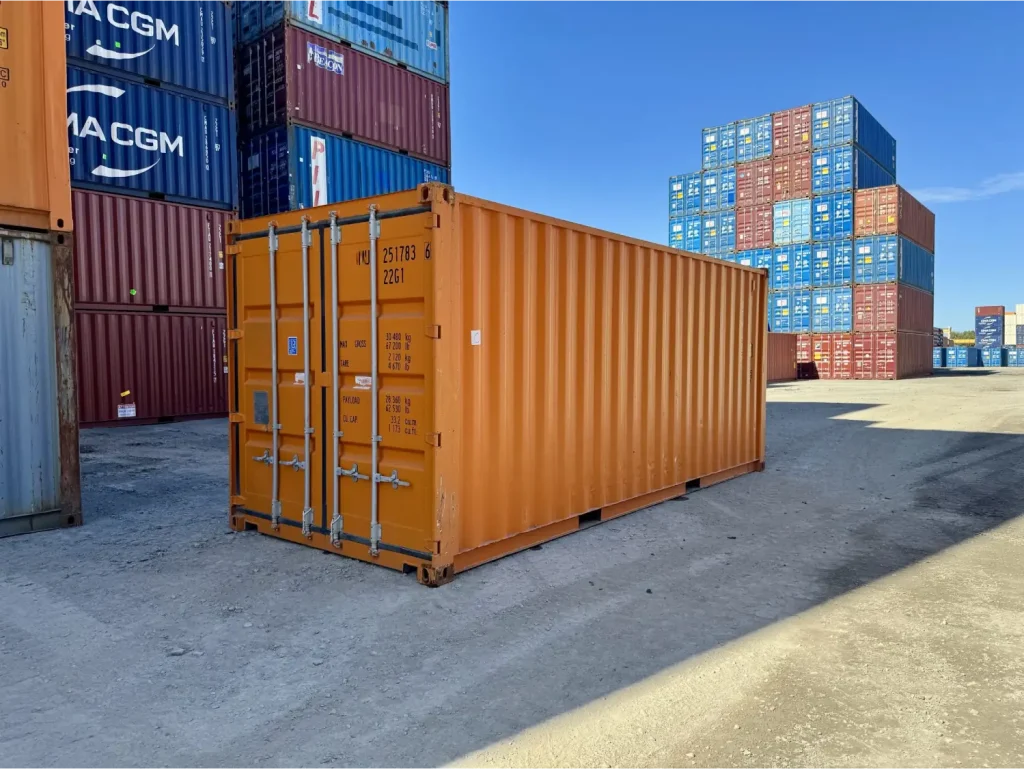
New vs Used Shipping Containers: NZ Buying Guide
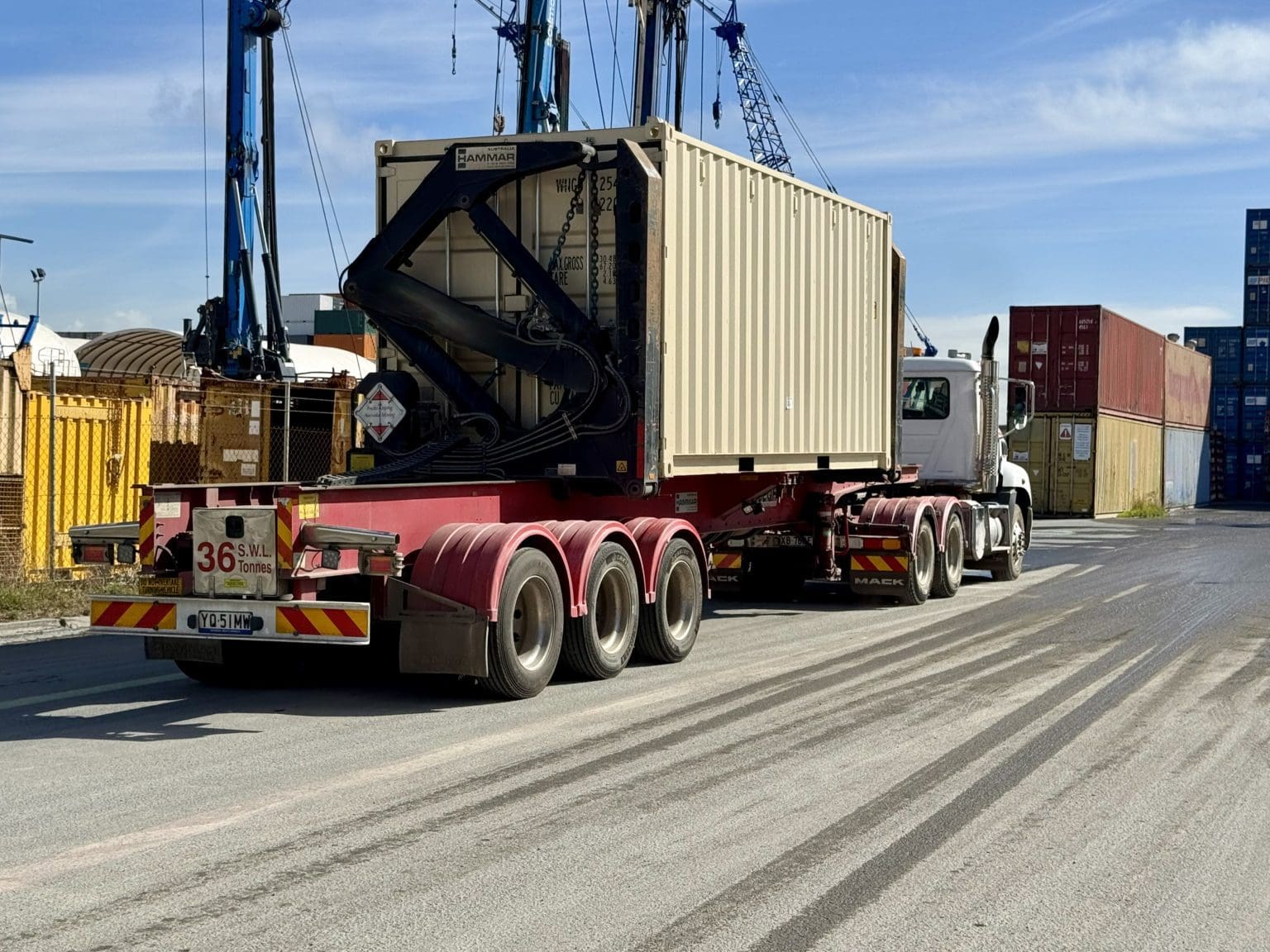
HIAB vs Swinglift: Container Delivery Options in NZ
Need a container for your project?
Tell us the size, condition and delivery address. Your request goes to suppliers who service your area.
Get a free quote