



What Size Shipping Container Do I Need?

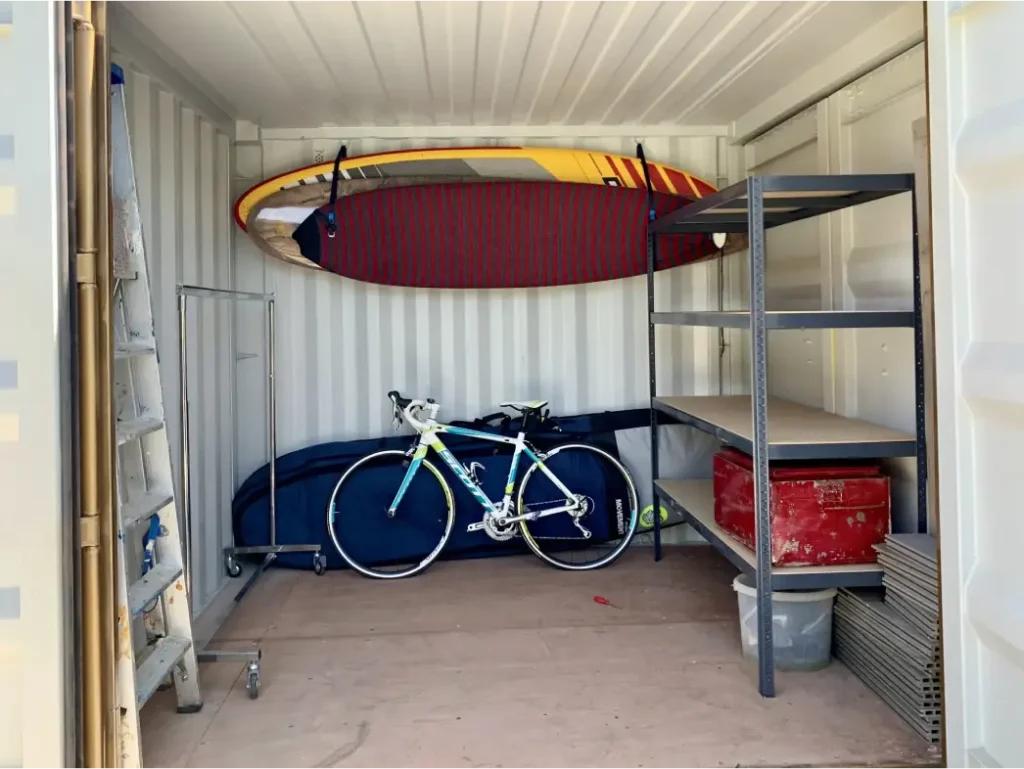
The right container size depends on three things: what you are storing, the largest single item that has to fit through the doors, and how much room your site has for the container and the truck that delivers it. Most buyers in New Zealand end up with a 20ft. This guide helps you check whether that is right for you, with a size chart in metres and rules of thumb for household furniture, cars, farm gear and tools.
Shipping container size chart
Internal measurements are what matter for storage. They are smaller than the external sizes because of the steel walls, floor and door frames.
| Size | Internal L x W x H (approx.) | Floor area | Volume | Typical uses |
|---|---|---|---|---|
| 8ft | varies by maker; roughly 2.2 m long | varies | varies | Garden tools, bikes, mower, small trades kit |
| 10ft | about 2.8 x 2.35 x 2.39 m | about 6.6 m² | about 16 m³ | Studio or one bedroom contents, garage overflow, tools |
| 20ft | about 5.90 x 2.35 x 2.39 m | about 13.9 m² | about 33 m³ | Two to three bedroom home, one car, farm feed and tools |
| 20ft high cube | about 5.90 x 2.35 x 2.69 m | about 13.9 m² | about 37 m³ | Sleepouts, workshops, taller items |
| 40ft | about 12.03 x 2.35 x 2.39 m | about 28.3 m² | about 67 m³ | Four bedroom home or more, two cars, machinery |
| 40ft high cube | about 12.03 x 2.35 x 2.69 m | about 28.3 m² | about 76 m³ | Workshops, conversions, bulky stock and racking |
Exact external and internal dimensions for every size, with door openings, are on our shipping container dimensions page. The two door sizes to remember: about 2.34 m wide by 2.28 m high on a standard container, and 2.58 m high on a high cube.
Household furniture by bedroom count
Households vary a lot, so treat this as a starting point. A home with a full garage, outdoor furniture or a piano needs more space than the bedroom count suggests. Pack to the ceiling and use the full length, and you will fit more than you expect; leave a walkway if you need to reach things while they are stored.
| Home | Suggested container | Notes |
|---|---|---|
| Studio or one bedroom flat | 10ft | Room for bed, sofa, whiteware and boxes |
| Two bedroom home | 10ft packed tightly, or 20ft | A 20ft leaves room for garage items |
| Three bedroom home | 20ft | The most common size for moving and renovations |
| Four bedroom home | 20ft packed tightly, or 40ft | Choose 40ft if you also store a garage full of gear |
| Five bedrooms or more | 40ft, or two 20ft | Two 20ft can be easier to place on a section |
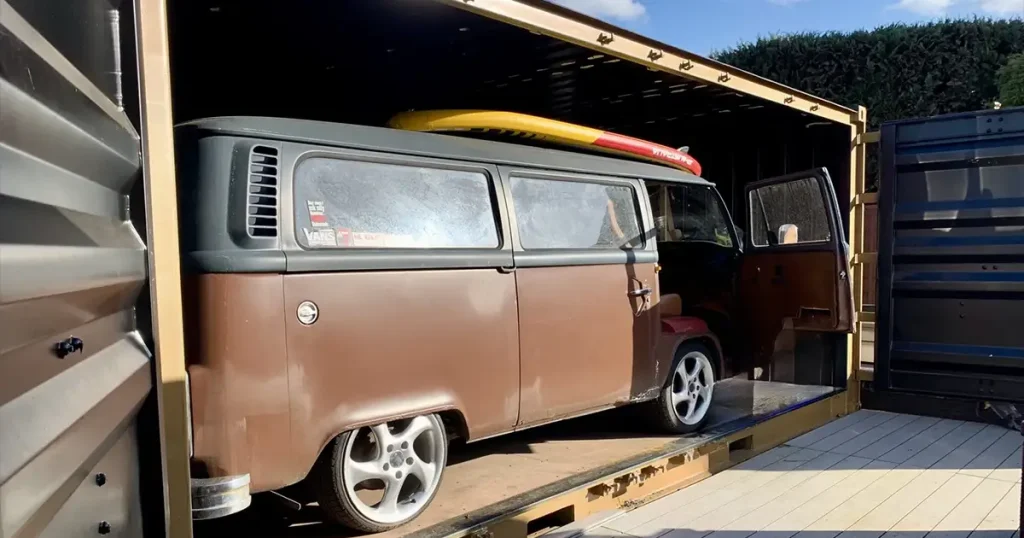
Storing a car, ute or boat
A 20ft container is about 5.9 m long and 2.35 m wide inside. Most hatchbacks, sedans and SUVs fit, but measure your vehicle first: a double cab ute is often longer than 5.3 m, which leaves little room once the doors close, and tow bars and bike racks add length. Width is the tighter limit. With mirrors folded, many cars fit through the 2.34 m door, but you will not be able to open the car doors far once inside, so plan how you will get out once the vehicle is parked, or push it in.
A 40ft container takes two cars end to end, or a car plus tools and parts. For a classic car or boat, add moisture absorbers and ventilation, because condensation in a closed steel box is the main risk. Ramps and wheel chocks are available as container accessories.
Farm and lifestyle block gear
- Quad bike or small ride-on mower: a 10ft is usually enough, a 20ft leaves room for fuel cans, tools and fencing gear.
- Side-by-side vehicle: a 20ft. Check its height against the 2.28 m door opening.
- Tractor: measure the height to the top of the cab or roll frame. Cab tractors are often taller than a standard door; a high cube gives about 2.58 m.
- Feed, fertiliser and seed on pallets: a 20ft or 40ft, depending on volume. Pallet counts depend on pallet size; our Australian guide on loading a container properly covers weight distribution and securing the load.
- Machinery and hay: a 40ft, or two containers with a shelter roof between them.
Our farm storage page covers delivery to rural sites and chemical storage rules.
Tools, trades and workshops
A 10ft suits a single trade’s tools and materials on a building site. A 20ft gives room for shelving along one wall and a walkway: container shelving listed in New Zealand includes 5.85 m long units made to fit a 20ft. A workbench along the other wall turns it into a small workshop. For a full workshop with machinery, or a site store plus office, look at a 40ft high cube or two 20ft units. See site storage and workshop containers.
How to work out your size
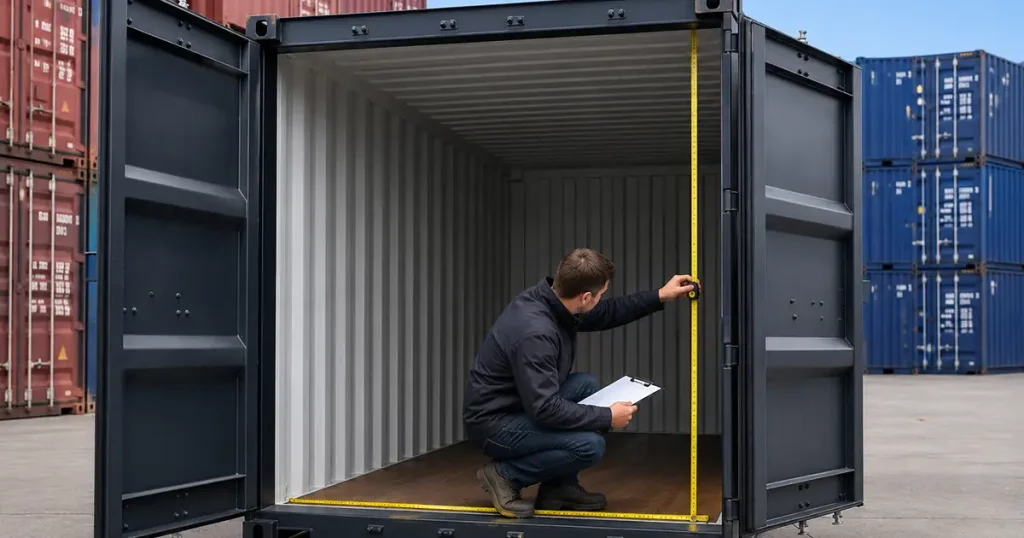
- List what you will store, and measure the largest items in the position they will go through the doors.
- Check the tallest item against the door height: about 2.28 m standard, 2.58 m high cube.
- Estimate the volume of everything else and compare it with the chart above. Leave space for a walkway if you need access.
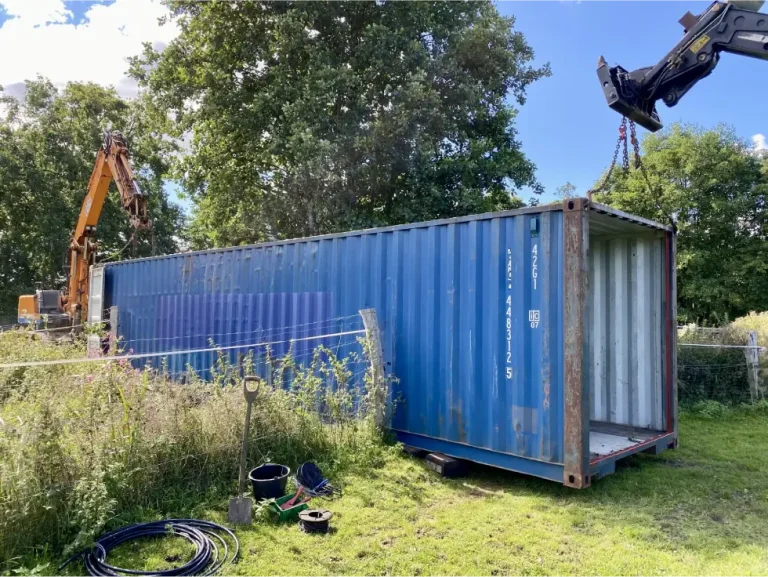
- Measure the spot on site, plus the room a truck needs to place the container. A 20ft placed by HIAB suits most sections; a 40ft usually needs a swinglift and much more space.
- Decide whether one large container or two smaller ones suits the site better. Our 20ft vs 40ft comparison covers prices and access.
Choosing between the sizes
- Choose an 8ft container or a 10ft container when space on site is tight, for a garage overflow, garden gear or a small trade store.
- Choose a 20ft container for household storage, moving, renovations, one vehicle or general farm storage.
- Choose a 40ft container for large households, machinery, two vehicles or bulk stock, if your site and access allow.
- Choose a high cube in either length for workshops, racking or conversions.
For household storage, our home storage guide covers placement on a section. If you are still unsure, describe what you need to store in your quote request and suppliers can suggest a size.
Describe what you are storing and get a size suggestion
Tell us what needs to fit, the largest item and the delivery address. Suppliers who service your area can suggest a size and quote it delivered.
Get a free quoteFAQ
Choosing a container size: common questions
As a rough guide, a 10ft holds the contents of a studio or one bedroom flat, a 20ft a typical two to three bedroom home and a 40ft a four bedroom home or larger. Garages, outdoor furniture and bulky items push you up a size. Packing tightly to the ceiling makes a big difference, so measure large furniture before deciding.
A 20ft container, about 5.9 m long and 2.35 m wide inside, fits most hatchbacks, sedans and SUVs. Measure longer vehicles such as double cab utes, and remember tow bars and racks. The door opening is about 2.34 m wide, so you will have little room to open car doors inside. A 40ft takes two cars end to end.
A standard 20ft container is about 5.90 m long, 2.35 m wide and 2.39 m high inside, giving about 13.9 m² of floor and about 33 m³ of space. The door opening is about 2.34 m wide and 2.28 m high. A 20ft high cube has the same floor area but about 2.69 m of internal height.
A 10ft gives about 6.6 m² of floor and about 16 m³ of space, enough for a studio or one bedroom flat, garden tools or a single trade’s kit. It suits tight sites and short driveways. In October 2026 new 10ft containers cost about the same as or more than a new 20ft, so if you have the room, compare both.
One 40ft gives more floor area for the money and needs one delivery, but it needs a long, firm unloading area and usually a swinglift. Two 20ft containers fit tighter access, can be placed apart and give two sets of doors. Our 20ft vs 40ft guide compares the costs and access needs in detail.
Andreas Atrott | Shipping container specialist and founder
Andy has worked with shipping containers since 2013. He runs shipping-containers.com.au from Brisbane and Shipping-Containers.co.nz for New Zealand buyers, and spends much of his time inspecting containers, checking grades and sorting out deliveries. His YouTube channel Andy Knows Containers covers buying, inspecting, delivering and converting containers.
Blog
More container guides

Do You Need Consent for a Shipping Container in NZ?
New vs Used Shipping Containers: NZ Buying Guide
HIAB vs Swinglift: Container Delivery Options in NZ
Need a container for your project?
Tell us the size, condition and delivery address. Your request goes to suppliers who service your area.
Get a free quote