



High Cube Shipping Containers in NZ
A high cube container is 2.896 metres tall instead of 2.591, giving about 2.70 metres of headroom inside and a 2.585 metre door. That extra 305 mm matters for racking, tall machinery, insulated sleepouts and container homes. Compare 20ft and 40ft high cubes, prices and delivery needs.
Backed by the team behind Shipping-Containers.com.au



| Specification | 20ft standard | 20ft high cube | 40ft standard | 40ft high cube |
|---|---|---|---|---|
| External height | 2.591 | 2.896 | 2.591 | 2.896 |
| Internal height | 2.393 | 2.698 | 2.393 | 2.698 |
| Door opening height | 2.280 | 2.585 | 2.280 | 2.585 |
| Internal volume | 33.2 m³ | 37.4 m³ | 67.7 m³ | 76.3 m³ |
| Empty weight | about 2.15 to 2.35 t | about 2.35 to 2.5 t | about 3.65 to 3.8 t | about 3.8 to 4.0 t |
| ISO size and type code | 22G1 | 25G1 | 42G1 | 45G1 |
| New / one-trip price | median $4,830 | median $5,395 | no published price | $6,999 to $7,395 |
How to tell a high cube from a standard container
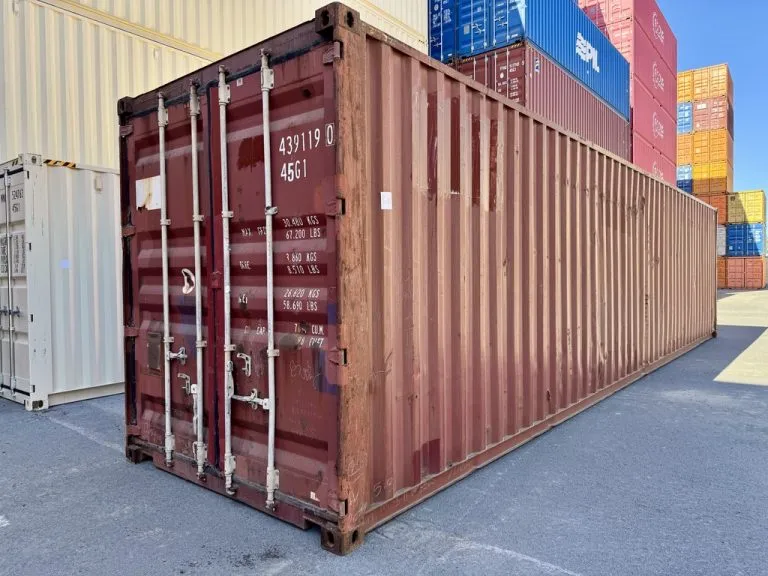
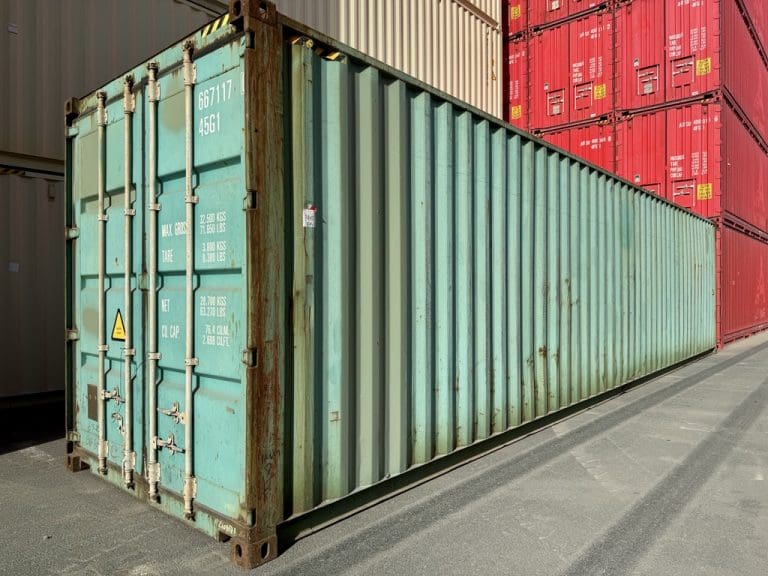
Length and width are identical, so a high cube is easy to miss in a photo. Look for three things. The ISO code on the doors starts with 25 for a 20ft high cube and 45 for a 40ft high cube, while standard units start with 22 or 42. Most high cubes carry yellow and black diagonal warning stripes along the top rail at the door end, a height warning for crane and truck drivers. And the CSC plate lists the external height as 9 ft 6 in, or 2,896 mm.
Internal height rises from about 2.39 to 2.70 metres. Once you add 100 mm of insulation to the ceiling and a new floor, a standard container leaves you with roughly 2.2 metres of headroom, which is tight for a habitable room. A high cube leaves about 2.5 metres. That is why designers of sleepouts, offices and container homes usually start with a high cube, and why our standard vs high cube guide spends most of its time on fit-outs. Our Australian site compares standard and high cube containers in more detail.
When the height pays off
Uses where a high cube is worth the extra cost
Sleepouts, offices and container homes
Any container people sleep or work in needs insulation, lining and ventilation, and a habitable building has to meet the energy efficiency clause H1 of the Building Code. Insulation takes height out of the room, so the extra 305 mm of a high cube keeps the finished ceiling at a comfortable level. Read our guides to container insulation in NZ and container homes before you buy the shell.
Workshops and racking
A 2.70 metre internal height lets you fit an extra shelf level, hang lights without hitting your head, and stand long timber or pipes on end. That makes a high cube the practical choice for a workshop with benches, a compressor and overhead storage. Our page on site storage and workshop containers covers layouts, power and security.
Tall machinery and pallet loads
The 2.585 metre door opening clears equipment that will not fit through a standard 2.28 metre door, such as some ride-on mowers with roll bars, tall pallet loads, quad bikes with racks and stage equipment. Measure the tallest item at its highest point, including anything that sticks up, and allow for the floor ramp or the lip at the door.
High cube prices in NZ
New 20ft high cubes had a median asking price of $5,395 incl. GST ($4,691 excl. GST) across 13 listings in the Shipping-Containers.co.nz NZ price index, October 2026. The middle half sat between $4,999 and $5,848 incl. GST, about $550 to $600 more than a standard 20ft. Used 20ft high cubes are uncommon: one C grade unit was listed at $3,278 incl. GST.
The 40ft market works the other way. New 40ft containers are now mostly built as high cubes, and no NZ seller published a price for a new 40ft standard-height unit in October 2026. Mainstream new 40ft high cubes were listed at $6,999 to $7,395 incl. GST, with one Central Otago listing at $10,595. Used 40ft high cubes ranged from $3,000 to $6,595 incl. GST. Side-door 40ft high cubes with four sets of doors had a median of $15,950 incl. GST. All prices exclude delivery; see the full data on the NZ price index.
6 metre footprint
20ft high cube
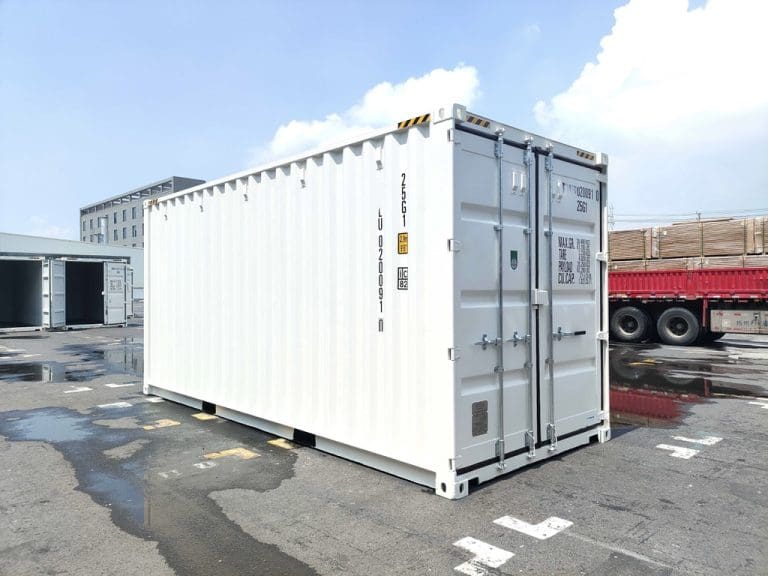
The 20ft high cube suits sleepouts, home offices, studios and small workshops on residential sections, and it can be delivered by HIAB, swinglift or tilt tray. New units cost about $5,400 incl. GST at the median.
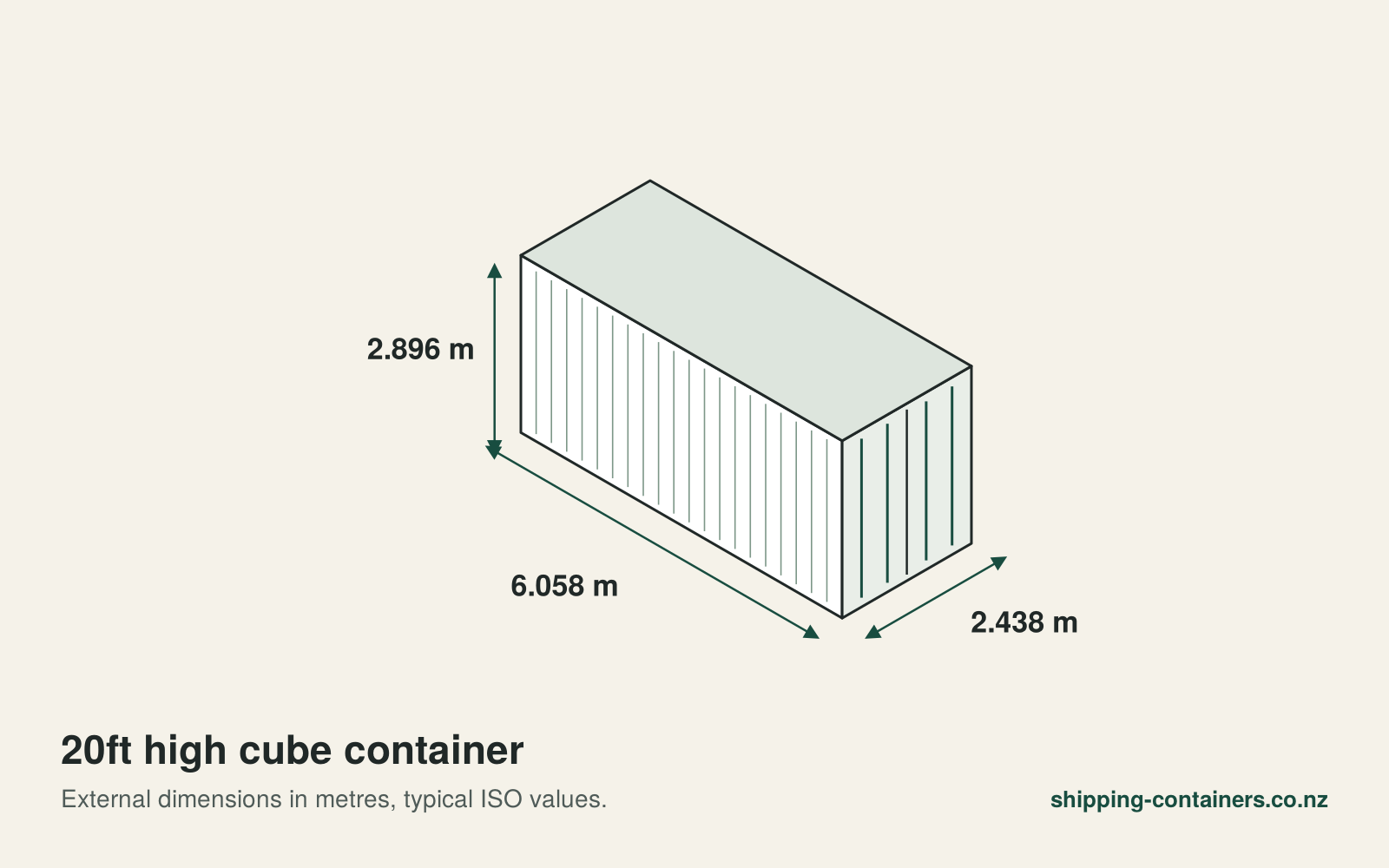 20ft high cube details
12 metre footprint
40ft high cube
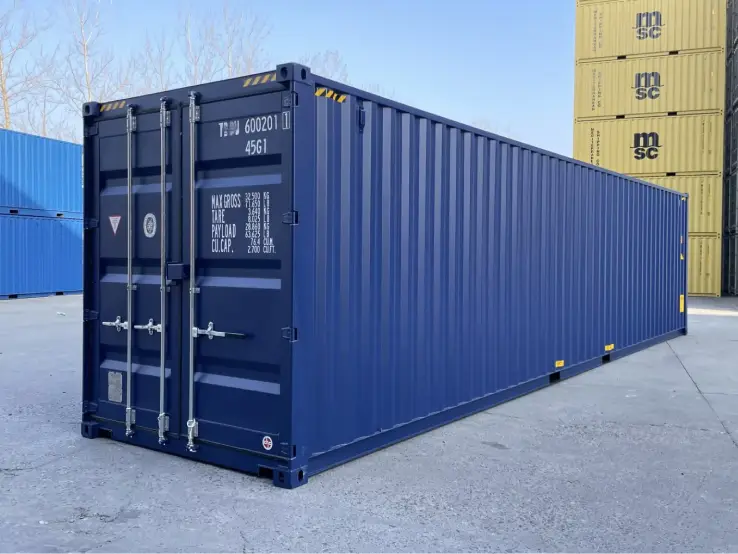
The 40ft high cube is the most common new 40ft in New Zealand and the usual base for container homes, large workshops and farm stores. It needs swinglift access and a long, firm placement area.
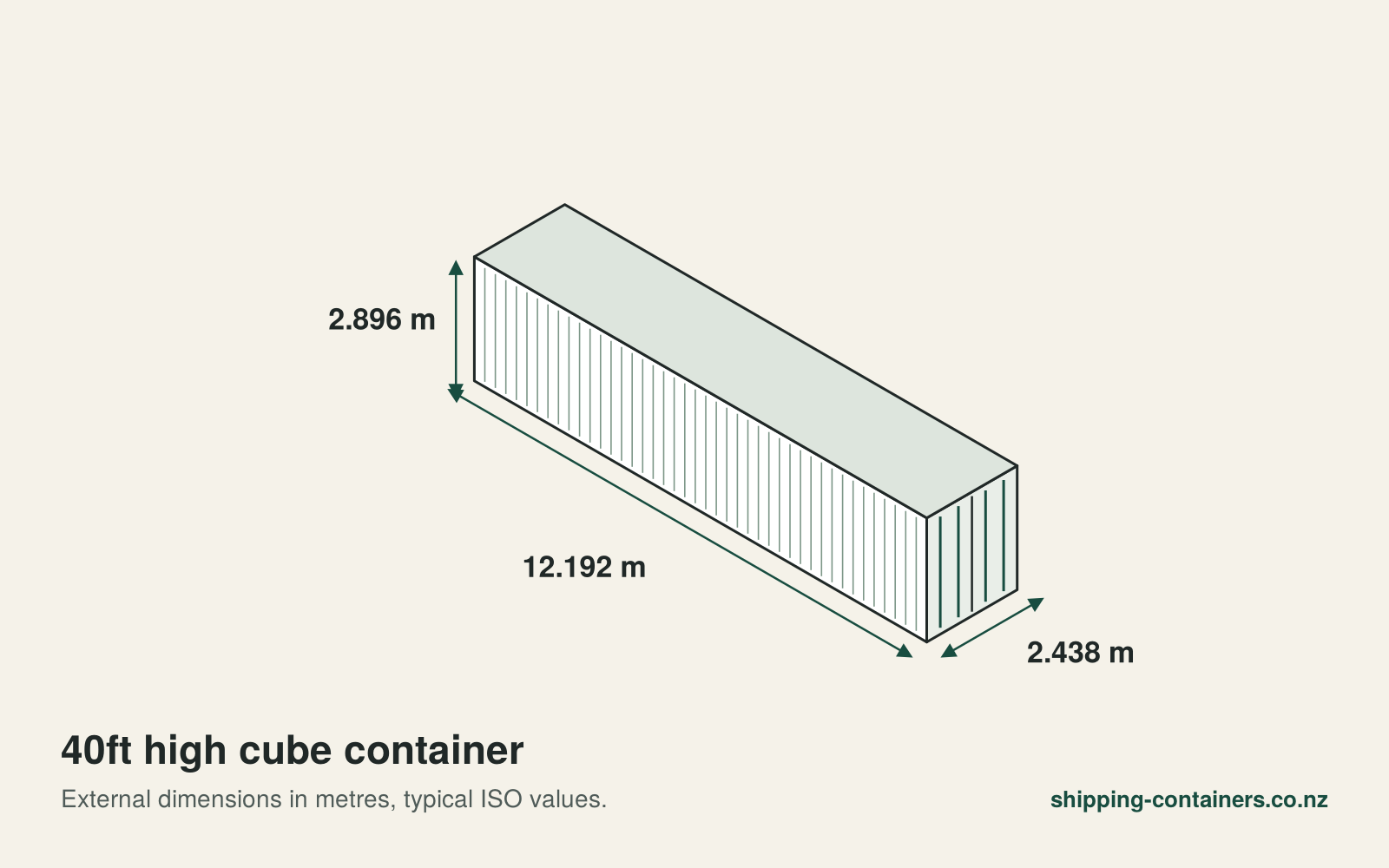 40ft high cube details
Before you order
Four checks specific to high cubes
Overhead clearance on delivery
A high cube sitting on a truck deck is about 30 cm higher than a standard container. Check low branches, carports, power lines, eaves and anything the load passes under on the way to the spot. Tell suppliers it is a high cube so they plan the route and truck.
Matching heights when joining
If you plan to join containers side by side or stack them, buy the same height and ideally the same manufacturer. Owners who have built container homes in New Zealand report that matching heights and brands is one of the harder parts. Mixing a high cube with a standard unit leaves a 305 mm step.
Condition grade
Used high cubes come off the same shipping fleets as standard boxes, so the same checks apply: roof dents that hold water, soft floor patches, door seals and rust at the corner castings. Our guide to container grades explains what A, B and C labels mean in New Zealand.
Ask for the plate details
When you request quotes, ask each supplier for the ISO code, the manufacture date and the tare weight from the CSC plate. That confirms you are being quoted a high cube, tells you how old a used unit is, and helps the transport operator plan the lift.
Request high cube quotes for your project
Tell us 20ft or 40ft, new or used, what you plan to do with it and how a truck reaches the site. Suppliers who service your area reply directly.
Get a free quoteFAQ
High cube containers: common questions
Yes. High cube, highcube and HC all describe a container that is one foot taller than standard. Most high cube shipping containers for sale in NZ are 40ft units, and new 20ft high cubes are available from fewer suppliers. Compare 20ft high cubes and 40ft high cubes for sizes and prices.
A high cube is 2.896 metres (9 ft 6 in) tall outside, compared with 2.591 metres (8 ft 6 in) for a standard container. Inside you get about 2.70 metres of height, and the door opening is about 2.585 metres high. Length and width are the same as standard 20ft and 40ft containers. Exact figures vary slightly by manufacturer, so check our container dimensions page for full tables.
For plain storage of boxes and furniture, usually not: a standard container holds the same floor area for about $550 to $600 less on a new 20ft. For anything with insulation, lining, racking or tall equipment, usually yes, because the extra 305 mm decides whether the finished room or shelving works. For new 40ft containers there is often no choice, as most new 40ft stock is high cube.
Usually not by much, because the truck types are the same. The difference is clearance. A high cube on a truck deck sits about 30 cm higher, so low trees, carports, bridges and power lines on the route or at the site matter more. Tell the supplier it is a high cube and send photos of the access.
Yes, mainly in 40ft. In October 2026, used 40ft high cubes graded wind and watertight were listed at $3,000 to $6,595 incl. GST, and as-is units at $4,025 to $6,095 incl. GST. Used 20ft high cubes are less common, with one C grade listing at $3,278 incl. GST. Inspect used units for roof dents, floor condition and door seals.
HC stands for high cube, sometimes written HQ or hi cube. You will also see it in the ISO size and type code painted on the doors: 45G1 is a 40ft high cube general purpose container and 25G1 a 20ft high cube. Standard containers carry 22G1 for a 20ft and 42G1 for a 40ft. The first digit is the length, the second the height.