



Container Shelters and Roof Kits in NZ
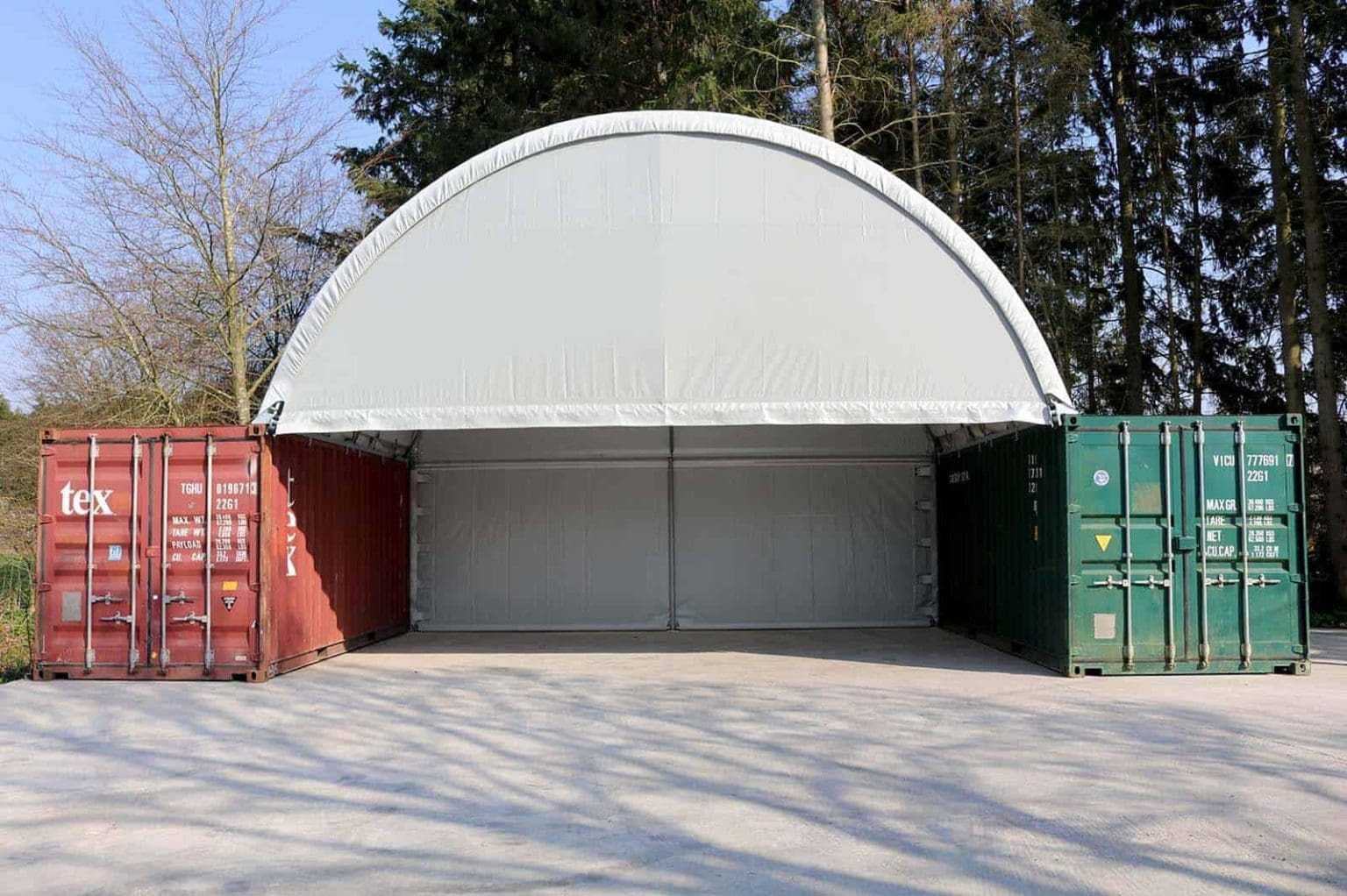
A container shelter is a roof kit that spans between two shipping containers, turning them into a covered workspace, machinery shed or hay barn. Kits come in 20ft and 40ft lengths and different spans. On Kiwi farms and lifestyle blocks, wind rating, tie-down and building consent matter as much as the price.
Backed by the team behind Shipping-Containers.com.au



The basics
How container shelters work
Structure
Two containers, one roof
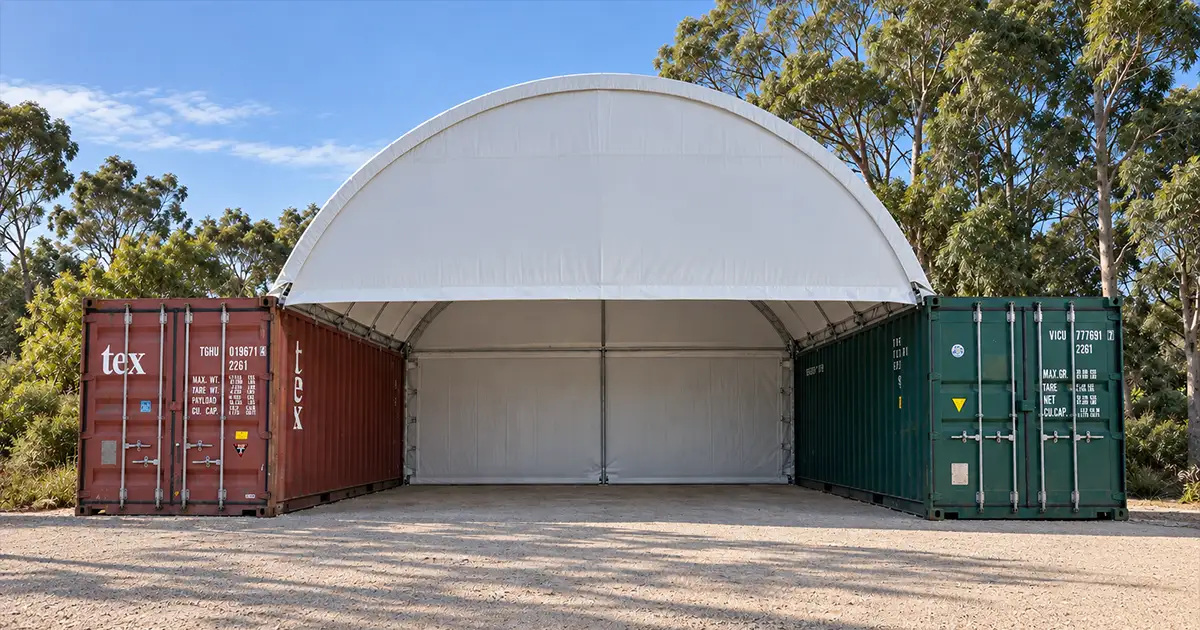
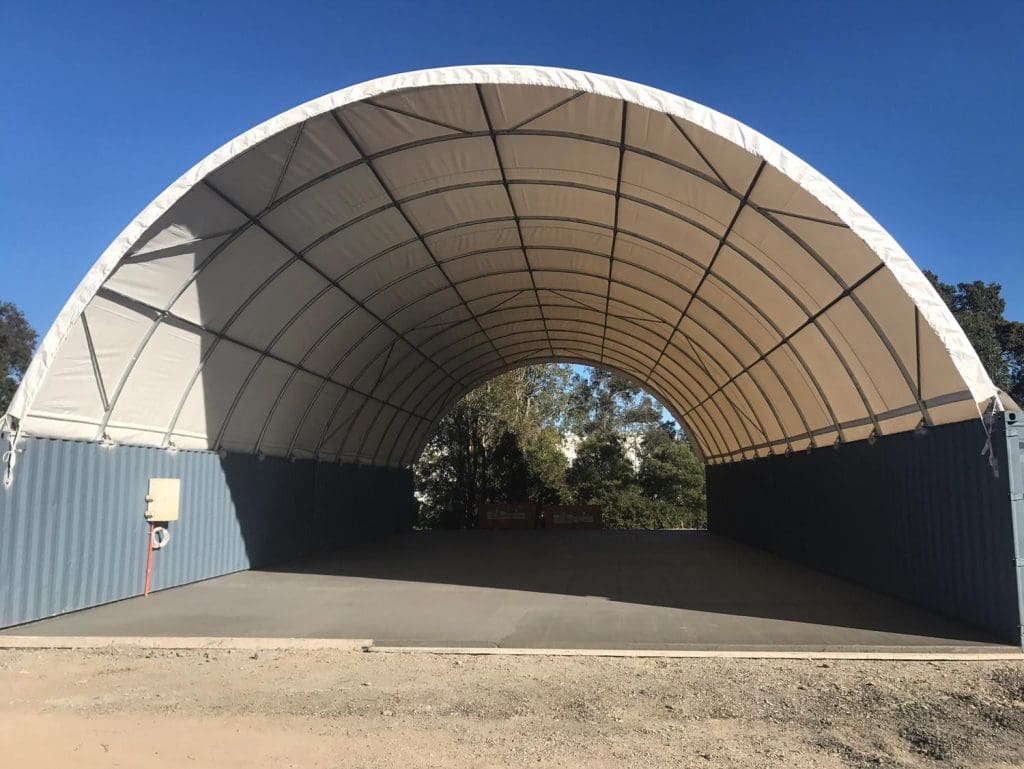
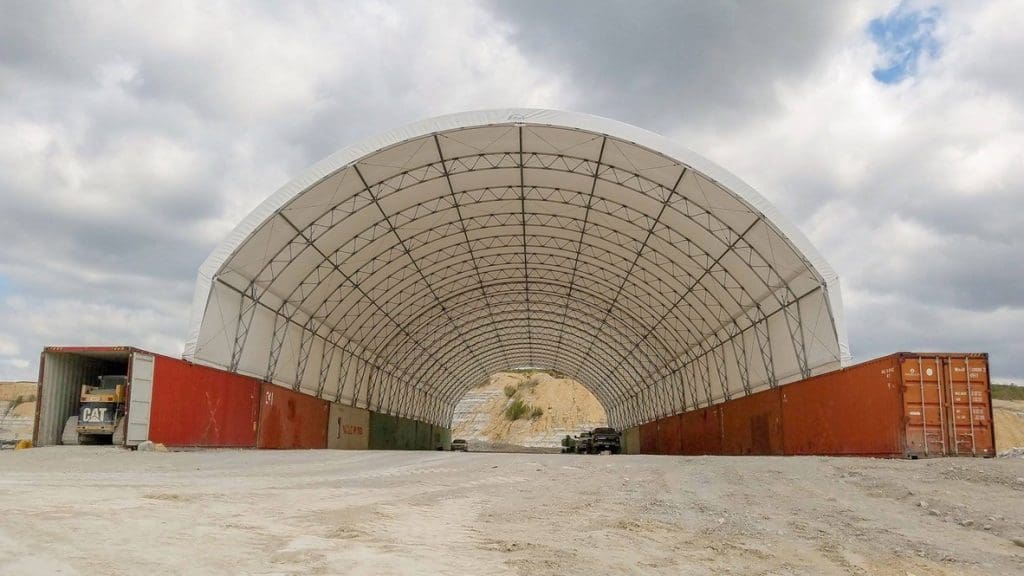
Two containers are placed parallel with a gap between them. A steel frame, usually a row of trusses or arches, is fixed to the top of each container and covered with heavy PVC or polyethylene fabric, or with steel roofing on some kits. The containers act as the walls and anchor the roof, and they remain lockable storage on each side.
The covered area is open at both ends. Many owners close the back with an end wall kit or cover. The brackets, often sold as shipping container roof brackets, clamp or bolt onto the containers’ top rails or corner castings.
Sizes
Sizes, spans and clearance
Shelters are sold by container length and by span, the width covered between the containers. A 20ft kit covers about 6 m of length and a 40ft kit about 12 m. Spans differ between kits, so work from the product specification. As a guide to area, containers set 6 m apart give about 36 m² of covered floor with 20ft containers and about 72 m² with 40ft containers.
Check the clear height under the frame as well as the span. Standard containers stand about 2.6 m tall and high cube about 2.9 m, and the roof rises above that. Measure your tallest tractor, truck or boat on its trailer against the kit’s clearance figures.
Choosing the containers
Both containers must be the same height, sound along the top rails and level with each other, otherwise the frame racks and the cover wears. Used containers in wind and watertight condition are the usual choice. In the NZ shipping container price index for October 2026, a used 20ft had a median asking price of $3,680 incl. GST and used 40ft units ranged from $3,000 to $6,595 incl. GST. Our pages on 40ft containers and used containers explain what to check.
Place both containers on firm, level ground, sleepers or concrete pads under the corner castings, with the gap set to the exact span of the kit. Our container foundations guide covers the options. Plan delivery so the second container can still be placed once the first is down: a swinglift needs room beside the truck, so read HIAB vs swinglift before you set out the site.
What a container shelter costs
Shelter kits are not part of our price index, because prices depend on span, cover type and rating. A complete project usually includes:
- the shelter kit, with or without an end wall
- two containers, unless you already own them
- delivery of the containers and the kit
- ground preparation, pads and hold-downs
- installation, if you do not assemble it yourself
- engineering documents and consent fees where consent is needed
Loads
Wind, snow and tie-down
Wind
Wind rating
A fabric roof behaves like a sail. Wind blowing into the open end pushes up on the cover and tries to lift the frame, and the containers with it. Good kits state the design wind speed or wind zone they are rated for. Under NZS 3604, sites are classed in wind zones from Low to Extra High, with indicative design wind speeds from 32 m/s up to 55 m/s; sites beyond Extra High need specific engineering design. BRANZ Maps gives an indicative wind zone for any address.
Exposure varies a lot. Christchurch Airport records about 52 days a year with gusts over 61 km/h, according to NIWA’s Canterbury climatology, and nor’west gales are a known hazard on the plains. Hilltop and coastal sites anywhere can be worse than the nearest town. Our Christchurch page has more on local conditions.
Snow
Snow load
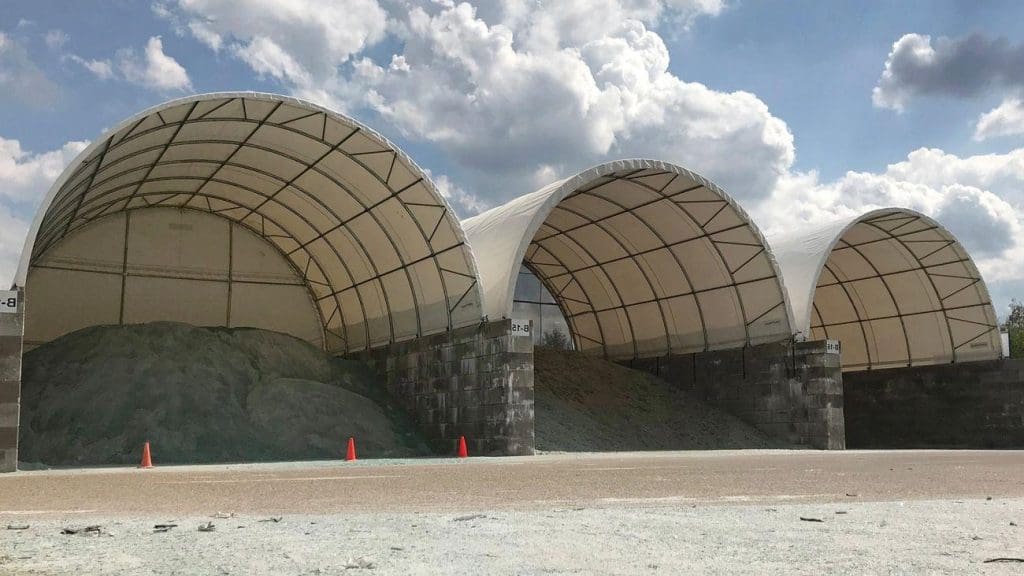
In Central Otago, Queenstown Lakes, Mackenzie and inland Canterbury, snow on the roof can be the deciding load. NIWA records about 12 snow days a year at Queenstown. Snow loads are set under the loading standard AS/NZS 1170.3 and rise with altitude. A fabric cover with a shallow pitch can hold snow and sag, while arched and steeper roofs shed it more easily. Ask for the kit’s rated snow load and whether you are expected to clear snow off the cover. See our Queenstown page for local delivery and climate.
Anchoring
Tie-down
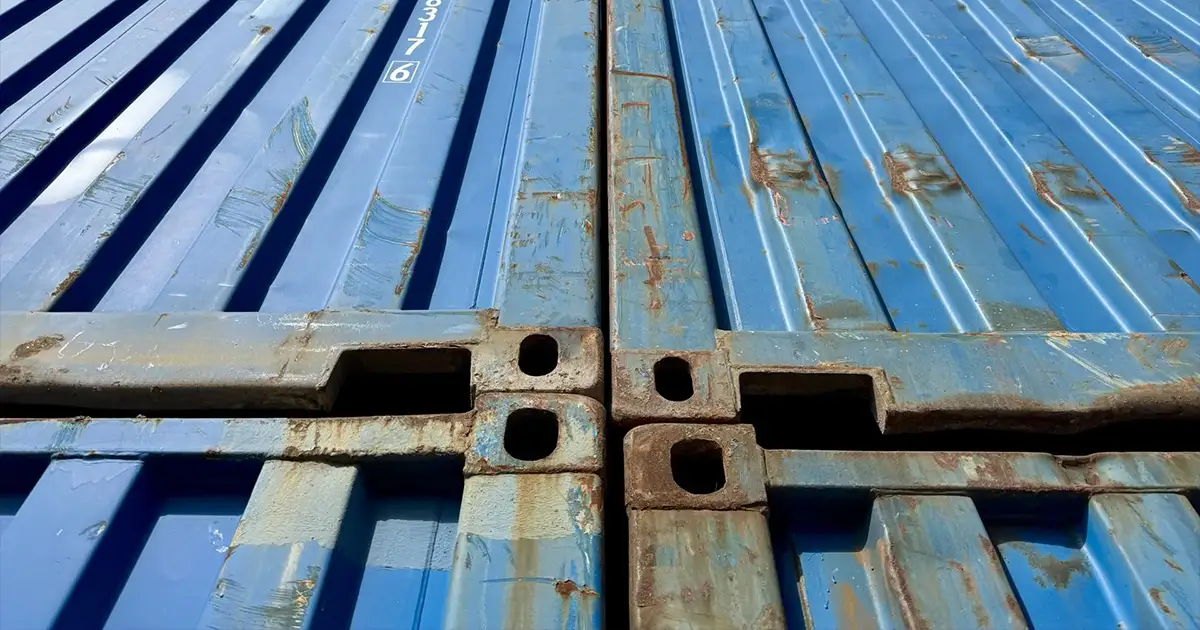
The roof is only as secure as the containers under it. In determination 2014/030 MBIE accepted that containers simply placed for storage are inherently stable, but a shelter changes the loads: wind on the cover can lift the frame and slide or tip an empty container. Engineered hold-downs are expected on exposed or high-wind sites, especially where the containers are empty. Common methods tie the corner castings to concrete pads, screw piles or ground anchors, designed for your site. Twistlock base plates set in concrete are one option, covered on our container accessories page.
Building consent for container shelters
This is where many shelter projects go wrong. In MBIE determination 2025/018, a Hamilton business had five structures, each made of containers with a metal frame and a tarpaulin canopy. It was not disputed that they were buildings. The Schedule 1 exemption for unoccupied buildings did not apply because people normally entered them, so building consent was required. The council’s notice to fix was reversed on technical grounds, but the decision shows how MBIE views container and canopy structures.
Council guidance points the same way. Invercargill City Council’s container guide and others say placing a container is not building work, but adding a roof, fixing to foundations or connecting services can require building consent. A canopy between two containers is a roof. District plan rules on site coverage, setbacks and visibility from the road apply separately, and rural zones often have larger setbacks.
Before you buy a kit, take the kit specification, a site plan and the intended use to your council’s building team. Ask whether consent is required, whether the kit supplier can provide engineering documents and whether a discretionary exemption is possible in your case. Our guide to building consent for shipping containers explains the process.
Farm and lifestyle block uses
What Kiwi owners put under a container shelter
Machinery shed
Tractors, quad bikes, mowers and implements under cover, with tools and spare parts locked in the containers on either side. A pair of 40ft containers gives enough length to park a tractor and trailer end to end. See farm storage containers for rural delivery.
Hay and feed
Hay, baleage and bagged feed kept dry and off the ground, with smaller supplies in the containers. Stack bales on pallets so ground moisture does not wick up, and close the windward end so rain does not drive in under the cover.
Covered workshop
A dry, shaded space for welding, servicing vehicles or building projects, with power run from one container that doubles as the tool store. Keep hot work away from fabric covers, and check whether running power to the structure affects consent.
Boats, caravans and floats
Boats, caravans and horse floats out of the sun and rain on a lifestyle block or near the bach. Check the clear height for masts, roof hatches and aerials before you choose the kit and the container height, and leave room to reverse in without clipping a container corner.
Price a shelter project
Tell us the container size, the span you want, whether you already own the containers, your site’s wind exposure and the delivery address. Suppliers who service your area quote you directly.
Get a free quote
FAQ
Container shelter questions
Often, yes. In determination 2025/018 MBIE found that containers with a metal frame and canopy were buildings and needed building consent, because people normally entered them. Council guides list adding a roof as a consent trigger. Talk to your council with the kit specification and site plan before buying, and ask about engineering documents and any exemption that may apply.
The kit’s rating should match or exceed the wind zone for your site. Under NZS 3604, wind zones run from Low to Extra High, with indicative design wind speeds from 32 m/s to 55 m/s, and sites above that need specific engineering design. Look up your address on BRANZ Maps, then ask the supplier for the kit’s rated wind speed in writing.
Exactly as far apart as the kit’s span requires, measured the way the supplier specifies, usually between the outer or inner faces of the containers. Set the gap before the second container is placed, because moving a container afterwards is costly. Keep both containers level with each other along their full length so the frame sits square.
Anchor the containers, not only the roof. Tie the corner castings to concrete pads, screw piles or ground anchors designed for your site, and fix the roof brackets as the kit instructions require. Empty containers are lighter and easier to lift or slide, so exposed sites need engineered hold-downs. Closing the windward end also reduces uplift on the cover.
Kit prices depend on span, length, cover material and wind rating, so get quotes for your exact setup. Budget separately for two containers if you do not own them, delivery, pads and hold-downs, installation and any engineering and consent fees. In October 2026 used 20ft containers had a median asking price of $3,680 incl. GST, which is a useful guide for the container side of the budget.
Yes, single-container canopies and lean-to kits are available. They fix to one container and need posts or ground anchors on the open side. The same questions apply: rated wind speed, snow load, tie-down and whether the structure needs building consent. Ask suppliers for the specification and installation details when you request a quote through our quote form.