



Open Top Shipping Containers
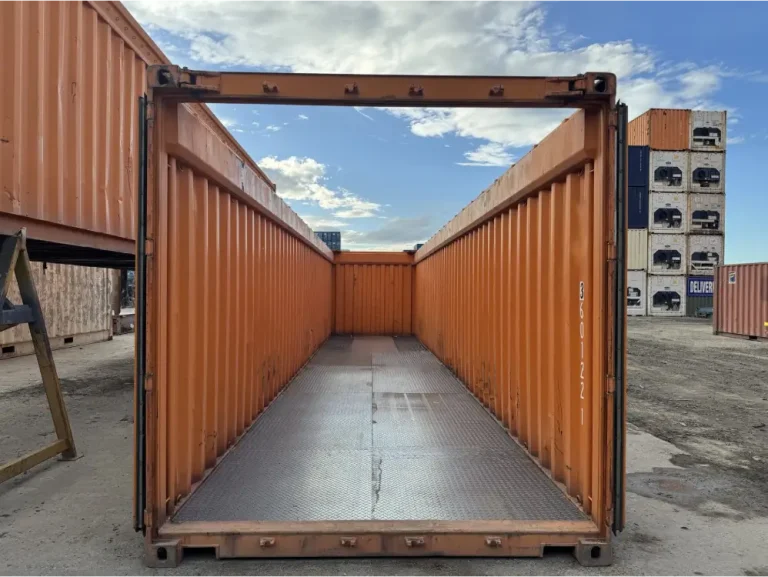
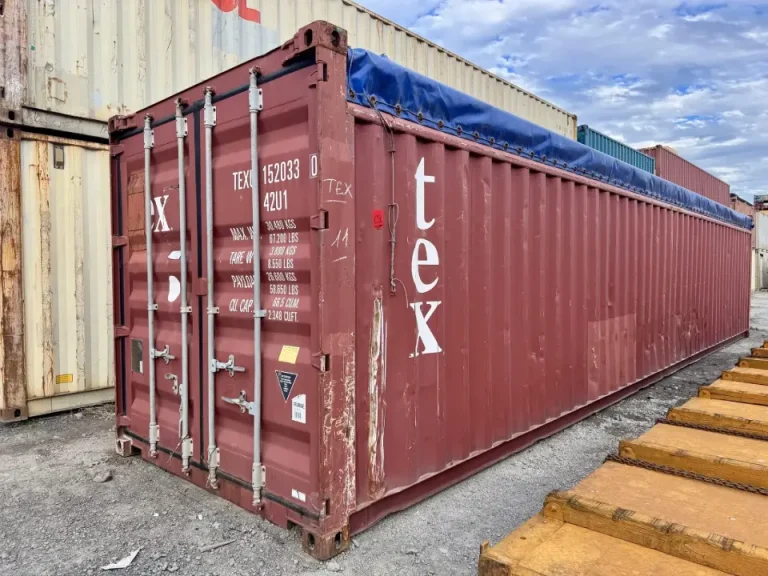
An open top container has steel walls and doors but no fixed roof. Removable roof bows and a tarpaulin close it, so cargo can be lowered in by crane, HIAB or excavator. It suits tall, heavy or awkward items that cannot go through the doors of a standard container.
Backed by the team behind Shipping-Containers.com.au



Design
How open top containers are built
Construction
Roof bows, tarpaulin and a removable header
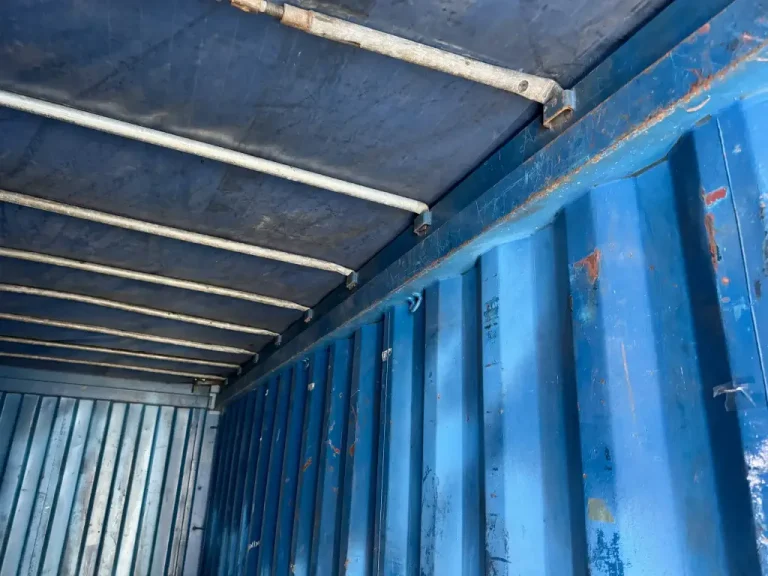
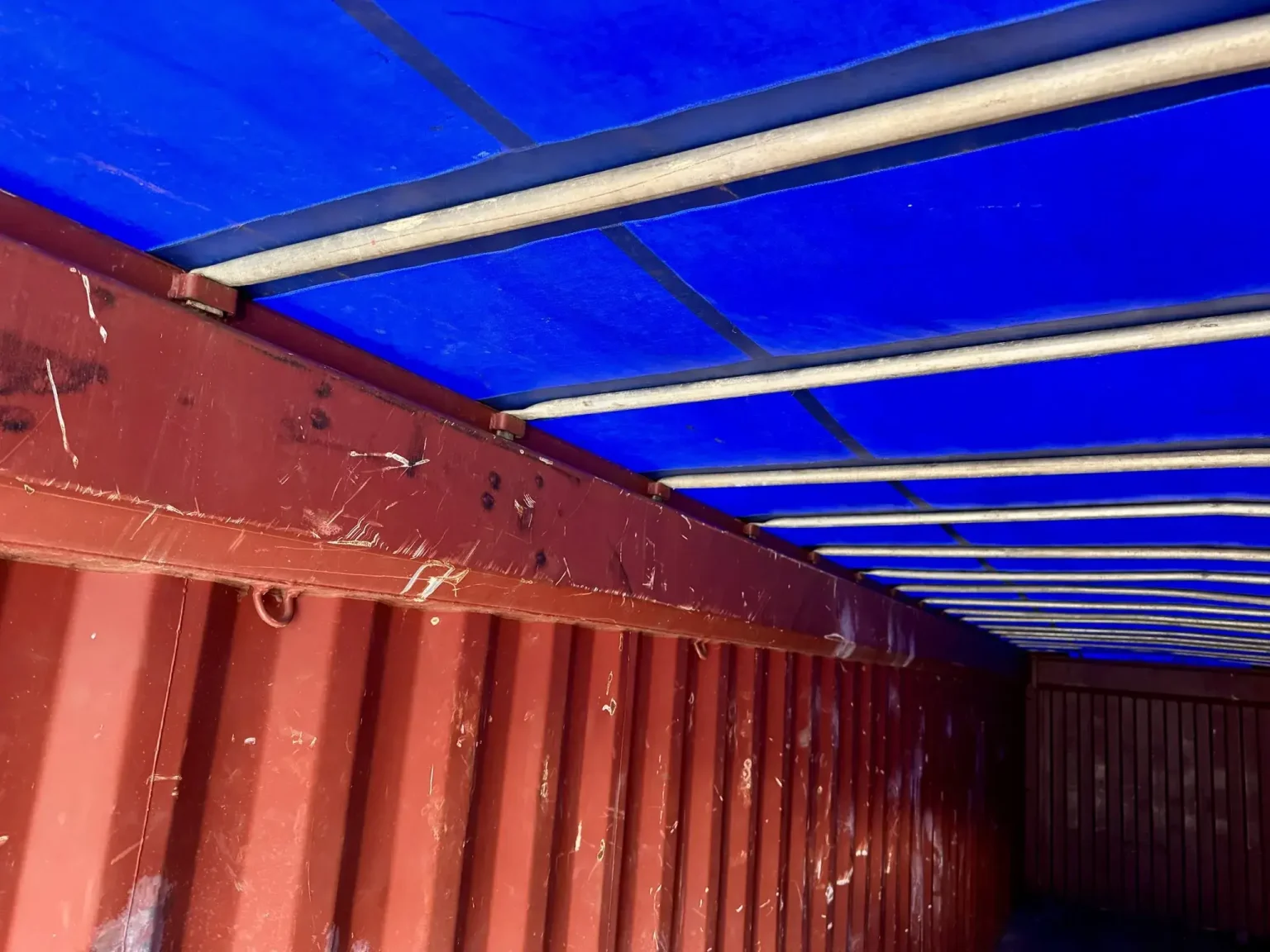
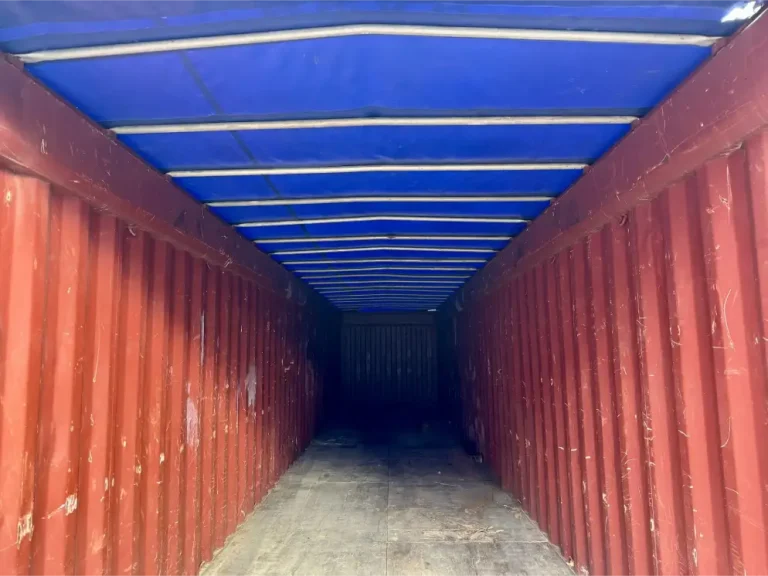
The walls, floor, end doors and corner posts match a standard dry container. The roof is replaced with removable steel roof bows and a heavy-duty tarpaulin tied down along the top rails. On many units the header beam above the doors can swing out or be removed, so tall items can also be loaded through the door end.
Open tops come in 20ft and 40ft lengths, mostly in standard height. Internal dimensions are close to a standard container, but fitted roof bows reduce the usable height. Ask whether the bows and tarp are included and in what condition, because a missing or torn tarp is a common gap on used units. For how open tops compare with other types, see the overview of container types, 8ft to 48ft on our Australian site.
Loading
Loading from above
With the bows removed, the whole floor is open from above. A crane or HIAB can lower machinery, engines, pipe bundles, steel or timber straight into position. Loads taller than the walls can travel with the tarp tied over them, within the height limits the transport operator sets.
Before loading, check the floor rating with the supplier and spread concentrated loads on timber bearers so the floor cross members are not overloaded.
When an open top makes sense
- Tall machinery or plant that does not fit through a door opening of about 2.28 m high
- Heavy items that need crane loading, such as engines, transformers or steel fabrication
- Loose materials loaded with an excavator or loader on construction sites and in scrap and recycling yards
- Export cargo that must be top-loaded. For overseas moves, book open top equipment through a freight forwarder or shipping line, because containers bought or hired for use on land in New Zealand are a separate market.
Limits for storage
An open top is a poor choice for long-term dry storage. A tarp is less watertight than a steel roof, lets light and dust in and is easy to cut, so security is lower. Water can pond on a sagging tarp and find its way in at the tie-down points, and condensation still forms on the steel walls. For weathertight storage a standard used shipping container is cheaper and more secure, and our condensation guide explains how to keep contents dry.
If you only need top access now and then, a supplier may be able to fit a steel lid to an open top, or cut a roof hatch into a standard container. Both are custom jobs, so describe the opening size you need when you ask for a quote.
| Container | Price incl. GST | Price excl. GST | Notes |
|---|---|---|---|
| 40ft open top, used | $3,852 | $3,350 | Supplier clearance list, August 2026 |
| 20ft open top | No published price | No published price | Quote only in October 2026 |
| 40ft used dry container, for comparison | $3,000 to $6,595 | $2,609 to $5,735 | Standard and high cube, wind and watertight or B grade |
Prices and availability
Open tops are a small share of the containers sold in New Zealand, and few sellers publish prices. In the October 2026 data the only listed unit was a used 40ft open top at $3,350 excl. GST ($3,852 incl. GST) on a supplier clearance list. That sits within the range for used 40ft dry containers, which were listed at $3,000 to $6,595 incl. GST in the NZ shipping container price index. Because availability is patchy, allow time and be flexible on colour and grade. Our container grades guide explains the condition labels sellers use.
Hire is possible but less common than for standard boxes. Shipping lines supply open tops for export bookings, while land-based hire depends on what a supplier has in its fleet. Mention open top in your request and say whether a flat rack container would also work, which widens your options.
On site
Delivery and site use
Delivery
Delivery and placement
Open tops are delivered like standard containers, by tilt tray, swinglift or HIAB. Keep the bows fitted and the tarp tied down for transport unless the supplier says otherwise. Place the container on level, firm ground or sleepers so the doors stay square and water drains off the tarp. Our HIAB vs swinglift guide explains which truck suits your access.
Construction
On construction sites
On larger sites an open top can sit within crane reach and take materials lifted straight from a delivery truck. It also works as a store for steel offcuts or heavy items that will later be lifted out by crane. See our construction and workshop containers page for other site storage options.
Request open top container quotes
Tell us the size, what you are loading, whether you want to buy or hire and where the container is going. Suppliers who service your area quote you directly.
Get a free quoteFAQ
Open top container questions
Open top containers carry and store cargo that is too tall for the doors or needs loading from above by crane, HIAB or excavator. Typical loads are machinery, engines, steel, timber, pipe bundles and bulk materials. They are also used on construction sites as crane-loaded stores. For general dry storage, a standard container with a steel roof is the better choice.
Not as reliably as a standard container. The tarpaulin keeps most rain out when it is in good condition and tied down tightly, but water can pond on a sagging tarp and get in at the tie-down points. For anything that must stay dry, use a standard container or cover the goods inside. Check the tarp condition before buying a used unit.
Very few NZ sellers publish open top prices. In the Shipping-Containers.co.nz NZ price index data for October 2026, one used 40ft open top was listed at $3,350 excl. GST ($3,852 incl. GST) on a supplier clearance list. No 20ft open top prices were published. Ask suppliers to quote through our quote form, including delivery to your site.
For export cargo, shipping lines provide open tops as part of the freight booking, usually arranged by a freight forwarder. For use on land in New Zealand, hire depends on whether a local supplier has open tops in its fleet. Ask for one specifically, give the hire period and delivery address, and consider a flat rack as an alternative.
An open top keeps its side walls, end walls and doors and only loses the roof, so it suits tall cargo that fits within the container’s width. A flat rack has no side walls or roof, only a base and two end walls, so it suits cargo that is wider or longer as well as taller. See the container types overview for other options.