



HIAB vs Swinglift: Container Delivery Options in NZ

Most shipping containers in New Zealand arrive on one of two trucks: a HIAB or a swinglift. Both lift the container rather than sliding it off, so both can set it down on a prepared base. They work in very different ways, though, and the one that suits your site depends on where the container has to go, how much room there is beside the truck and what is overhead. A third option, the tilt tray, is cheaper where the site allows it.
This guide explains how each truck works, what it needs on site and which one to ask for. For the wider picture of booking and site preparation, see our shipping container delivery guide.
How a HIAB delivers a container
HIAB is the name New Zealanders use for a truck-mounted knuckle-boom crane. The container travels on the truck deck, the driver puts down stabiliser legs, and the crane lifts the container off and swings it into position. Because the crane can reach sideways and over obstacles, a HIAB can place a container over a fence, beside a house or onto a pad that the truck cannot drive up to.
The limits are reach and weight. The further the crane has to reach, the less it can lift, so heavier containers and long reaches do not mix. That is why HIABs are often used for 10ft and 20ft containers. A 20ft weighs roughly 2.2 tonnes empty; anything stored inside adds to that, so tell the operator if the container will not be empty. The stabiliser legs press hard on small areas of ground and need a firm footing, and the boom needs clear air above it.
How a swinglift works
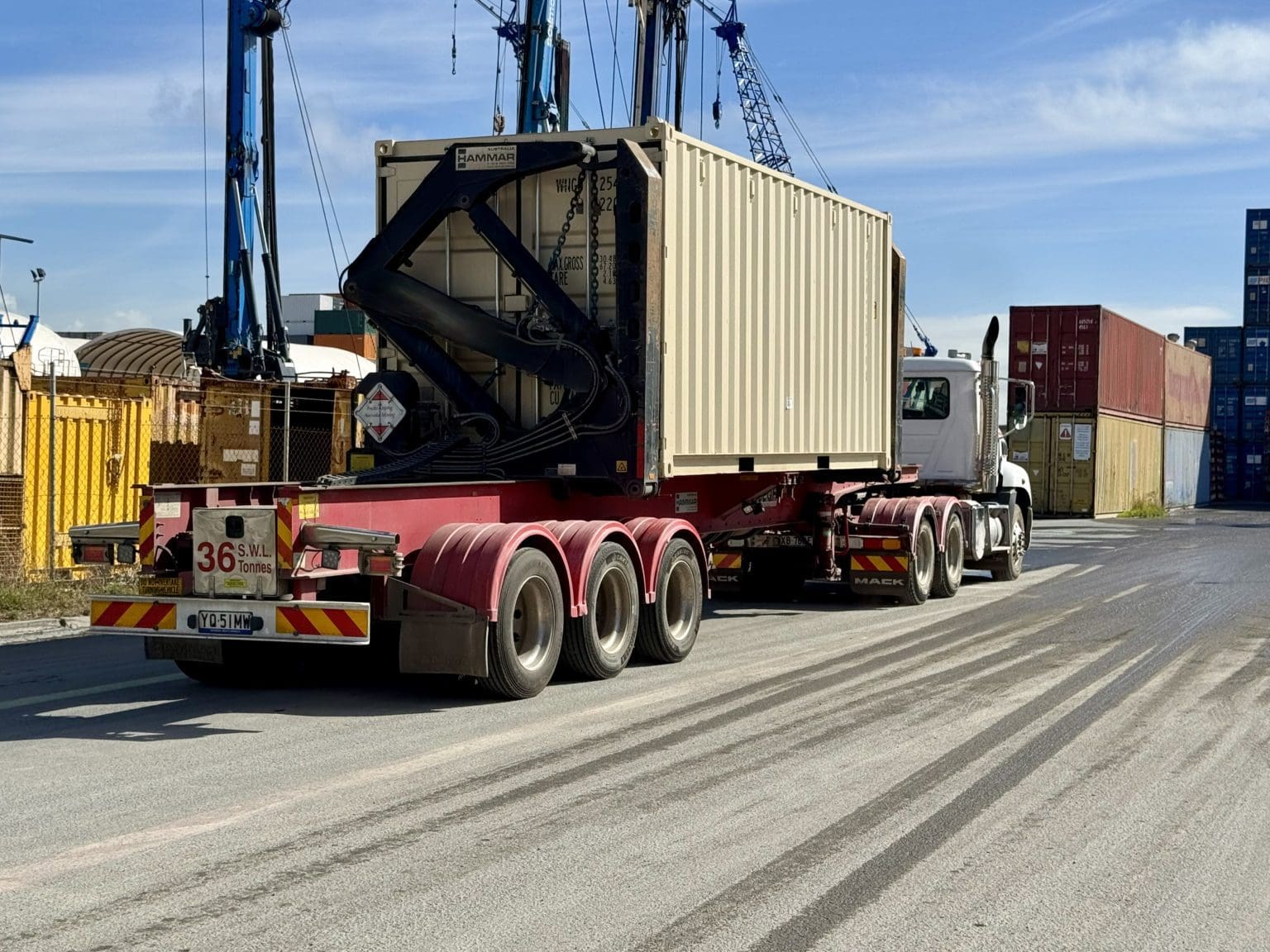
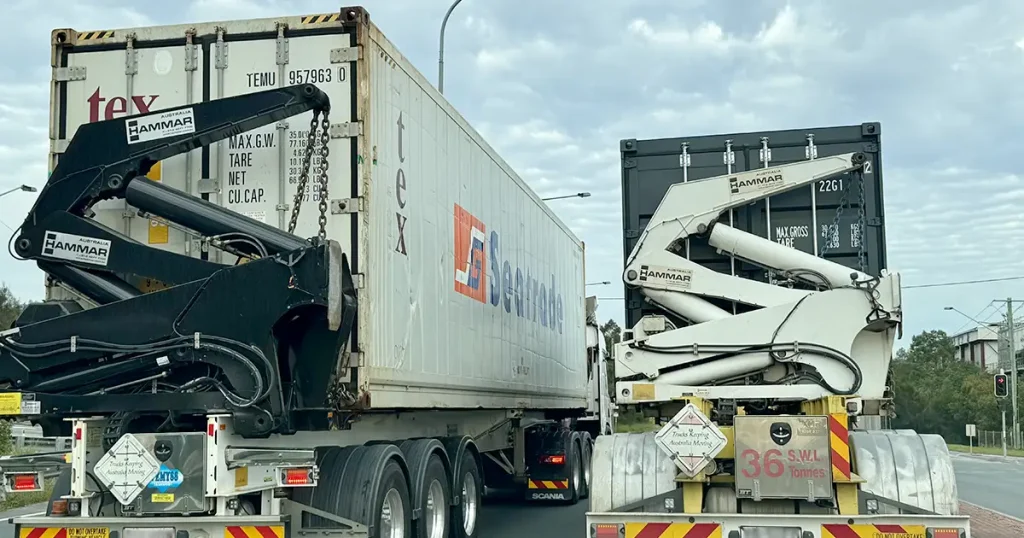
A swinglift, also called a side loader or sidelifter, is a trailer with two cranes, one at each end. The cranes lift the container off the trailer and lower it beside the truck. A swinglift can set a container down at ground level, onto a pad or sleepers, or onto another truck, and it can do the reverse: pick a container up off the ground and load it. That makes it a common choice for uplifting containers from a seller’s yard, collecting hire units and relocating containers between sites.
The swinglift needs a long, level, firm strip roughly the length of the truck and trailer, plus about 4 to 5 m of width beside it for the container and the stabiliser legs. It also needs overhead clearance for the crane arms. Swinglifts are common for both 20ft and 40ft containers, and for a 40ft container they are usually the practical choice.
| HIAB | Swinglift | Tilt tray or flat deck | |
|---|---|---|---|
| How it places the container | Crane lifts and swings it into position | Two cranes lower it beside the trailer | Deck tilts and the container slides off the back |
| Reach over fences or obstacles | Yes, within the crane’s reach | No, sets down alongside the trailer | No |
| Typical container sizes | Often 10ft and 20ft | 20ft and 40ft | Depends on deck length |
| Space needed | Room for the truck and its stabiliser legs | Level strip the length of the rig plus about 4 to 5 m width | Straight run-off of about twice the container length |
| Ground | Firm footing under stabiliser legs | Firm and level along the whole strip | Firm and flat where the container lands |
| Overhead clearance | Boom height during the lift | Crane arms above the container | Raised deck end, often quoted at 7 m or more for a 20ft |
| Can lift a container off the ground | Yes, within capacity | Yes | No |
| Relative cost | Usually the more expensive option | Quoted per job | Described by one supplier as its cheapest option |
Where a tilt tray fits in
A tilt tray or tilt deck raises the front of its deck so the container slides off the back onto the ground. It is the simplest delivery: one national supplier describes the flat deck as its cheapest option and the HIAB as the more expensive one. The catch is space. A tilt tray needs a straight, flat run-off of about twice the container length, and the raised deck end needs overhead clearance often quoted at 7 m or more for a 20ft. Door direction is fixed by how the container was loaded at the depot, so agree it at booking. Sliding a container onto sleepers or piers needs care, so tell the driver exactly what base you have prepared.
Which truck suits your site
- Suburban section, container going behind a fence or beside the house: a HIAB, if the crane can reach the spot from where the truck can park.
- Farm or lifestyle block with open, level ground: a swinglift or a tilt tray. See farm storage containers for rural placement tips.
- 40ft container: usually a swinglift, because of the length and weight.
- Small 10ft unit into a tight driveway: a HIAB or a small tilt tray. Our 10ft container page covers small sites.
- Container going onto concrete piers or a pad that must be hit precisely: a HIAB or swinglift, which lift rather than slide.
- Steep hill section where the truck must stand on the street: often a HIAB working from the road, which may need a council permit. Our Wellington page covers hill-suburb deliveries.
- Collecting a container from a private seller or relocating your own: a swinglift or HIAB, because the container has to be lifted off the ground.
Power lines and other hazards
Any crane or tilting deck must keep clear of overhead power lines. The NZ code of practice NZECP 34 sets minimum approach distances for mobile plant near overhead lines, commonly cited as 4 m, unless the line owner agrees otherwise in writing. Check the current distance with WorkSafe electricity guidance or your lines company, which can arrange covers or a shutdown. Also look for tree branches, eaves, carports and phone lines along the route and above the drop point.
Cost differences
No NZ operator we checked publishes a HIAB or swinglift tariff; all quote per address. The published examples and the factors that move a quote are in our guide to shipping container transport costs in NZ. As a rule, the more the site demands of the truck, the higher the price, so a clear and level drop point that suits a tilt tray or a quick swinglift set-up costs less than a long HIAB reach over a house. Send photos of the access when you request a delivered quote, and the supplier can tell you which truck they would use.
Prepare the base before the truck arrives
Both HIAB and swinglift deliveries can set a container straight onto sleepers, concrete pads or a gravel pad, so have the base built and level first. Our shipping container foundations guide compares the options. To check what the truck has to lift, see the container weight guide.
Find out which truck suits your site
Send us the address, a few photos of the access and where the container should go. Suppliers who service your area will tell you which truck they would use and quote the delivery.
Get a free quoteFAQ
HIAB and swinglift questions
A swinglift, also called a side loader or sidelifter, is a truck and trailer with two cranes that lift a container off the side of the trailer and set it down beside the truck. It can place a container on the ground, on a pad or onto another truck, and it can pick one up again. It needs a long, level strip of ground and about 4 to 5 m of width beside the trailer.
In New Zealand, HIAB is the everyday name for a truck with a knuckle-boom crane mounted behind the cab. The crane lifts the container off the deck and swings it into place, which means it can reach over fences or onto a pad the truck cannot drive to. Its lifting capacity falls as the reach increases, which limits heavier containers and long reaches.
It depends on the truck and the reach. HIABs are often used for 10ft and 20ft containers because their capacity drops as the crane reaches further out, and a 40ft is longer and heavier. 40ft deliveries are more commonly made by swinglift. If your site only suits a crane, ask the supplier whether a larger crane truck is available for your address.
No NZ operator we checked publishes HIAB or swinglift tariffs, so compare quotes for your address. One national supplier describes the flat deck as its cheapest delivery option and the HIAB as the more expensive one. Distance from the depot and time on site often make a bigger difference than the truck type itself.
A tilt tray slides the container off the back of the deck, so it can only place it where the container lands as it slides. That works on a level gravel pad or sleepers with care, but hitting piers or pads precisely is easier with a HIAB or swinglift, which lift the container and lower it into place. Tell the supplier what base you have prepared.
Andreas Atrott | Shipping container specialist and founder
Andy has worked with shipping containers since 2013. He runs shipping-containers.com.au from Brisbane and Shipping-Containers.co.nz for New Zealand buyers, and spends much of his time inspecting containers, checking grades and sorting out deliveries. His YouTube channel Andy Knows Containers covers buying, inspecting, delivering and converting containers.
Blog
More container guides

Do You Need Consent for a Shipping Container in NZ?
New vs Used Shipping Containers: NZ Buying Guide
HIAB vs Swinglift: Container Delivery Options in NZ
Need a container for your project?
Tell us the size, condition and delivery address. Your request goes to suppliers who service your area.
Get a free quote