



Shipping Container Weight: 10ft, 20ft and 40ft Tare and Gross

An empty 20ft shipping container weighs about 2.2 tonnes and an empty 40ft about 3.7 tonnes. High cubes weigh a little more, and small 8ft and 10ft units about 1 to 1.5 tonnes. Those figures matter for three practical decisions: which truck can deliver the container, what it should sit on, and how much you can safely load into it. This guide gives typical weights for every common size, shows where to find the exact figures on a container, and explains what the numbers mean on a New Zealand section, farm or building site.
Tare, payload and maximum gross weight
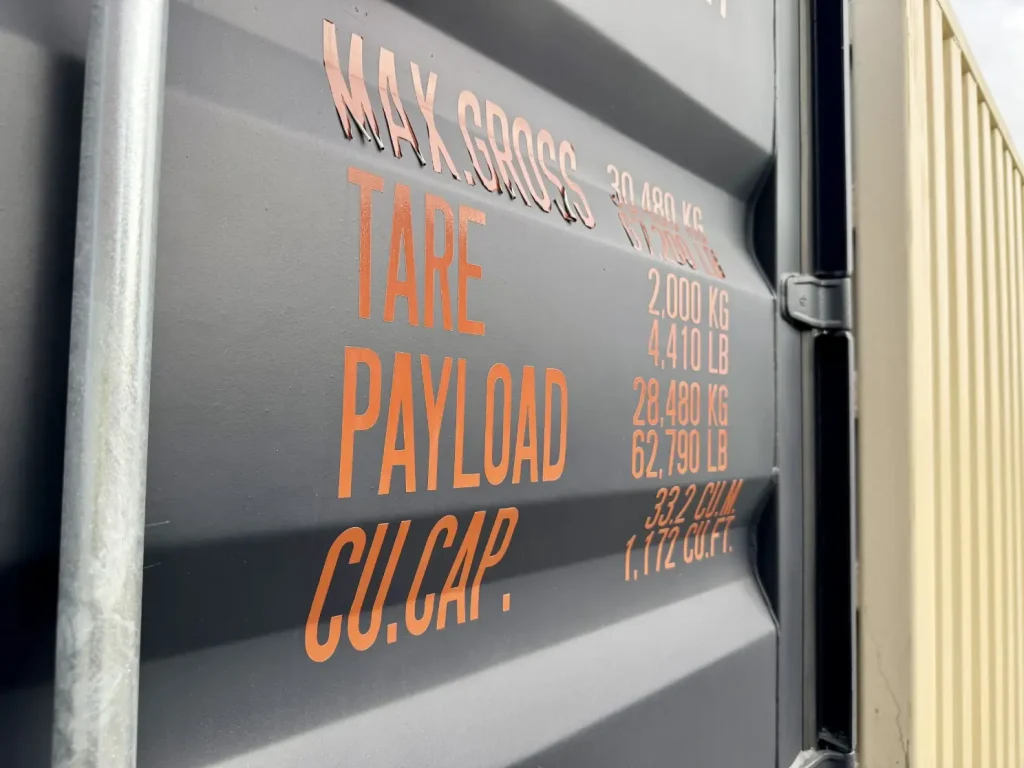
Every container is described by three weights, and they are printed on the right-hand door of most units.
- Tare weight is the weight of the empty container, including the floor and doors.
- Maximum gross weight is the most the container and its contents may weigh together, as certified for transport.
- Payload, sometimes marked as net or max cargo, is the maximum gross weight minus the tare. It is the most cargo the container is rated to carry.
The certified values sit on the CSC safety approval plate, a small metal plate usually riveted to the left-hand door. It also shows the manufacture date, which is useful when you compare used containers. Cut-down 8ft and 10ft storage units and heavily modified containers are no longer certified for freight, so their plates, if present, no longer apply.
| Container | Tare (empty) weight | Maximum gross weight | Approximate maximum payload |
|---|---|---|---|
| 8ft new-build mini | about 900 to 1,100 kg | not usually CSC-rated | ask the supplier |
| 8ft cut-down | about 1,000 to 1,300 kg | not rated after cutting | ask the supplier |
| 10ft | about 1,200 to 1,500 kg | about 10,000 kg where rated | about 8,500 to 8,800 kg |
| 20ft standard | about 2,150 to 2,350 kg | 24,000 kg (older) to 30,480 kg | about 21,700 to 28,300 kg |
| 20ft high cube | about 2,350 to 2,500 kg | usually 30,480 kg | about 28,000 kg |
| 40ft standard | about 3,650 to 3,800 kg | 30,480 to 32,500 kg | about 26,700 to 28,800 kg |
| 40ft high cube | about 3,800 to 4,000 kg | 30,480 to 32,500 kg | about 26,500 to 28,700 kg |
Why two containers of the same size weigh differently
Tare weights in the table are ranges because containers are not identical. Older units often have thicker floors or heavier doors, some factories use different steel gauges, and repairs add patches and welds. Modifications add weight quickly: a roller door, a personnel door with a steel frame, windows, insulation panels, lining, shelving and electrical fittings can add several hundred kilograms to a 20ft. Refrigerated and insulated containers are considerably heavier than dry containers of the same size because of their insulated walls and, on reefers, the refrigeration unit. If the weight matters for your site, ask the supplier for the tare figure painted on the door of the actual unit rather than relying on a typical value. Our dimensions page lists the matching sizes, door openings and volumes.
What weight means for delivery
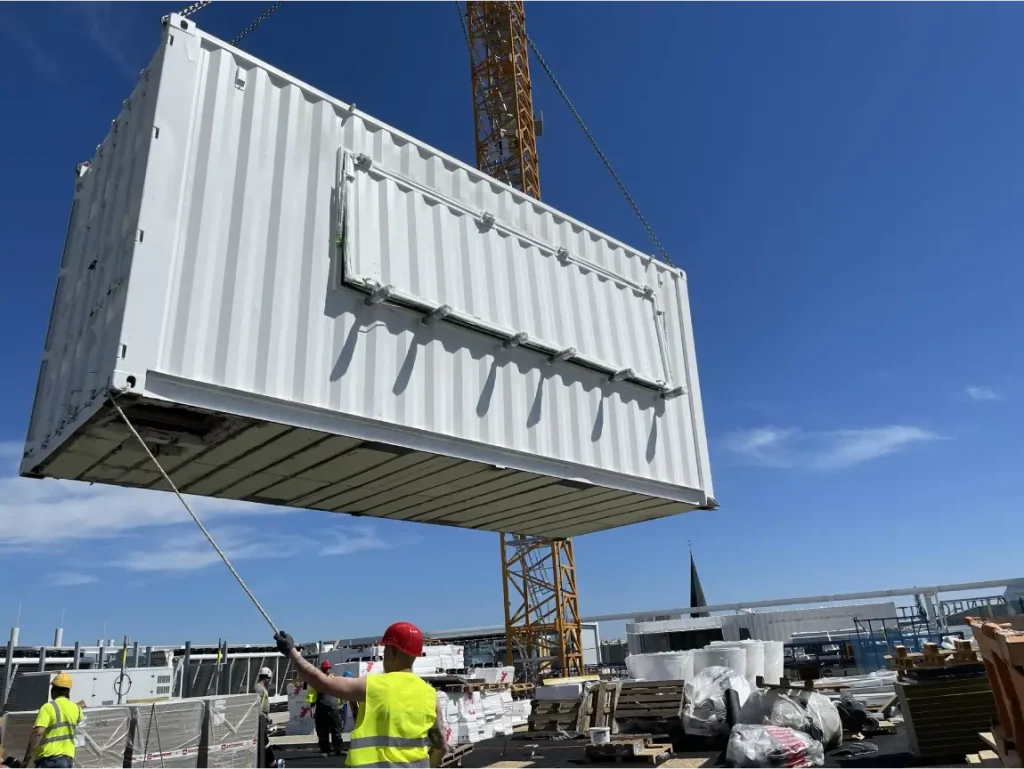
Container deliveries in New Zealand use three types of truck, and weight affects each differently.
- HIAB crane trucks lift the container with a truck-mounted crane. Their capacity drops as the boom reaches further out, so a 2.2 tonne 20ft that is easy to lift close to the truck may be too heavy at full reach over a fence. That is why HIABs are mostly used for 8ft, 10ft and 20ft containers, and why suppliers ask how far the spot is from where the truck can park.
- Swinglifts (side loaders) lift with two cranes at the ends of the trailer and handle both 20ft and 40ft containers. They need a firm, level area alongside, because the stabiliser legs carry the load during the lift.
- Tilt trays slide the container off the back of the deck. Weight matters less for the lift, but the full truck still has to cross your ground.
The delivery truck usually weighs much more than the container it carries. Soft lawns in a wet winter, septic tanks, drainage pipes, shallow services and old driveways can all give way under a truck before the container is even unloaded. Mark them before delivery day. Our guide to HIAB vs swinglift delivery compares the trucks, and the transport cost guide explains how distance and access change the price.
Moving a loaded container
Suppliers deliver containers empty. If you want a loaded container moved later, for example when relocating a farm store or taking stored furniture to a new house, tell the transport operator the approximate weight of the contents. A container that weighs 2.2 tonnes empty can easily weigh 6 to 8 tonnes full of furniture or 15 tonnes or more with machinery and parts, which may need a different truck. Secure the load inside so it cannot shift while the container is tilted or lifted.
| Example | Total weight | Load per corner | Pressure on a 600 x 600 mm pad |
|---|---|---|---|
| 20ft, empty | about 2.25 t | about 0.56 t | about 15 kPa |
| 20ft with 8 t of household and garden storage | about 10.25 t | about 2.6 t | about 70 kPa |
| 40ft, empty | about 3.75 t | about 0.94 t | about 26 kPa |
| 40ft with 15 t of machinery and parts | about 18.75 t | about 4.7 t | about 128 kPa |
What weight means for foundations
A container stands on its four corner castings, so its whole weight passes through four small steel blocks. Set directly on soil, each casting presses a small area hard and sinks unevenly, especially after rain. Pads, sleepers or piers under each corner spread that load over a larger area, which is why a 600 mm square concrete pad under each corner reduces the pressure to the modest figures in the table. Council guidance on containers from Invercargill City Council and Grey District Council assumes good ground with an ultimate bearing capacity of 300 kPa. Peat, fill, clay that turns soft in winter and sloping sites need more care.
For storage, compacted gravel, concrete pads or treated timber sleepers under the corners are normal, with a slight fall towards the doors for drainage. MBIE noted in Determination 2014/030 that shipping containers are inherently stable even when empty and that a container simply placed for storage does not need foundations. A container that people live or work in, one stacked on another, or one set on a deck, retaining wall or raised piles is different: it needs engineered foundations and fixings, and usually building consent. Our foundations guide compares gravel pads, piers, sleepers and slabs.
Weight, wind and tie-downs
An empty 20ft weighs little for its size and presents a large flat side to the wind. Sites in New Zealand’s high and very high wind zones, exposed ridgelines and coastal sections deserve extra thought, especially for empty containers or two containers with a roof between them. Your council can tell you the property’s wind zone, and BRANZ explains wind zones under NZS 3604. Engineered hold-downs are expected for occupied, stacked or raised containers and for container shelters.
How much can you load inside
For storage, the floor usually limits you long before the rated payload does. Container floors are tested to carry the axle load of a forklift working inside, so spread heavy items over the floor rather than stacking them in one spot, keep the heaviest items low, and load over the cross members near the walls where you can. If you plan to store machinery, pallets of stone, steel or anything over a few tonnes, tell the supplier when you request a quote so they can recommend a suitable unit and floor condition.
Need a container placed somewhere tricky?
Tell us the size, the delivery address and how far the spot is from where a truck can park. Suppliers who service your area will check the weight and reach before they quote.
Get a free quoteFAQ
Container weight: common questions
An empty 20ft standard container weighs about 2,150 to 2,350 kg, roughly 2.2 tonnes. A 20ft high cube weighs about 2,350 to 2,500 kg. Modern 20ft containers are rated to a maximum gross weight of 30,480 kg including cargo, and older units to 24,000 kg. The exact tare is printed on the door and on the CSC plate. See the 20ft containers page for sizes and prices.
An empty 40ft standard container weighs about 3,650 to 3,800 kg and a 40ft high cube about 3,800 to 4,000 kg. Maximum gross weight is usually 30,480 or 32,500 kg, which leaves a payload of roughly 26.5 to 28.8 tonnes. Delivery is normally by swinglift because of the length and weight. See the 40ft containers page for prices and access.
Large HIAB trucks can, but it is unusual. A 40ft weighs about 3.7 tonnes empty and is 12 metres long, and a crane’s capacity drops quickly as it reaches out. Most 40ft deliveries in New Zealand use a swinglift, which lifts from both ends of the trailer. If only a HIAB can reach your site, tell suppliers so they can check a suitable crane is available.
On paper a modern 20ft can carry about 28 tonnes of cargo and a 40ft about 26.5 to 28.8 tonnes, as long as the load is spread evenly and secured. For storage on your property, the practical limits are the floor, the ground under the corners and how the container will be moved later. Heavy loads concentrated in one spot can damage the floor well below the rated payload.
A container placed for storage on level ground is generally stable, and MBIE has described containers as inherently stable even when empty. Engineered hold-downs are expected for containers people live or work in, stacked or raised containers, units on piles, and container shelters with a roof. Exposed sites in high wind zones deserve a check with an engineer even for storage.
Andreas Atrott | Shipping container specialist and founder
Andy has worked with shipping containers since 2013. He runs shipping-containers.com.au from Brisbane and Shipping-Containers.co.nz for New Zealand buyers, and spends much of his time inspecting containers, checking grades and sorting out deliveries. His YouTube channel Andy Knows Containers covers buying, inspecting, delivering and converting containers.
Blog
More container guides

Do You Need Consent for a Shipping Container in NZ?
New vs Used Shipping Containers: NZ Buying Guide
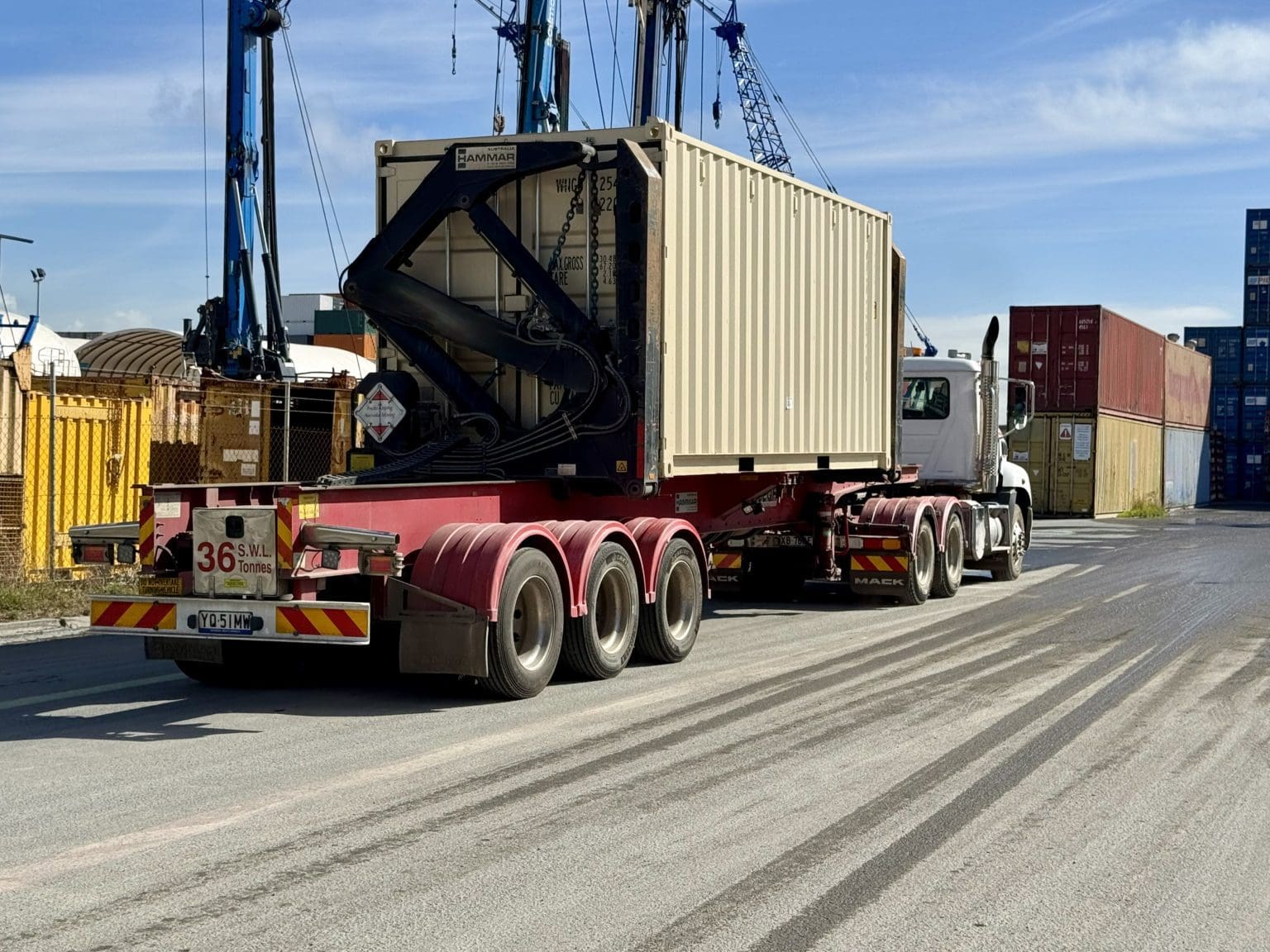
HIAB vs Swinglift: Container Delivery Options in NZ
Need a container for your project?
Tell us the size, condition and delivery address. Your request goes to suppliers who service your area.
Get a free quote