



40ft Shipping Containers for Sale in NZ
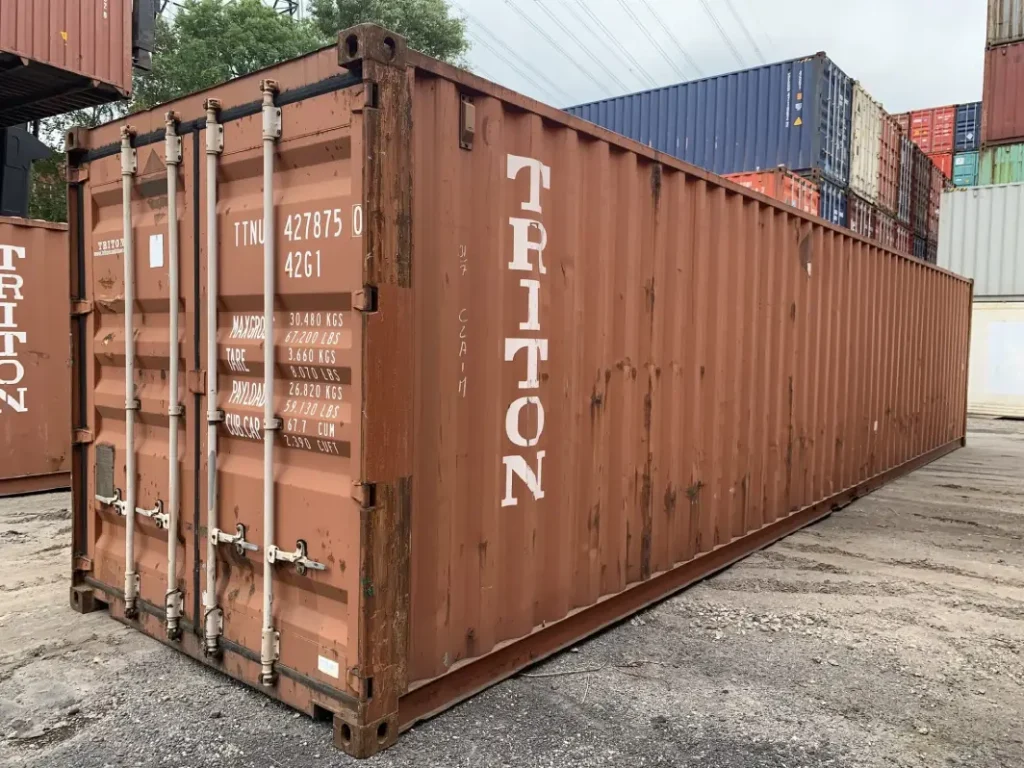
A 40 foot container gives about 28 m² of lockable floor in a 12 metre steel box. Farms, lifestyle blocks, builders and businesses use them for machinery, feed, stock and as the walls of a container shelter. Check prices, standard versus high cube, and the truck access a 40ft needs.
Backed by the team behind Shipping-Containers.com.au



| Specification | 40ft standard (GP) | 40ft high cube |
|---|---|---|
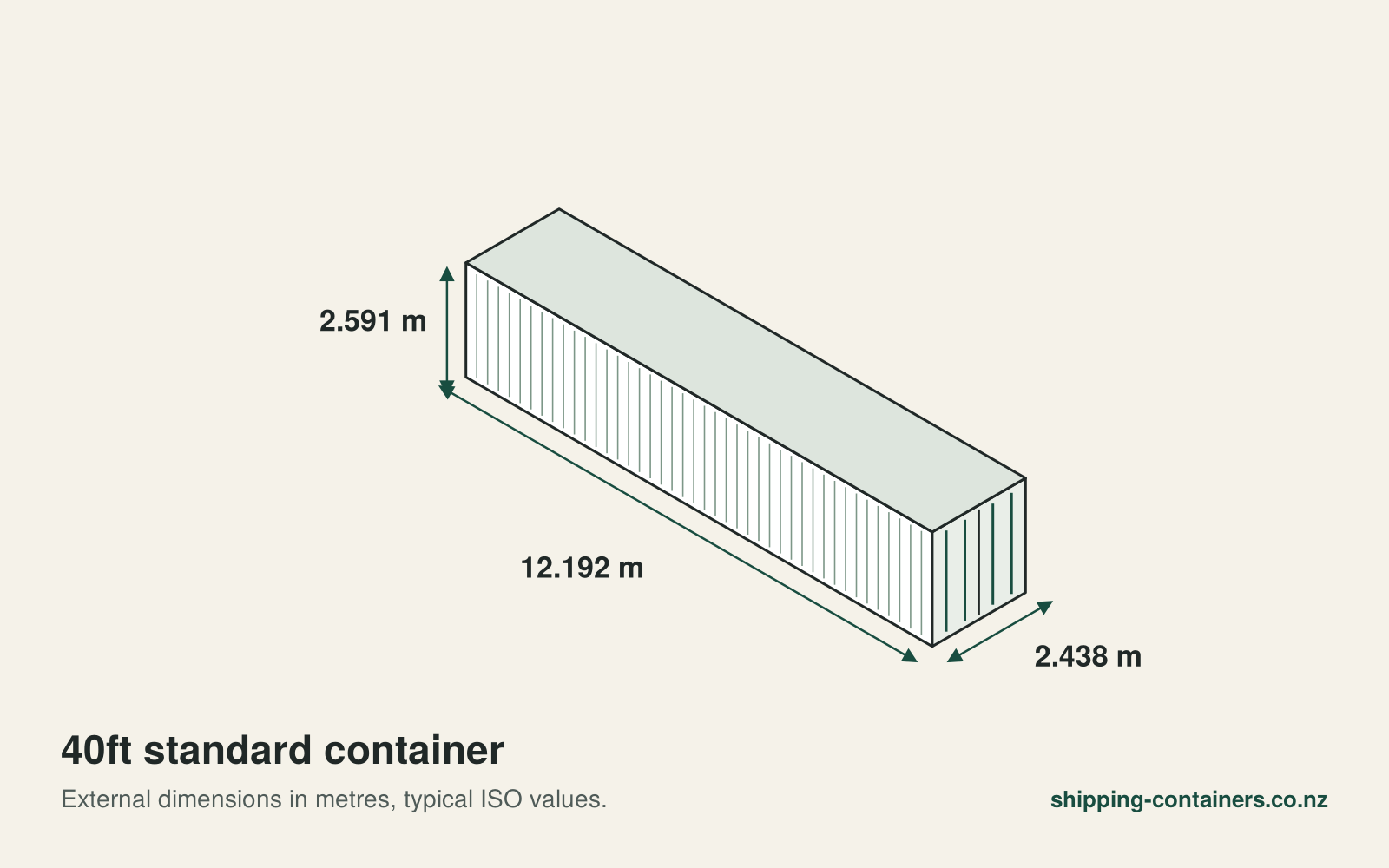
| External length x width x height | 12.192 x 2.438 x 2.591 | 12.192 x 2.438 x 2.896 |
| Internal length x width x height | 12.032 x 2.352 x 2.393 | 12.032 x 2.352 x 2.698 |
| Door opening, width x height | 2.340 x 2.280 | 2.340 x 2.585 |
| Internal floor area | 28.3 m² | 28.3 m² |
| Internal volume | 67.7 m³ | 76.3 m³ |
| Empty (tare) weight | about 3,650 to 3,800 kg | about 3,800 to 4,000 kg |
| Maximum gross weight | 30,480 to 32,500 kg | 30,480 to 32,500 kg |
| External footprint | about 29.7 m² | about 29.7 m² |
40ft container prices in NZ
Published 40ft prices are thinner than 20ft prices, so the Shipping-Containers.co.nz NZ price index for October 2026 shows them as ranges. Used 40ft standard containers graded wind and watertight or B grade were listed at $3,500 to $5,060 incl. GST, and used 40ft high cubes at $3,000 to $6,595 incl. GST. New 40ft high cubes from mainstream sellers were $6,999 to $7,395 incl. GST, with one Central Otago listing at $10,595. No NZ seller published a price for a new 40ft standard-height container in October 2026. Factory output in 2026 is concentrated in 40ft high cubes, so suppliers usually quote new 40ft stock as high cube.
Per square metre, a used 40ft is the cheapest covered storage you can buy. At about $4,000 incl. GST for 28.3 m² it works out near $140 per square metre, against roughly $265 for a used 20ft at its median of $3,680. Delivery costs more for a 40ft, so compare delivered prices. For long-term context, a NZ supplier’s June 2017 guide listed used 40ft standard units at $2,800 to $3,200 and new 40ft high cubes at $6,400 to $6,950, both excl. GST. Today’s new 40ft high cube median of $6,343 excl. GST sits at or slightly below that 2017 range. Hire rates published for a 40ft on your site ranged from $129 to $260 a month excl. GST. See every data point on the NZ price index.
| Size and condition | Listings | Range (incl. GST) | Range (excl. GST) |
|---|---|---|---|
| 40ft standard, used wind and watertight / B grade | 4 | $3,500 to $5,060 | $3,043 to $4,400 |
| 40ft standard, used as-is | 1 | $4,945 | $4,300 |
| 40ft standard, new | 0 | no published price | no published price |
| 40ft high cube, new / one-trip | 4 | $6,999 to $10,595 | $6,086 to $9,213 |
| 40ft high cube, used wind and watertight / B grade | 3 | $3,000 to $6,595 | $2,609 to $5,735 |
| 40ft high cube, used as-is / C grade | 2 | $4,025 to $6,095 | $3,500 to $5,300 |
Typical uses
Where a 40ft makes more sense than two 20fts
Farm machinery, feed and workshop storage
A 40ft takes a tractor and implements, a season’s worth of calf meal, fencing gear and a bench, all behind lockable steel doors. Waikato and Canterbury carry the largest dairy herds in the country, about 23% and 20% of all NZ cows in DairyNZ’s 2022/23 statistics. Our farm storage guide covers placement on rural sites, rodent proofing and separate storage for fuel and agrichemicals.
Container shelters and covered yards
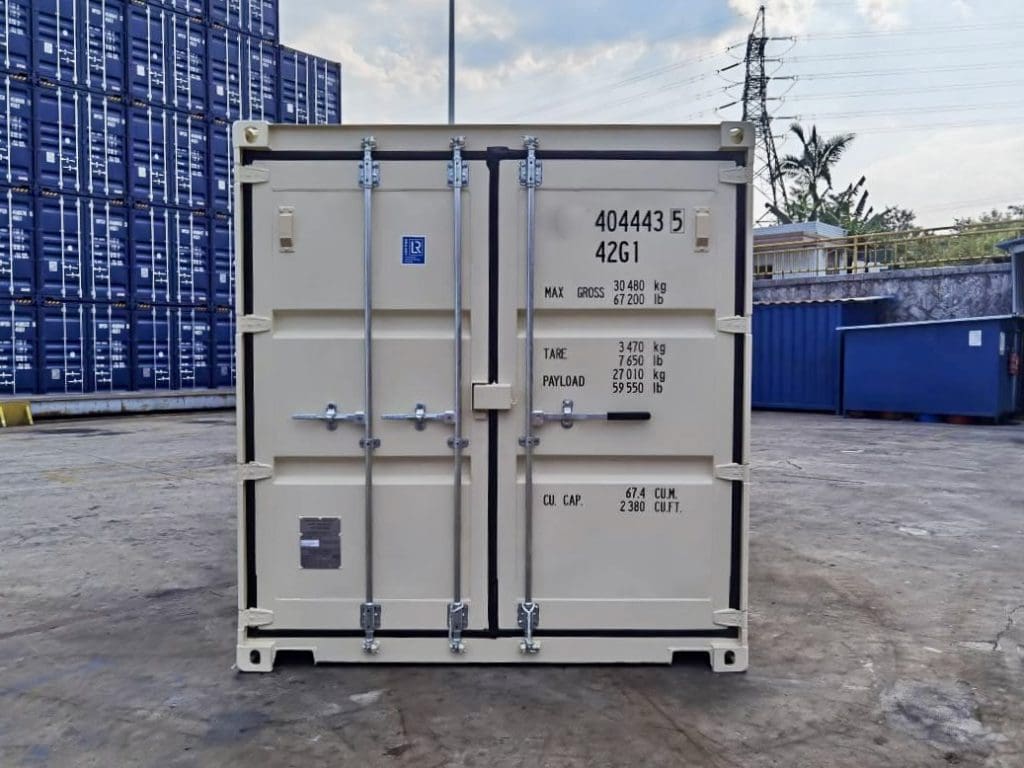
Two 40ft containers set parallel with a roof kit between them give a covered bay about 12 metres long for machinery, hay or a workshop. Shelter kits sized for 20ft and 40ft containers are sold by several NZ retailers and container suppliers. Plan consent early: in Determination 2025/018, MBIE found that container and canopy structures used by a Hamilton business needed building consent. See container shelters for sizes and wind ratings.
Bulk stock, events and business storage
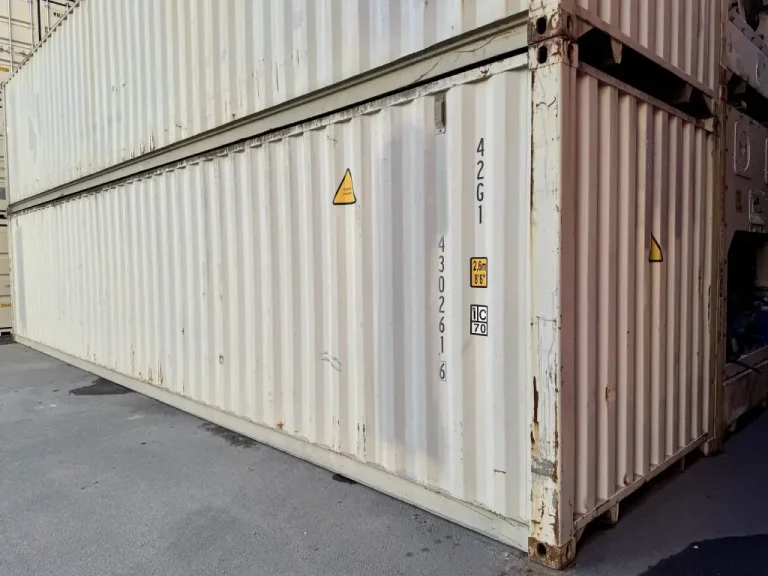
Retailers, event companies and contractors use 40ft containers for seasonal stock, staging, marquees and pallets. Twenty standard 1165 mm pallets fit in two rows of ten. A high cube adds 305 mm of height for racking and tall equipment, and a side-opening 40ft gives access along the full length if you need to reach everything without unloading from the back.
Standard height
40ft standard (GP)
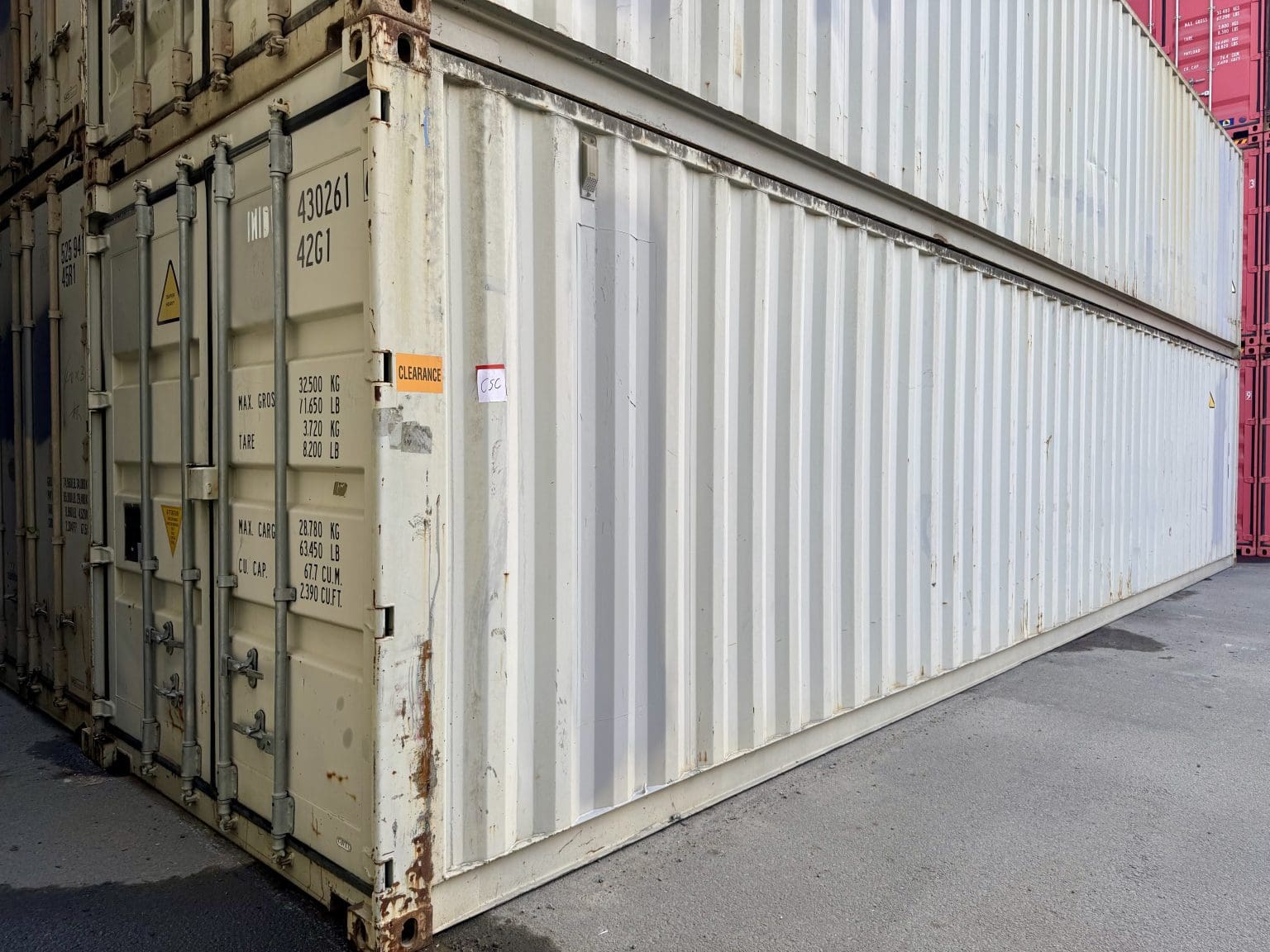
At 2.591 metres tall outside, the standard 40ft is the cheaper used option and fine for pallets, machinery under 2.2 metres and general storage. New standard-height units are scarce in New Zealand, so most buyers find them second-hand. If you need a few in matching condition, ask suppliers early.
Extra height
40ft high cube
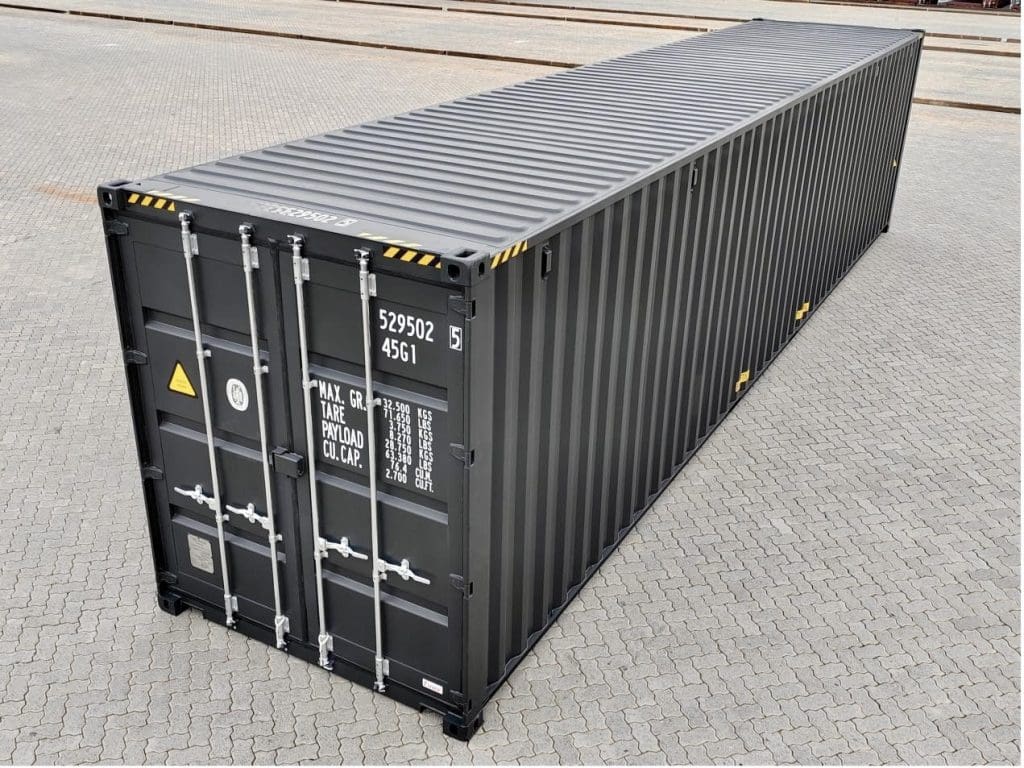
The high cube adds 305 mm of internal height and a 2.585 metre door opening. It is the usual choice for new 40ft containers, workshops, container homes and anything with racking. Compare specifications and uses on our 40ft high cube containers page.
Delivery and placement
What a 40ft needs on delivery day
Truck access for a 12 metre container
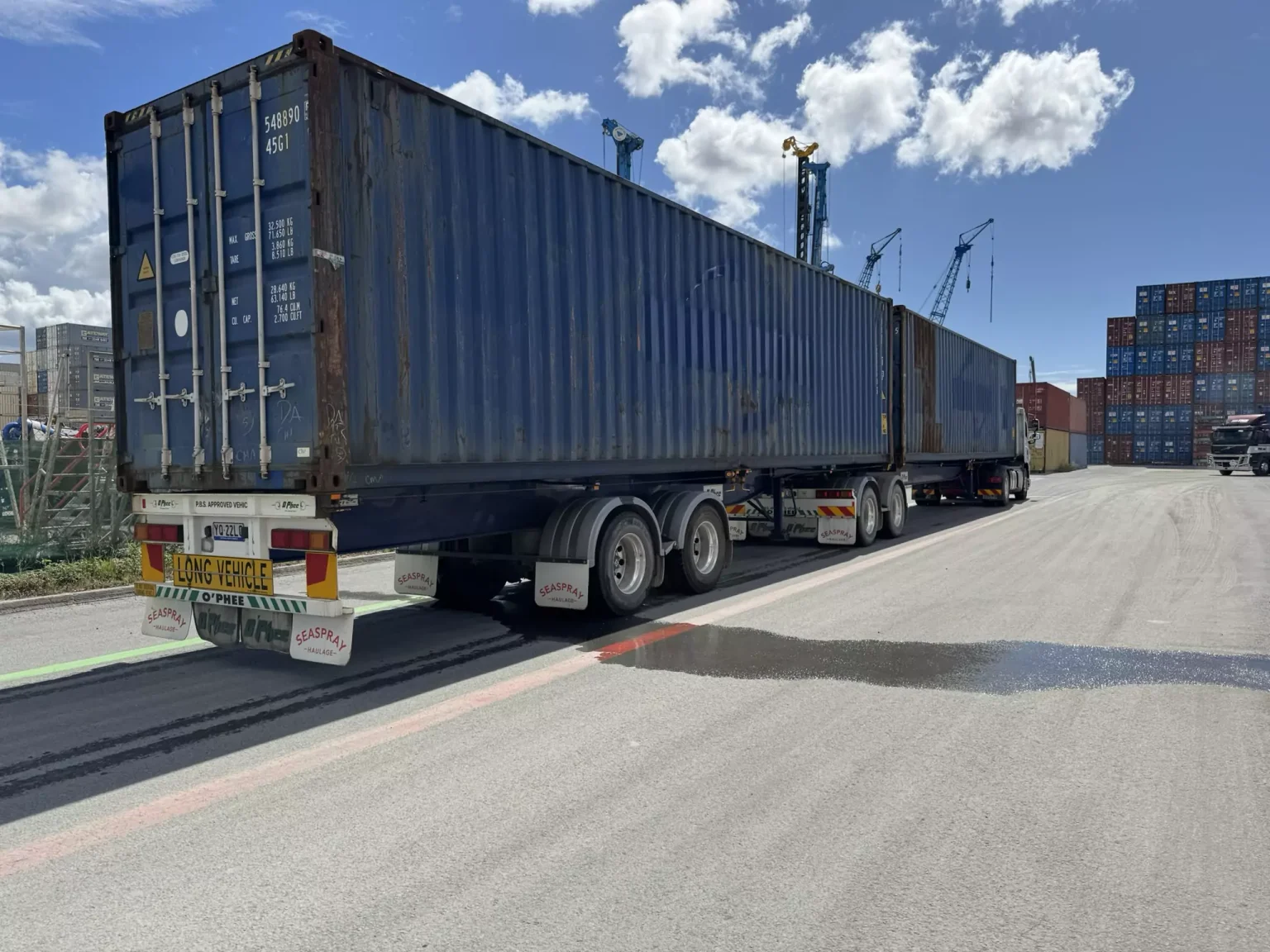
Most 40ft deliveries in New Zealand use a swinglift, which sets the container down beside the trailer. The truck and trailer need a long, level, firm area alongside the placement spot, about 4 to 5 metres wide for the container and stabiliser legs, plus room to drive in and out. A tilt tray needs a straight run-off of roughly twice the container length. HIAB trucks are rarely used for 40ft containers because of the weight at reach. Check gate widths, turns on farm tracks, soft winter ground and power lines, and read our HIAB vs swinglift guide.
Foundations and consent
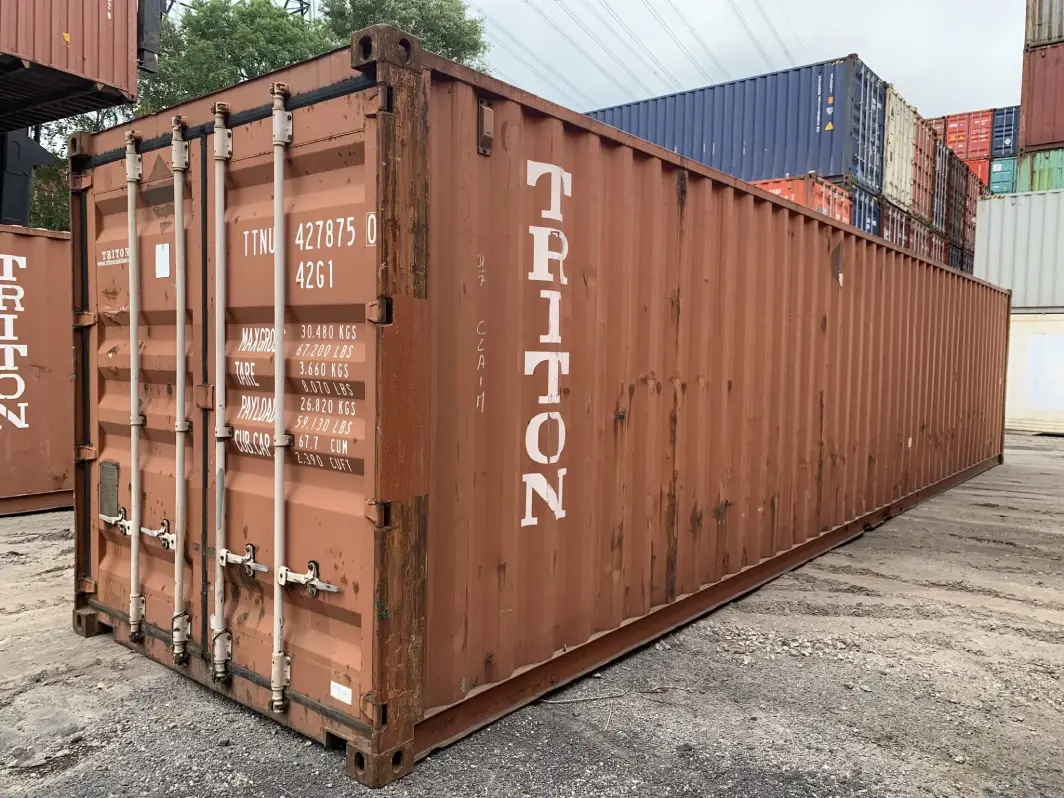
Containers carry their weight through the four corner castings, so set each corner on a firm, level pad or sleeper with a slight fall to the doors. For heavy loads or soft ground, ask an engineer about the foundation; our foundations guide compares the options. A 40ft is about 29.7 m² outside, just under the 30 m² limit for exempt small buildings, which require at least 1 metre from boundaries and other residential buildings according to building.govt.nz. Plain storage placement is generally not building work. Our consent guide explains the rest.
Get 40ft quotes with delivery worked out
Tell us standard or high cube, new or used, and describe the access: track surface, gates, turns, slope and overhead lines. Suppliers who service your area quote the container and the swinglift together.
Get a free quoteFAQ
40ft containers: common questions
A standard 40ft container is 12.192 metres long, 2.438 metres wide and 2.591 metres high outside. Inside it measures about 12.03 by 2.35 by 2.39 metres, giving 28.3 m² of floor and 67.7 m³ of space. A 40ft high cube is 2.896 metres high outside and about 2.70 metres inside. Both have a door opening about 2.34 metres wide.
Yes. A 12m shipping container for sale is a 40ft container described in metres. The exact external length is 12.192 metres, so you will also see 12.2m in listings. Standard and high cube 40ft containers share that length and differ only in height.
In October 2026, used 40ft standard containers were listed at $3,500 to $5,060 incl. GST and used 40ft high cubes at $3,000 to $6,595 incl. GST. New 40ft high cubes from mainstream sellers cost $6,999 to $7,395 incl. GST. No new 40ft standard-height prices were published. Delivery is extra and depends heavily on access, so ask for delivered quotes.
An empty 40ft standard container weighs about 3,650 to 3,800 kg and a 40ft high cube about 3,800 to 4,000 kg. The exact tare weight is on the CSC plate and printed on the doors. Maximum gross weight, container plus cargo, is usually 30,480 kg or 32,500 kg. See our container weight guide for what this means for trucks and pads.
One 40ft usually costs less than two 20fts and gives one continuous space. Two 20fts are easier to deliver to tight sites, can be placed separately, and give you two sets of doors. They can also form a shelter with a roof between them. Our 20ft vs 40ft comparison works through price per square metre and access.
Plan for the container’s footprint of about 12.2 by 2.4 metres plus door swing, and a parallel strip for the swinglift truck and trailer, with room to drive in and out without tight turns. A tilt tray needs a straight run-off of about twice the container length. Describe slopes, soft ground and overhead lines and add photos to your quote request.
Yes, but most designers choose a 40ft high cube, because insulation and linings take up height. A container people live in is a dwelling: it needs building consent, restricted building work by licensed practitioners, engineered foundations and compliance with the Building Code, including insulation. Read our container homes guide before buying the shell.