



Flat Rack Containers
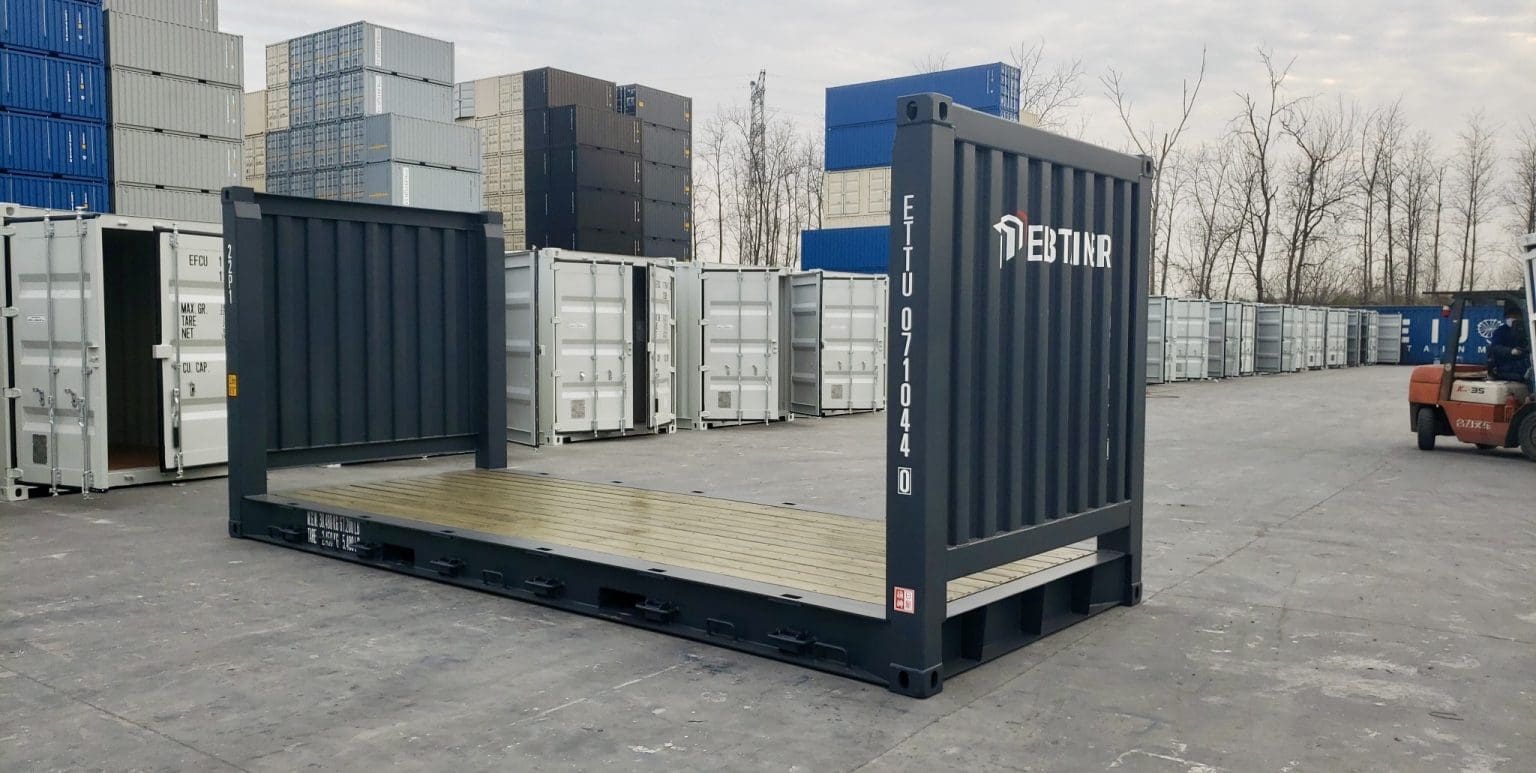
A flat rack is a container base with an end wall at each end and no sides or roof. It carries loads that are too wide, too tall or too heavy for a closed container, such as tractors, boats, timber and machinery. Fixed and collapsible types come in 20ft and 40ft lengths.
Backed by the team behind Shipping-Containers.com.au



Types
How flat racks are built
Fixed or folding
Fixed end and collapsible flat racks
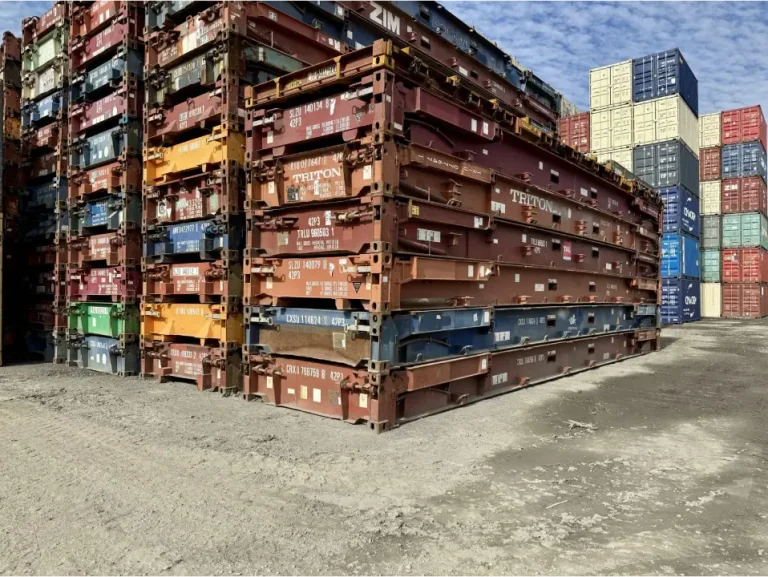
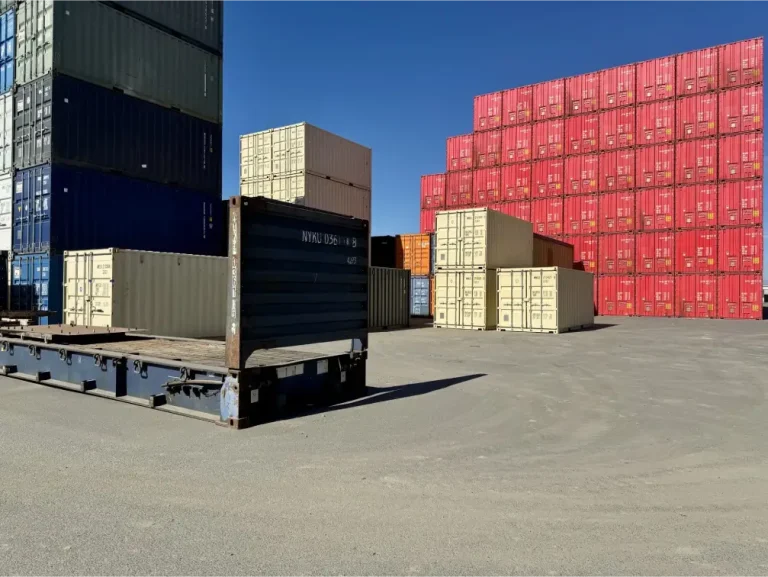
A fixed end flat rack has end walls welded in place. It is simple and strong and suits repeated use for the same kind of cargo. A collapsible flat rack has end walls that fold down onto the base. Empty collapsible racks can be stacked in bundles, which saves space and freight cost when they are moved empty.
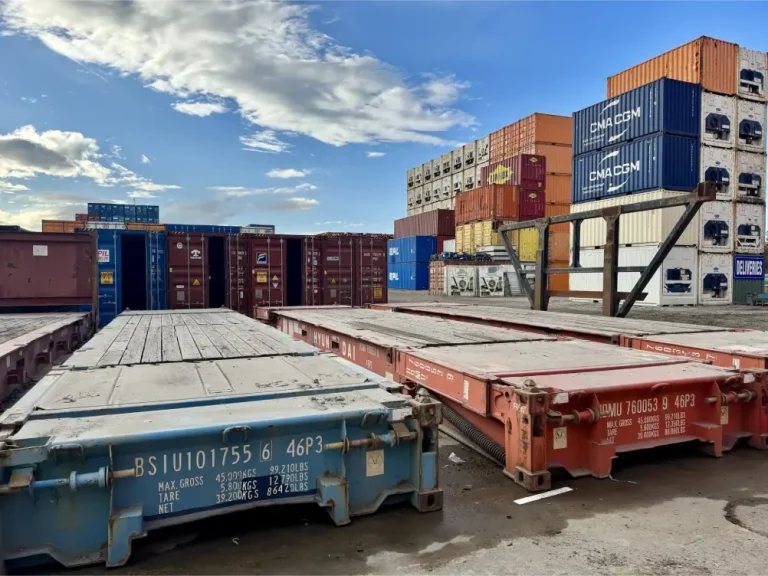
Both types have a heavy steel deck, often with a timber floor, lashing rings along the side rails and stake pockets for side posts. Corner castings at the top of the end walls allow lifting and, on many models, stacking when the walls are up.
Sizes
Sizes, payload and tare weight
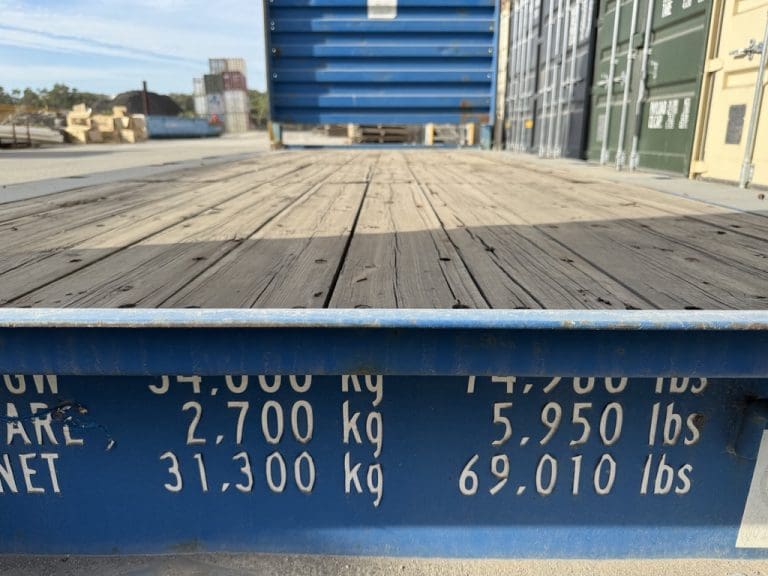
Flat racks follow the standard 20ft and 40ft footprints, so they fit the same trucks, cranes and twistlocks as other containers. The deck is built for heavy point loads, which also makes the rack heavy: a 40ft flat rack can weigh well over 5 tonnes empty. Ask for the tare weight and maximum payload from the data plate, and how the payload may be spread along the deck. Our shipping container weight guide compares tare weights across types.
What flat racks are used for
- Farm and forestry machinery: tractors, harvesters, excavators and attachments
- Boats and vehicles that are too wide or tall for a closed container
- Long, heavy material such as timber, logs, steel beams and pipe
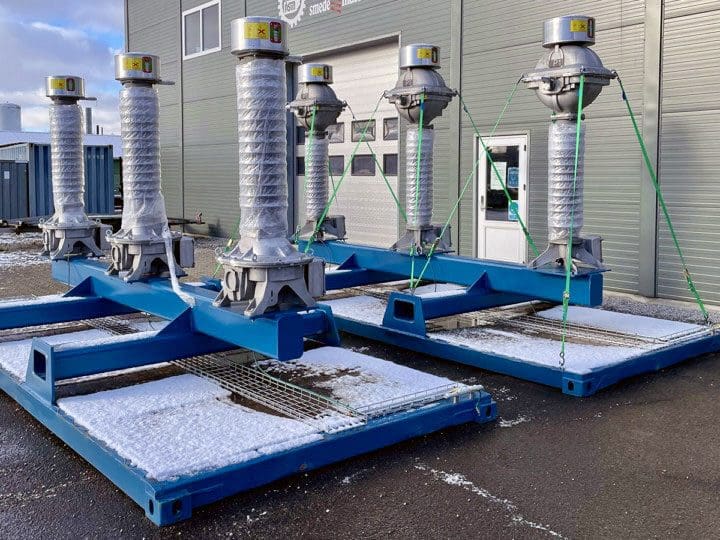
- Plant and project cargo, for example generators, tanks and transformers
- Moving equipment between the islands: Interislander freight lists over-dimensional freight and machinery among the cargo it carries
On land, second-hand flat racks are sometimes bought as heavy steel platforms, for example as a base for plant or a temporary loading deck. Any use where people walk on the deck or where it supports a structure needs engineering advice and may need building consent. For general farm storage a closed container is usually the better buy; see farm storage containers.
| Flat rack | Price incl. GST | Price excl. GST | Notes |
|---|---|---|---|
| 20ft flat rack, used | $1,600 to $1,903 | $1,391 to $1,655 | Trade Me listing in Waikato (nine available) and a supplier clearance list |
| 40ft flat rack, used | $8,990 | $7,817 | One Trade Me listing, Timaru |
Prices and what to check
Flat rack prices vary more than standard container prices because type, size and condition differ widely. In October 2026, used 20ft flat racks were listed from $1,600 incl. GST and a 40ft flat rack at $8,990 incl. GST. Current figures sit in the NZ shipping container price index, and the condition terms sellers use are explained on our used shipping containers page.
Before you buy
- Check the deck for cracked welds, bent cross members and rotten timber flooring.
- On a collapsible rack, fold and raise the end walls to confirm the hinges and locking pins work.
- Count the lashing rings and check their condition. Missing rings limit how you can secure a load.
- Ask for the data plate details: build year, tare weight and maximum gross weight.
- Confirm whether the price includes delivery. A flat rack’s weight and length often call for a swinglift or crane truck, which our HIAB vs swinglift guide compares.
Flat racks for export cargo are normally supplied by shipping lines through your freight forwarder. Buying one makes sense when you move oversize equipment between your own sites or need a heavy platform on land.
Transport
Moving a loaded flat rack
Road limits
Over-dimension loads
Standard heavy vehicles in New Zealand are limited to 2.55 m wide and 4.3 m high. A load on a flat rack that goes beyond those limits falls under over-dimension rules, which can mean permits, pilot vehicles and restricted travel times. The transport operator plans this, so give them the exact dimensions and weight of the loaded rack when you ask for a price. Our delivery guide covers access at the destination.
Securing
Securing the load
Loads are secured with chains, webbing straps or wire lashings to the rings on the rack, with timber dunnage underneath to protect the deck and spread the weight. Drain or secure machinery so nothing shifts or leaks in transit. Lifting and lashing should be done by people trained for it, usually the transport company or a rigger.
Request flat rack quotes
Tell us whether you need a 20ft or 40ft flat rack, fixed or collapsible, what it will carry and where it is going. Suppliers who service your area quote you directly.
Get a free quote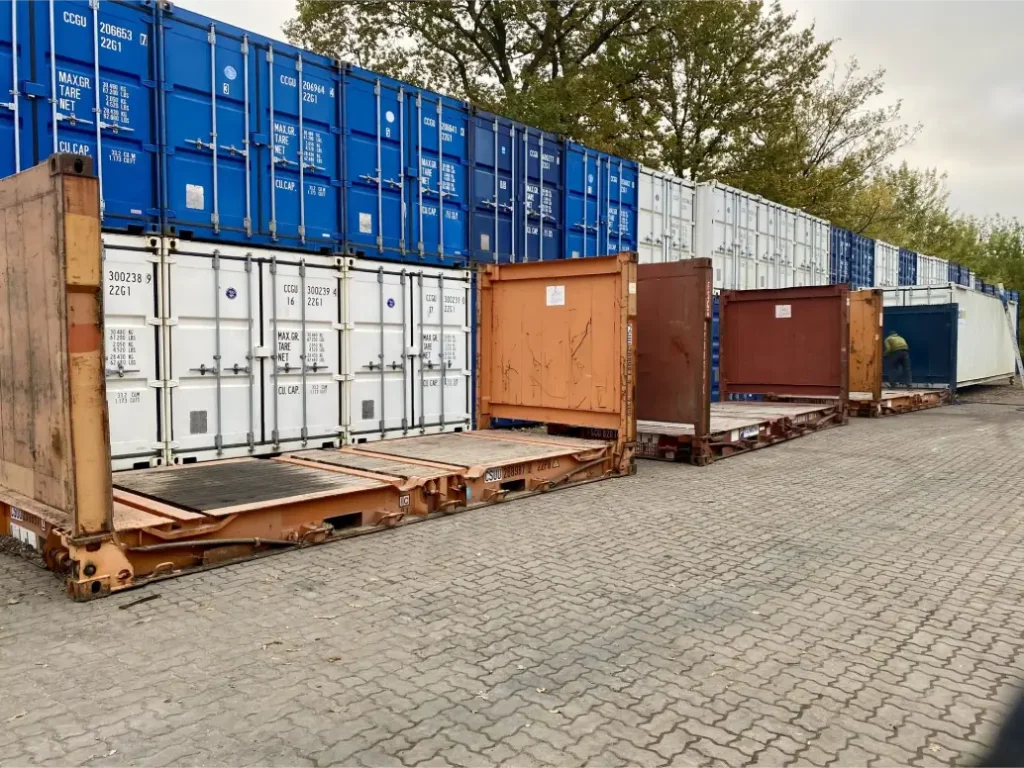
FAQ
Flat rack questions
A flat rack is a container with a strong steel base and two end walls, but no side walls or roof. It is built to carry cargo that does not fit inside a closed container because it is too wide, too tall or too heavy, such as machinery, boats, vehicles and timber. It uses the same corner castings and footprint as standard 20ft and 40ft containers.
A fixed end flat rack has its end walls welded in place, which makes it simple and strong. A collapsible flat rack has end walls that fold down onto the base, so several empty racks can be stacked in a bundle and moved as one. Collapsible racks save freight cost when moved empty, but their hinges and pins need checking.
In October 2026, used 20ft flat racks were listed at $1,600 to $1,903 incl. GST in NZ, and one 40ft flat rack at $8,990 incl. GST. Prices vary widely with type and condition, and delivery is extra. Request current quotes through our quote form, stating the size, type and where the rack needs to go.
For export shipments, the shipping line supplies the flat rack as part of the booking, usually arranged by a freight forwarder. For moves within New Zealand, buying a used rack is often more practical, because few suppliers keep flat racks for land-based hire. Include the size and intended use in your request so suppliers can say what they have.
Interislander lists over-dimensional freight and machinery among the freight it carries, booked through its freight services. Your transport operator usually handles the booking as part of the move. Give them the loaded dimensions and weight so they can confirm the sailing and any over-dimension requirements on the roads at each end.